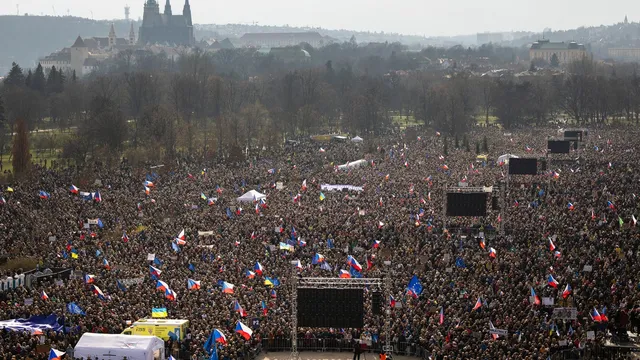
The current political situation in the Czech Republic as of 2026 is shaped by a complex interplay of domestic policies, international relations, and social issues. After the general elections of 2025, a coalition government comprising the Civic Democratic Party (ODS), the Christian Democratic Union (KDU-ČSL), and the Freedom and Direct Democracy (SPD) has emerged, signaling a right-leaning direction in national governance. Prime Minister Petr Fiala continues to navigate the challenges posed by a highly polarized political landscape, where public opinion is divided on issues such as immigration, economic policy, and relations with the European Union. The coalition has prioritized economic recovery and social stability, focusing on addressing the aftermath of the COVID-19 pandemic and ongoing energy crises influenced by geopolitical tensions in Europe, particularly regarding Russian relations and reliance on energy supplies.
In light of the ongoing war in Ukraine and the broader security landscape in Europe, Czechs have shown increasing support for NATO and EU collaboration, reflecting a shift in public sentiment towards stronger defense policies. The Czech government has been active in advocating for additional sanctions on Russia and has committed to providing support for Ukrainian refugees. This solid commitment to international alliances contrasts with rising sentiments within parts of the population that are wary of the EU’s regulatory role over national sovereignty, indicating a crucial balancing act for the current government. The coalition faces pressure to uphold its commitments while also addressing domestic concerns regarding immigration and integration of refugees, which have become hot-button issues in local and national discussions.
Socially, the Czech Republic continues to grapple with a demographic divide, where younger generations tend to prioritize progressive values and environmental issues, while older citizens often hold traditional views. The government’s policies are increasingly challenged by social movements advocating for environmental sustainability, human rights, and social justice. Influential civil society organizations are championing causes that demand accountability from the government, particularly in areas such as climate policy and anti-corruption measures. The tension between traditional and progressive values manifests in public discourse, influencing party strategies as elections approach.
As the year progresses, it is clear that the Czech political landscape remains dynamic, with issues of governance and societal values at the forefront of citizen engagement. The coalition government must continue to navigate a fine line between fulfilling its electoral promises, addressing public concerns, and maintaining a stable international position. The success of this administration will significantly depend on its ability to manage these competing interests while ensuring that economic recovery is not overshadowed by internal dissent or external pressures.