

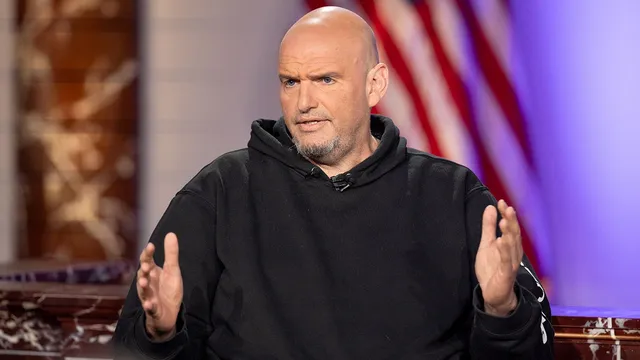
John Fetterman claims Trump Derangement Syndrome drives Democratic Party decisions
John Fetterman claims Trump Derangement Syndrome drives Democratic Party decisions
- John Fetterman articulated on a podcast that the Democratic Party currently does not have a clear leader.
- He expressed frustration over the party's focus on opposition to Trump over its own values and interests.
- Fetterman concluded that to move forward, Democrats need to prioritize the country's needs above party loyalty.
Story
In a recent appearance on the 'All-In Podcast,' John Fetterman, a Democratic Senator from Pennsylvania, expressed his belief that the Democratic Party lacks a true leader and instead is dominated by what he terms 'Trump Derangement Syndrome' or TDS. Fetterman articulated that TDS governs the decisions within the party and inhibits any form of bipartisan cooperation, suggesting it creates an environment where Democrats are criticized for acknowledging anything positive that comes from Republican initiatives. His remarks were a clear indication of his frustration with the party's rigid stance on certain issues and its unwillingness to celebrate achievements, even those that align with their established goals, such as national security regarding Iran. This criticism is part of a broader concern he has regarding the party's approach to collaboration with Republican counterparts. Fetterman believes that the party’s strong opposition to Donald Trump often overshadows their actual positions on critical national issues, like the potential threat posed by Iran. He specifically highlighted the Democratic refusal to commend President Trump's military actions against Iran, which he views as vital for America’s interests, remarking that he finds it perplexing that Democrats prioritize opposition to Trump over the country’s security. Such stands, he argues, are harmful and serve to further polarize the political climate. Fetterman, who has publicly advocated for a tough stance on Iran, noted that he remains one of the few Democrats willing to support actions deemed necessary for protecting U.S. interests, emphasizing the importance of putting the nation before party loyalty. He underscored the necessity for Democrats to reassess their strategies to enable dialogue and cooperation with Republicans, as he perceives a growing inflexibility within the party that hinders legislative progress and compromises.
Context
analysis insight strategic global geopolitical geopolitical impact shift market impact analysis analysis impact insight data geopolitical analysis policy data economic policy economic market policy strategic analysis global economic shift analysis trends global geopolitical insight global insight data strategic data strategic insight policy shift trends policy global market strategic economic economic policy geopolitical trends insight strategic policy market market geopolitical policy strategic shift geopolitical geopolitical global data market insight economic impact strategic impact analysis trends policy impact impact economic strategic global...


