
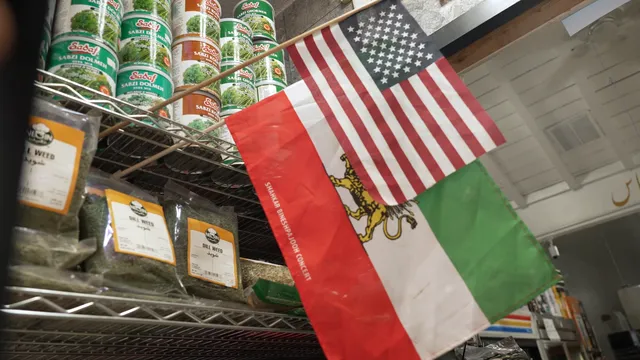
Iranian Americans support Trump for preventing nuclear weapons
- The Iranian community in Los Angeles watches the war in Iran with mixed emotions, balancing optimism and concern.
- Many believe that the US involvement, particularly under Donald Trump, could ultimately lead to a freer Iran.
- Community members express hope for change, but acknowledge the complexities involved in achieving it.
Story
In Los Angeles, particularly in Westwood and Beverly Hills, a significant diaspora of Iranians resides, far from the turmoil of their homeland. Many members of this community express their views on the current situation in Iran, especially regarding the war initiated by the United States. Among them is Eric, who moved from Iran at the age of 15, and watches the ongoing conflict with a mix of emotions. He reflects on the opulence of his surroundings, which stand in stark contrast to the chaos in Iran. Despite the horrors of war, he feels optimistic that the conflict will lead to greater freedom in his homeland. Eric believes that Donald Trump's aggressive stance towards Iran is ultimately beneficial for global safety, particularly concerning nuclear arms. He suggests that although people in Iran are suffering and experiencing bombings, he supports the idea of collateral damage in the pursuit of freedom. His view reflects a broader sentiment within the community, where there's significant hope for regime change in Iran, albeit tempered by the realization that such change is complex and fraught with challenges. Mohammad, another member of the Iranian community who has lived in America for 53 years, believes that change in Iran is overdue but fears that the current war will not resolve quickly. Others like Aida, who has ties to Armenian heritage, are acutely aware of the delicate situation, emphasizing the deep desire for a new regime among their Iranian friends, while acknowledging the multifaceted nature of achieving such change. As the community navigates their realities in Los Angeles, their perspectives on the war and their homeland illustrate a unique combination of hope and apprehension. The impact of American foreign policy under Trump's administration resonates strongly among them, confirming their belief that the fight for a nuclear-free Iran is an important, albeit painful, struggle that could lead to a brighter future for their homeland.
Context
The impact of U.S. foreign policy on Iran has been profound and multifaceted, notably influencing the geopolitical landscape of the Middle East and affecting domestic dynamics within Iran itself. U.S. foreign policy has primarily shaped its relationship with Iran since the 1979 Iranian Revolution, which resulted in the establishment of the Islamic Republic and the subsequent severing of diplomatic ties. The U.S. responded to the revolution with economic sanctions and has attempted to isolate Iran from the international community, particularly in relation to its nuclear program and its support for groups deemed destabilizing by the U.S. and its allies. This approach has fueled anti-American sentiment in Iran and complicated any potential avenues for constructive dialogue between the two nations. Over the years, various administrations in the U.S. have employed different strategies to engage with Iran or to deter it. The Obama administration's approach, characterized by diplomacy and the landmark 2015 nuclear agreement (Joint Comprehensive Plan of Action, JCPOA), aimed to curtail Iran's nuclear ambitions in exchange for lifting sanctions. While this agreement created a temporary thaw in U.S.-Iran relations, it ultimately unraveled following the Trump administration's withdrawal from the deal in 2018 and the re-imposition of harsh sanctions. This shift not only escalated tensions but also led Iran to resume some of its nuclear activities, prompting global concerns over nuclear proliferation in the region. In addition to its nuclear policy, U.S. foreign policy has significantly impacted Iran's regional behavior. By supporting nations opposed to Iranian influence, such as Saudi Arabia and Israel, the U.S. has contributed to the complex interplay of proxy conflicts throughout the Middle East. Iran's involvement in Syria, Iraq, and Yemen is often framed as a response to perceived threats from U.S. policies and its regional allies. This dynamic has exacerbated sectarian tensions and fueled conflicts contributing to instability in the region. The Iranian government has leveraged a narrative that portrays U.S. actions as imperialism, thus consolidating internal support during a time of economic hardship exacerbated by sanctions. Ultimately, the influence of U.S. foreign policy on Iran illustrates a critical aspect of international relations: the interplay between external pressures and domestic responses. The sanctions and military posturing have galvanized nationalist sentiments among Iranians, leading to a rally-around-the-flag effect in times of heightened tensions. However, the adverse effects of sanctions on the Iranian economy have sparked domestic dissent against the government, revealing a complex relationship between external policy and internal political dynamics. As the U.S. continues to navigate its foreign policy objectives regarding Iran, the long-term implications for both the region and global diplomacy remain uncertain. The future will likely depend on how both nations adapt their strategies and the potential for renewed dialogue that can address mutual concerns.
