

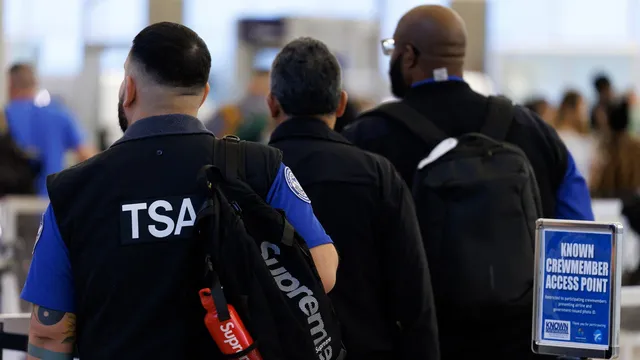
Denver airport faces crisis as TSA workers go unpaid during shutdown
Denver airport faces crisis as TSA workers go unpaid during shutdown
- Denver International Airport initiated a donation drive for TSA employees amid a partial government shutdown.
- Only grocery store and gas gift cards in $10 and $20 denominations are being accepted due to federal ethics rules.
- The ongoing crisis highlights the challenges faced by TSA workers and the impact on airport operations.
Story
In early March 2026, as the partial government shutdown affecting the United States continued, Denver International Airport initiated donation drives to support Transportation Security Administration (TSA) employees who were working without pay. The airport specified that it would accept only grocery store and gas gift cards of $10 or $20 denominations, as federal ethics rules limit the kind of assistance federal employees can accept during such a shutdown. This initiative follows a concerning trend, highlighted by reports of TSA workers across the nation struggling financially due to delayed paychecks. The Denver airport's announcement came amidst a larger crisis instigated by the Department of Homeland Security's funding challenges. TSA officers, classified as essential workers, are mandated to serve during government shutdowns, resulting in financial difficulties when paychecks are postponed. Other airports, like Seattle-Tacoma International Airport, have responded similarly by organizing food pantries to provide aid to unpaid federal workers, emphasizing the widespread impact of the shutdown on these essential workers' finances. Reports indicate that many TSA officers were facing considerable hardships during this period, leading to increased staffing shortages and longer wait times at security checks across airports as the spring break travel season approached. Lawmakers have proposed legislation to prevent future situations where TSA employees go unpaid, but as of now, no effective solutions have been put in place. Consequently, TSA officers remained on duty without pay, relying on the hope of back pay once the situation stabilizes. As the Denver airport encouraged passengers and the public to contribute, the situation at other airports was similarly dire, with officers expressing the stress of working under financial strain. The urgency of the funding crisis reflects the ongoing challenges within the federal government, as many employees, including TSA workers, navigate an uncertain financial landscape while committed to their roles in public safety. These developments illustrate the deeper implications that government shutdowns have, not only on the individuals directly affected but also on the entire travel infrastructure of the country, affecting millions of travelers each year.


