
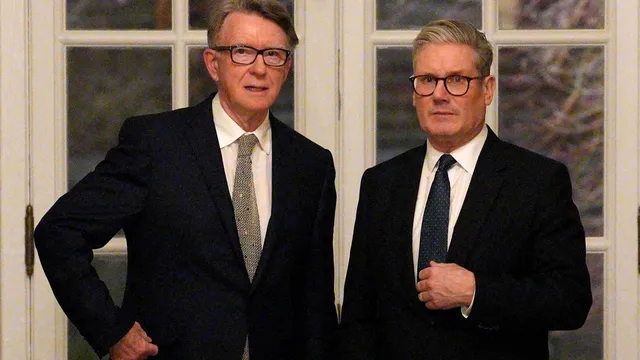
Starmer's appointment of Mandelson raises scandal over Epstein ties
- Sir Keir Starmer appointed Lord Peter Mandelson as UK ambassador to the US despite his connections to Jeffrey Epstein.
- The appointment has led to outcry from political figures across the spectrum, including Labour Party members.
- This situation could significantly impact Starmer's leadership and may draw parallels with historical political scandals.
Story
In the United Kingdom, Sir Keir Starmer is currently facing significant political turmoil following his controversial decision to appoint Lord Peter Mandelson as the ambassador to the United States. This appointment comes in the light of public scrutiny over Mandelson's connections to Jeffrey Epstein, a convicted pedophile. The revelation of these ties has sparked outrage not only from opposition parties but also within Starmer's own Labour Party. Members of parliament and constituents have expressed their dismay, questioning Starmer’s judgment and leadership effectiveness. As the situation escalates, some political figures believe it could threaten Starmer’s prime ministerial position. The ramifications of his decision are being compared to past political scandals, particularly the Profumo affair from the 1960s, which resulted in the downfall of a Conservative prime minister. Those close to Starmer claim he acted with foresight and consideration, yet dissenters inside his party argue that his actions reflect a severe lapse in political acumen. This division highlights a broader issue regarding trust and accountability in leadership. As public opinion trends against him, many are left wondering how this controversy will affect Starmer’s policy-making and credibility going forward. Public opinion appears to be split, with some defending the Prime Minister's ability to make tough choices and others believing it could mark the end of his leadership. Various news outlets, including The Independent, have started featuring discussions that shed light on public sentiment regarding this affair. Many members of the public admit feeling confused about his decision and question the ethical implications of appointing someone with such controversial past associations to an important diplomatic role. This crisis reflects deeper underlying tensions regarding leadership ethics and the responsibilities of elected officials. The narrative has begun drawing parallels between current events and historical political misjudgments, echoing concerns about whether current leaders are truly accountable to their constituents. The fallout from this scandal could remain a topic of discussion and analysis in political circles for months to come, influencing future elections and party dynamics as it unfolds.
Context
The recent controversy surrounding Keir Starmer's appointment of Peter Mandelson has sparked significant debate within the Labour Party and among the general public. Mandelson, a prominent figure in the party's history, known for his role in the New Labour movement under Tony Blair, has a complex legacy characterized by both revered political acumen and contentious decisions. With Starmer's leadership aiming to reposition the Labour Party in a more centrist light, his decision to collaborate with Mandelson raises questions about ideological coherence and the direction of the party's future. Critics argue that Mandelson's history, which includes several high-profile controversies and his association with the Blair era, is at odds with Starmer's attempts to distance Labour from its past failures, particularly in relation to electoral performance during the last decade. The appointment has prompted a wide array of reactions from party members and the public alike. Supporters of Starmer contend that bringing in Mandelson's expertise can help revive the party's fortunes, especially given the electoral challenges ahead. They argue that Mandelson's experience with media strategy and political messaging can prove beneficial in crafting a compelling narrative for the Labour Party as it seeks to regain voter trust and redefine its identity in a rapidly changing political landscape. On the flip side, many within the party view Mandelson's involvement as a misstep, fearing that it may alienate the grassroots supporters who propelled Starmer's leadership bid, particularly those who seek a clear break from the traditional party establishment. Additionally, the timing of this appointment is particularly critical, as the political climate remains volatile with upcoming elections on the horizon. The divide within the party reflects broader societal tensions, as Labour grapples with its stance on key issues such as economic inequality, climate change, and social justice. Starmer’s team must navigate these internal divisions while also presenting a united front to the electorate. As Mandelson takes on his new role, it is likely that his influence will be closely monitored, and any perceived misalignment with Starmer’s vision could exacerbate existing fractures within the party. Ultimately, the future success of the Labour Party may hinge on this appointment. As Starmer aims to merge Mandelson's strategic insight with a modern interpretation of Labour values, the effectiveness of this collaboration will be scrutinized closely by both supporters and critics. The potential benefits of seasoned political expertise weighed against the risks of alienating a burgeoning base who yearn for progressive change will likely define the party's trajectory in the months and years to come. This controversy not only encapsulates the challenges faced by the Labour Party but also serves as a reflection of the evolving dynamics within British politics itself.
