

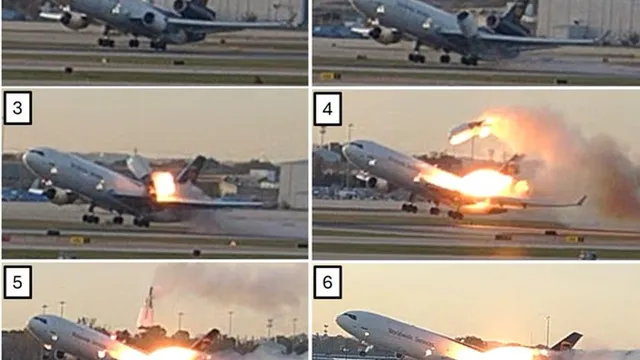
UPS axes entire fleet of MD-11 planes after fatal crash kills 15
UPS axes entire fleet of MD-11 planes after fatal crash kills 15
- The MD-11 plane involved in the accident crashed on November 4, 2022, near Muhammad Ali International Airport.
- UPS confirmed the retirement of its MD-11 fleet following the accident, which resulted in significant financial losses.
- The decision underscores UPS’s commitment to safety and operational integrity in the aviation industry.
Story
In November 2022, a tragic accident occurred in Louisville, Kentucky, when a McDonnell Douglas MD-11 cargo plane operated by UPS crashed during takeoff, resulting in the deaths of 15 individuals, including the aircraft's three-person crew and 12 people on the ground. The left engine of the plane detached from the wing just shortly after takeoff, leading to the crash less than 30 feet into the ascent. This incident prompted the Federal Aviation Administration to ground all MD-11 aircraft, initiating a thorough investigation into the cause of the crash. The National Transportation Safety Board uncovered severe cracks in engine mount components, which were not detected during routine maintenance, raising serious concerns regarding aircraft safety protocols. These components had last been inspected in 2021. Following the catastrophic event, UPS made the decision to accelerate its plans to retire its fleet of MD-11 cargo planes, which had constituted about 9% of its overall fleet. This decision was officially announced by CEO Carol Tomé during a fourth-quarter earnings call. The company experienced a financial impact from this decision, resulting in an after-tax charge of $137 million due to the write-off. In an effort to rebuild its capacity and adapt to operational demand, UPS is scheduled to receive 18 new Boeing 767s over the forthcoming 15 months. During the recent holiday peak season, UPS had to leverage various strategies including importing aircraft from international sites and increasing ground transportation to meet the service demands. The response from UPS’s team and their partners showcased commendable solidarity and support in the aftermath of the tragedy. While the FAA continues its investigation to determine the possibility of returning the MD-11 aircraft to service, this incident has raised important questions regarding aircraft maintenance and safety, fundamentally reshaping UPS’s operational capabilities and future planning.
Context
The UPS MD-11 is a wide-bodied, tri-jet aircraft that was introduced in the late 1990s and has become a mainstay in cargo operations. Safety regulations surrounding the MD-11 are crucial considering the aircraft's operational role and the importance of aviation safety. Oversight of safety regulations for the MD-11 is primarily conducted by the Federal Aviation Administration (FAA) and other international regulatory bodies. These regulations cover a variety of areas, including aircraft maintenance, operational procedures, pilot training, and emergency protocols, which are essential for ensuring the airworthiness of the MD-11 fleet. Additionally, UPS itself enforces strict internal safety protocols that align with regulatory requirements, fostering a culture of safety among its flight crews and maintenance personnel. One of the primary safety concerns for the MD-11 has historically been its stall characteristics and the associated risks during takeoff and landing phases. In response to incidents, the FAA has mandated specific training requirements for pilots operating the MD-11, emphasizing simulation of stall conditions and recovery procedures. The design features of the MD-11, such as its long fuselage and center of gravity, require that pilots have a deep understanding of the aircraft's handling nuances to mitigate risks effectively. UPS employs continuous training programs to ensure that pilots remain proficient in handling the specific challenges posed by the MD-11, reflecting the importance of ongoing education in addressing safety concerns. Maintenance is another critical aspect of the safety regulations concerning the MD-11. The aircraft's complex systems necessitate rigorous inspection and maintenance schedules, which are mandated by both the FAA and the manufacturer's guidelines. UPS operates a dedicated maintenance team that specializes in MD-11 aircraft, ensuring that they meet the stringent safety standards set forth by regulatory authorities. This includes regular checks of essential components such as engines, avionics, and structural integrity to prevent potential in-flight failures. Compliance with maintenance regulations not only serves to enhance the safety of the aircraft but also contributes to its operational reliability, which is paramount in the cargo transportation industry. Finally, emergency procedures are an integral part of the safety regulations for the MD-11. The aircraft is equipped with advanced safety and emergency systems designed to assist pilots and crew during critical situations. UPS has developed comprehensive emergency response plans tailored to the MD-11, including procedures for handling in-flight emergencies, evacuation protocols, and communication with air traffic control. Regular drills and simulations ensure that crew members are well-prepared to respond promptly and effectively, minimizing risks to passengers and cargo. Active engagement with safety analytics and incident reporting further enriches UPS’s efforts in identifying potential safety hazards and continually improving operational standards. Overall, adherence to safety regulations ensures the ongoing reliability and safety of the UPS MD-11 fleet.


