

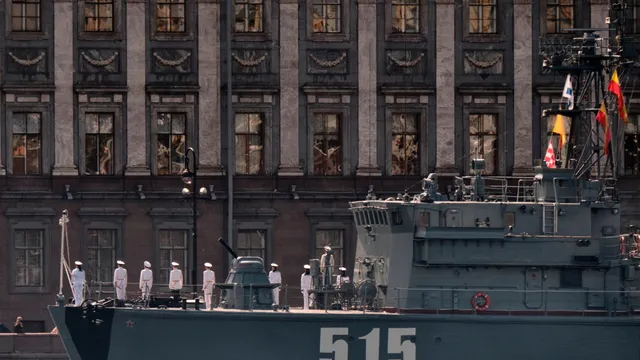
U.S. Coast Guard tracks Russian military vessel near Hawaii
U.S. Coast Guard tracks Russian military vessel near Hawaii
- The U.S. Coast Guard is monitoring a Russian military vessel operating near Hawaii.
- The monitoring occurred approximately 15 nautical miles south of Oahu, outside U.S. territorial waters.
- Such actions reflect the Coast Guard's commitment to maritime security and response to foreign military activities.
Story
On October 29, 2025, in the Pacific Ocean near Hawaii, the U.S. Coast Guard conducted surveillance of a Russian military vessel identified as the Kareliya, a Vishnya-class intelligence ship. The vessel was operating approximately 15 nautical miles south of Oahu, falling just outside the U.S. territorial waters which extend 12 nautical miles from shore. This action highlights the ongoing vigilance of U.S. maritime defense operations, especially concerning foreign military activity in the vicinity. The Coast Guard utilized an HC-130 Hercules aircraft and the cutter William Hart to carry out an overflight of the Kareliya. This operation was characterized by the Coast Guard as a "safe and professional overflight," emphasizing their commitment to maintaining maritime security. Coast Guard officials reiterated that such monitoring falls within the framework of international law, which permits military vessels to operate in international waters without unreasonable interference from coastal nations. The U.S. Coast Guard routinely monitors maritime activities around the Hawaiian Islands as part of its broader mission to safeguard U.S. interests and ensure the security of the surrounding maritime region. This incident underscores the importance of awareness and regulation in maritime operations, particularly as military tensions persist in various parts of the world. Captain Matthew Chong, the chief of response for the Coast Guard Oceania District, stated that the Coast Guard's actions serve to protect U.S. maritime borders and defend sovereign interests. By working alongside international partners and allies, they leverage their surveillance capabilities to ensure a timely and effective response to any potential threats from foreign military operations near their waters.
Context
International law regarding foreign military vessels is governed by a complex framework of treaties, customary international law, and principles that provide guidance on the rights and responsibilities of states. Central to this framework is the United Nations Convention on the Law of the Sea (UNCLOS), which outlines the legal status of the sea and the rights of vessels navigating international waters. Among the key provisions of UNCLOS are the rules concerning the innocent passage of ships through territorial waters, which states that while foreign military vessels can pass through the territorial waters of another state, they must do so in a manner that is not prejudicial to the peace, good order, or security of that state. This principle is crucial to maintaining the sovereignty of coastal states while allowing for freedom of navigation at sea. Additionally, the concept of sovereign immunity is significant in international law as it applies to foreign military vessels. This principle asserts that military vessels enjoy immunity from the jurisdiction of foreign courts while in foreign ports or territorial waters. However, this immunity is not absolute; it can be waived by the flag state or if the military activities are not consistent with the laws of the coastal state. Thus, while foreign military vessels can operate freely, they must also respect the laws and customs of the states they engage with, which often leads to diplomatic negotiations to ensure compliance and mutual respect. International incidents involving foreign military vessels often highlight the delicate balance between respect for national sovereignty and the necessity for military operations in international waters. Recent instances, such as encounters between naval vessels from rival states in strategic maritime passages, demonstrate the potential for conflict arising from perceived infringements on sovereign rights. These situations necessitate ongoing dialogue and adherence to international legal frameworks to prevent escalations. Multilateral agreements and cooperative security arrangements can be essential in managing interactions between military vessels of different nations, often requiring formal protocols that dictate how such vessels should operate in proximity to one another. In conclusion, international law regarding foreign military vessels is characterized by a need for both lawful navigation and respect for national sovereignty. The provisions of UNCLOS, along with the principles of sovereign immunity, shape the legal landscape in which these vessels operate. As geopolitical tensions evolve, the interpretation and implementation of these laws remain vital for maintaining peace and security at sea. The ongoing challenge for the international community lies in reconciling the principles of freedom of navigation with the legitimate security concerns of coastal states, necessitating both legal clarity and diplomatic engagement.


