

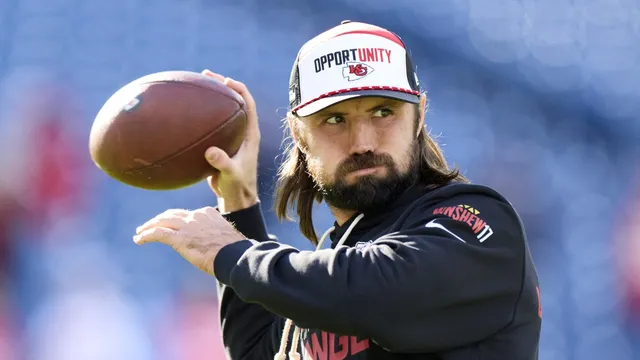
Kansas City Chiefs avoid major quarterback crisis as Gardner Minshew's injury not as severe
Kansas City Chiefs avoid major quarterback crisis as Gardner Minshew's injury not as severe
- Patrick Mahomes was ruled out for the season due to a torn ACL, leading to Gardner Minshew stepping in as the starter.
- Minshew suffered a knee injury during the game against the Titans, initially feared to be a torn ACL but later confirmed not to be.
- The Chiefs signed Shane Buechele as a precautionary measure to stabilize the quarterback position for their remaining games.
Story
In a challenging season for the Kansas City Chiefs, the team faced severe setbacks when both quarterback Patrick Mahomes and backup Gardner Minshew suffered significant knee injuries. The situation escalated during their Week 16 game against the Tennessee Titans, where Minshew went down early in the first quarter due to a non-contact injury. Initial reports indicated that he had potentially torn his ACL, which would have compounded the team's problems following Mahomes' season-ending injury sustained in the previous week. This injury crisis occurred as the Chiefs were already eliminated from playoff contention, escalating their struggles within an already disappointing season. Following the Titans' loss, where the Chiefs were unable to secure a touchdown, Minshew's condition was subject to further examination. Despite early fears of a torn ACL, an MRI provided the team with a more hopeful update, revealing that Minshew’s ACL was intact, although he would still need to recover from the injury and miss some game time. Meanwhile, Chris Oladokun, who had replaced Minshew during the game, displayed commendable resilience, completing 11 of 16 pass attempts for 111 yards. Yet, the Chiefs’ offensive disappointment continued under his leadership, emphasizing the team's overall struggles following the injury to their quarterbacks. Consequently, with the regular season nearing its end and two games on the schedule, the Chiefs quickly moved to stabilize their quarterback situation by signing former Bills quarterback Shane Buechele off the practice squad. This decision was crucial as the team aimed to ensure a competent starter for their following games while anticipation built for Minshew's recovery timeline. This signing also underscores the organization's attempts to manage their quarterback depth, especially in light of Mahomes’ surgery and uncertain recovery timeline. As the Chiefs prepared for their encounter against the Denver Broncos on Christmas Day, the focus was not only on fielding a competitive team but also on addressing the emotional toll on players and staff due to the string of injuries. The loss to the Titans marked a significant point in the Chiefs' season, highlighting a downturn that many believe ranks among the worst times in the franchise's recent history. As the season wraps up, the Chiefs will aim to finish strong despite the setbacks they’ve faced, which is particularly critical given their expected relocation announcement from Missouri to Kansas and the future decisions looming regarding the roster, including key players like Travis Kelce. Fortunately, while the Chiefs' playoff aspirations are over, the positive news surrounding Minshew's injury could offer a glimpse of hope as the franchise looks to rebuild and re-evaluate its future plans heading into the off-season. The continuity in their quarterback roster, albeit with complications, may also aid in maintaining team morale while they navigate through the end of the regular season.
Context
economic economic global insight geopolitical policy geopolitical market economic data policy strategic data shift global policy market shift trends market geopolitical shift global global insight policy market economic economic shift shift global economic strategic global insight policy impact global impact analysis economic trends data strategic impact insight impact analysis market data insight strategic shift policy trends policy strategic global market geopolitical global geopolitical analysis strategic global market economic policy impact analysis economic insight analysis trends analysis impact global global impact...


