

Trump vows to protect shipping and threatens Iran's oil infrastructure
Trump vows to protect shipping and threatens Iran's oil infrastructure
- U.S. forces conducted major airstrikes on military targets in Iran's Kharg Island, a key oil export location.
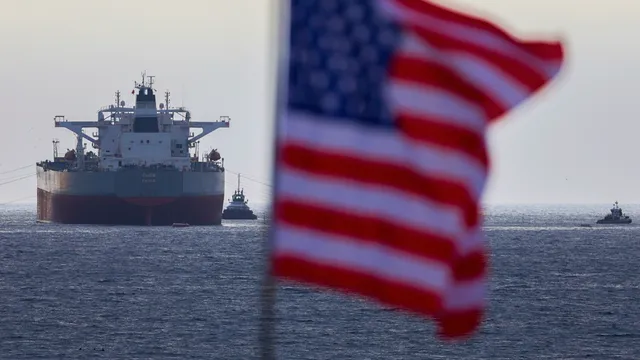
- President Trump announced the readiness of the U.S. Navy to escort vessels through the Strait of Hormuz while calling for international naval support.
- The escalation of military actions and rhetoric has raised concerns about further conflict and its implications for global oil prices.
Story
The ongoing conflict in the Middle East escalated significantly with the United States launching a powerful airstrike on military targets located on Iran's Kharg Island. This strategic region serves as a key export hub for Iranian oil. On March 13, shortly after the attacks, President Donald Trump claimed that these actions amounted to one of the most impactful bombing runs in the area's recent history. Alongside military advancements, the Pentagon began enhancing U.S. military presence in the region by dispatching the USS Tripoli, an assault ship carrying approximately 2,500 Marines. In light of increasing tensions, Trump reaffirmed the U.S. Navy's readiness to escort vessels through the vital Strait of Hormuz, crucial for global maritime oil transport. He called upon countries such as China, France, Japan, South Korea, and the United Kingdom to send warships to reinforce these efforts, highlighting international cooperation. Trump emphasized the potency of American military capabilities, asserting that he opted not to target Iran's oil infrastructure for reasons of decency, although he warned of reconsidering this decision should anything compromise the free passage of ships. Amid these developments, Iran demonstrated defiance, continuing its missile launches toward Israel, prompting U.S. defense cover to remain vigilant. The regional atmosphere remains charged as both sides prepare for further confrontations, with significant casualties reported extending beyond local populations, including U.S. service members and foreign soldiers tied to various mission frameworks in the region. Iranian officials responded to these threats with warnings of severe retaliation targeting U.S. interests in the area. As the situation unfolds, gas prices are reportedly on the rise, heightening domestic pressures on the Trump administration. Amid a backdrop of heightened military readiness and international dialogue, the U.S. response appears to be navigating a critical juncture, balancing aggressive military action with a need for diplomatic outreach to defuse tensions while ensuring shipping lanes remain open and secure in the face of possible Iranian threats.
Context
The history of U.S. military actions in Iran is marked by a complex interplay of geopolitical strategies, regional security concerns, and historical grievances. The most notable early U.S. involvement in Iran began with the 1953 coup d'état that overthrew Prime Minister Mohammad Mossadegh, orchestrated by the CIA and Britain's MI6. This move aimed to secure Western access to Iran's oil resources and prevent the perceived threat of communism in the region. The aftermath of this intervention fostered deep-seated resentment towards the U.S., laying the groundwork for future tensions. The 1979 Iranian Revolution, which resulted in the establishment of an Islamic Republic, transformed Iran from a U.S. ally into a significant adversary, further complicating U.S. interests in the Middle East. Following the 1979 revolution, relations between the U.S. and Iran deteriorated sharply, particularly after the U.S. Embassy hostage crisis in which 52 American diplomats and citizens were held for 444 days. In response to Iranian actions perceived as hostile, the U.S. implemented various sanctions, aimed at curtailing Iran's influence in the region and limiting its nuclear capabilities. Throughout the 1980s, the U.S. became involved in the Iran-Iraq War indirectly, supporting Iraq under Saddam Hussein in an effort to counter Iranian expansion. The 1988 U.S. Navy's downing of Iran Air Flight 655, resulting in the deaths of 290 civilians, further intensified animosities between the two nations. In the 2000s, particularly post-9/11, U.S. military actions in the region were heavily influenced by the


