

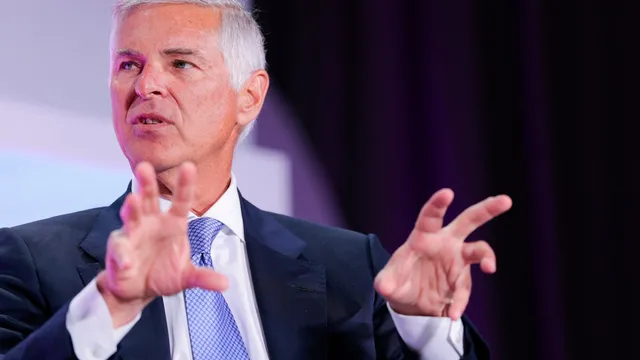
Lower-income consumers may benefit from a C-shaped economy, says Hilton CEO
Lower-income consumers may benefit from a C-shaped economy, says Hilton CEO
- Christopher Nassetta discussed a potential shift towards a 'C-shaped' economic recovery during Hilton's first quarter 2026 earnings call.
- The expected decline in interest rates and growth in technology investments may benefit lower and mid-income consumers.
- This emergence of a balanced economic demand could support a broader spending base for sectors like hospitality.
Story
In the United States, the economy appears to be entering a new phase characterized by a shift towards a more balanced demand across various income levels. This perspective was articulated by Christopher Nassetta, the CEO of Hilton, during the company's earnings call for the first quarter of 2026. He indicated the emergence of what he dubbed a 'C-shaped' recovery, where the financial growth is not solely concentrated among affluent consumers, but is beginning to encompass lower and mid-income groups. This change comes at a time when hospitality services, particularly mid-priced hotel offerings, are experiencing a surge in demand. The company's analysis highlighted that the demand for lower- and mid-priced hotels is rising sharply, suggesting a strengthening of spending power among these income brackets. Factors contributing to this change are expected declines in interest rates and increased investments in technology, which are believed to create better economic conditions for middle- and lower-income consumers. Christopher Nassetta noted that this trend represents an opportunity for broader growth within the economy, contrasting sharply with the challenges facing less wealthy Americans who have suffered from high debt burdens and increased affordability pressures. This economic condition follows a prolonged period marked by a K-shaped recovery, observed by many economists as a result of the COVID-19 pandemic. While wealthy households benefited from ongoing increases in asset values, including stocks and real estate, lower-income families struggled with stagnant wages, rising prices, and uncertainty in the labor market. Policymakers have voiced concerns about this growing divide, which has manifested as a decrease in consumer spending among lower-income households over recent years. Christopher Nassetta's comments suggest a hopeful transition from the K-shaped recovery toward a more inclusive financial landscape. Looking toward the future, Nassetta expressed optimism about the potential for lower inflation once geopolitical tensions, such as the Iran war, stabilize. He believes this stabilization would enable the Federal Reserve to lower interest rates, further stimulating economic growth focused on benefiting all income levels, rather than predominantly the wealthy. This renewed focus on equitable economic recovery may not only improve the situation for lower-income consumers but also bolster sectors reliant on discretionary spending, such as hospitality. As the economic landscape evolves, the hospitality industry, which plays a significant role in supporting consumer spending, may emerge stronger with a more diverse customer base contributing to its growth.


