

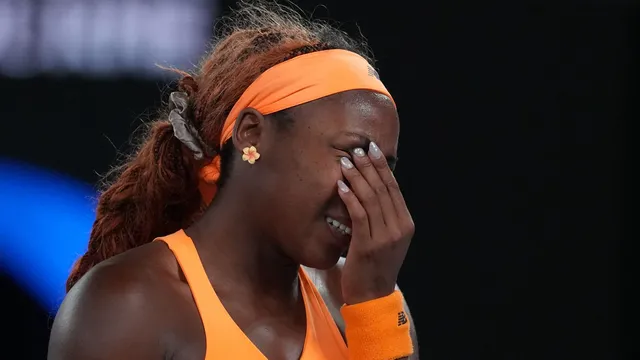
Coco Gauff faces backlash after emotional racket smash at Australian Open
Coco Gauff faces backlash after emotional racket smash at Australian Open
- Following her defeat to Elina Svitolina at the Australian Open, Gauff smashed her racket in frustration while searching for privacy.
- Despite her efforts to avoid cameras, the incident was broadcasted, prompting discussions about player privacy during tournaments.
- Gauff expressed that breaking a racket helps her release frustration rather than taking it out on her support team.
Story
In Australia, Coco Gauff experienced an emotional aftermath to her match against Elina Svitolina during the Australian Open quarterfinals. The match ended in a disappointing straight-set loss for Gauff, with scores of 6-1, 6-2, and took place just a few days prior. Struggling significantly with her serve, Gauff registered five double faults and faced multiple service breaks throughout the match, culminating in a performance that lasted only 59 minutes. Such a display of frustration is not uncommon in competitive sports, yet the circumstances surrounding her reaction were somewhat atypical given the public scrutiny faced by high-profile athletes. After the match, Gauff attempted to find a space to vent her frustrations without cameras present, ultimately leading her to a location in the catacombs of Rod Laver Arena. In an unexpected twist, her racket smash as she struck it against the concrete was caught on camera and broadcast to the audience. The incident sparked conversations around player privacy, as Gauff expressed her discomfort with the constant presence of cameras, likening her situation to a prior incident involving fellow player Aryna Sabalenka. She explicitly stated her awareness of the lack of private spaces during tournaments, emphasizing that the only significant private area available to players is the locker room. Gauff reflected on her emotional state, admitting that breaking a racket was a method of releasing frustration while preferring not to take it out on her support team, whom she values greatly. She noted her history of breaking rackets and stressed her intent to avoid such displays on the court, particularly in front of younger fans. The larger implication of Gauff's experience raises pertinent questions regarding the handling of athletes' emotions in the public eye and the responsibilities of broadcasting companies. In her quest for understanding and privacy, Gauff has inadvertently spotlighted the challenges faced by athletes navigating emotional trials amidst a 24/7 media cycle. Her acknowledgment of needing to express frustration rather than lash out at others underlines a level of emotional intelligence that is often overlooked in the intense world of competitive sports. Ultimately, Gauff's reflections have prompted discussions on player welfare and the need for protective measures in terms of media coverage at competitive tournaments. What occurred has resonated within the sport and amongst fans, with many showing support for Gauff and understanding her need to handle her emotions authentically, even if it involved breaking a racket.
Context
Emotional management is crucial for professional athletes, as it directly influences performance, mental health, and overall well-being. Athletes often face immense pressure to perform at high levels consistently, which can lead to stress, anxiety, and emotional instability. Understanding and effectively managing these emotions can enhance an athlete's ability to compete and recover from setbacks. Strategies such as mindfulness, cognitive-behavioral techniques, and emotional regulation exercises can be integrated into an athlete's training routine, providing essential tools to navigate the psychological challenges of competitive sports. Mindfulness practices, including meditation and breathing exercises, have gained popularity among athletes for their effectiveness in maintaining focus and reducing anxiety. By cultivating a present-moment awareness, athletes can learn to detach from distracting thoughts and emotions, fostering a calm and concentrated mindset. Research indicates that regular mindfulness practice can lead to improved performance outcomes, greater resilience in the face of adversity, and an overall sense of enjoyment in the sport. Furthermore, incorporating mindfulness into pre-competition routines can help athletes manage nerves and enter competitions with a clear and focused mind. Cognitive-behavioral techniques are another essential aspect of emotional management for professional athletes. These strategies involve identifying and challenging negative thought patterns that may undermine confidence and performance. By reframing negative self-talk and adopting a growth mindset, athletes can cultivate a more positive outlook and empower themselves to tackle challenges head-on. This approach not only enhances emotional resilience but also promotes a healthier relationship with the pressures of competition, enabling athletes to bounce back more effectively from disappointments and setbacks. Finally, emotional regulation exercises play a critical role in helping athletes manage their emotions during high-stakes situations. Techniques such as visualization, goal-setting, and affirmations can aid in preparing both mentally and emotionally for competitions. By having a structured emotional management plan in place, athletes are better equipped to handle the unique pressures they face, ultimately improving their performance and enhancing their overall quality of life. Emphasizing emotional management in the training regimens of professional athletes can lead to long-term success, not only in their sport but also in their personal lives.


