

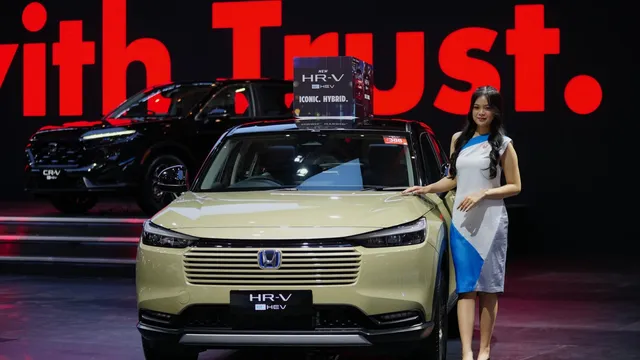
Honda faces 42% profit drop due to tariffs and EV market changes
Honda faces 42% profit drop due to tariffs and EV market changes
- Honda reported a 42% decrease in profits for the nine months through December 2023.
- Sales also dipped by 2.2%, reaching approximately 15.98 trillion yen.
- The automaker is facing challenges due to tariffs and a slowdown in the electric vehicle market.
Story
In Tokyo, Honda Motor Co. recently announced a steep decline in profits for the nine months that ended in December 2023, experiencing a staggering 42% drop compared to the same period the previous year. The automaker's profit during this timeframe totaled 465.4 billion yen, equivalent to roughly 3 billion dollars, a significant decrease from the 805.2 billion yen reported in the prior year. This profit slump is particularly concerning as it marks the second consecutive year of falling profits for Honda during these three quarters. Additionally, sales also dipped by 2.2%, reaching about 15.98 trillion yen or around 102.6 billion dollars. Despite the challenging financial landscape, Honda maintained its forecast for a full fiscal year profit of 300 billion yen, approximately 1.9 billion dollars, aiming to retain stability amid the ongoing market fluctuations. The automaker cited various factors contributing to this downturn, including the impact of tariffs imposed by the Trump administration, which negatively affected its earnings potential. The climb in tariffs significantly hampers Japan’s export-reliant economy, creating challenges not only for Honda but also for its industry counterparts. Moreover, the slowing demand for electric vehicles (EVs) in the U.S. market contributed further pressure on Honda's financial performance. In response to these developments, Honda has revised its long-term strategy, reducing its EV sales target for 2030 from 30% down to 20%, indicating a shift in focus due to the changing market dynamics. The background context reveals that the automotive industry has been navigating a difficult landscape, especially with the Trump administration's lack of support for environmentally friendly automotive solutions originally set in motion by prior government initiatives. Significant changes in the EV market have led Honda to cancel the development of several planned EV models, marking a pivotal adjustment in its business strategy as it attempts to adapt to evolving consumer demands and a competitive market environment. On a positive note, Honda's motorcycle division managed to show healthy performance, which offered a counterbalance to the declines in its automobile sector. As the company recalibrates its approach amidst these economic adversities, it remains crucial for Honda to address the impacts of tariffs and adapt its product offerings to meet shifting consumer expectations. The recent market changes have sparked discussions on the viability of personal transportation solutions and the future of automotive technologies. As of now, Honda's stock responded positively, showing a 2.1% increase during trading on the day of the announcement, indicating some level of investor confidence despite the underlying challenges facing the company. The general sentiment among the investor community reflects both acute awareness of the economic hurdles and optimism towards strategic adjustments being made by Honda and other Japanese automakers.
Context
The electric vehicle (EV) market has witnessed remarkable growth in recent years, driven by a combination of technological advancements, increased consumer awareness, and regulatory support. The momentum is largely fueled by rising environmental concerns, as consumers and governments increasingly prioritize sustainability. In 2023, the global EV market penetrated over 10% of total vehicle sales, a significant increase from previous years, showcasing a robust shift towards electric mobility. Major automotive manufacturers, both established and new entrants, are investing heavily in EV development and infrastructure, leading to an expanding array of electric models across various segments, from compact cars to luxury vehicles and commercial trucks. Technological innovations, such as improvements in battery technology, are pivotal to this growth. The development of solid-state batteries promises to enhance energy density, charging speed, and overall efficiency, thereby addressing key consumer concerns about range anxiety and charging convenience. Research and development in fast-charging networks are also contributing to smoother adoption; with more charging stations becoming available worldwide, the practicality of owning an EV continues to improve. Furthermore, significant government incentives, including tax credits and rebates for EV purchases, alongside investments in charging infrastructure, are encouraging consumers to make the transition to electric vehicles. Another noteworthy trend is the rising competition among global manufacturers. Traditional automakers are ramping up their electric offerings to stay relevant in a rapidly evolving market. Meanwhile, startups focusing exclusively on EVs are entering the market with innovative designs and business models, challenging established players. This competitive landscape is stimulating innovation and enhancing consumer options, which in turn drives down prices. As battery costs continue to fall, the total cost of ownership for EVs is increasingly becoming more attractive compared to traditional internal combustion engine vehicles, pushing more consumers towards adopting electric mobility. Lastly, societal changes are also influencing the electric vehicle market. There is a noticeable shift in consumer attitudes; an increasing number of potential buyers are considering EVs not just for environmental reasons but also for their cutting-edge technology, performance, and long-term cost savings. As perceived barriers, such as charging availability and range, continue to diminish, the market is expected to maintain its upward trajectory. Looking ahead, the EV market is poised for further expansion, driven by continuous technological progress, supportive policies, and a growing commitment to sustainability.


