
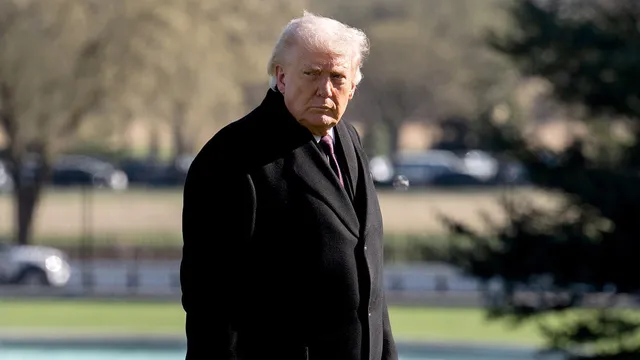
Trump threatens Iran with military action over gas field after Israeli strike
- President Donald Trump warned that the U.S. will respond powerfully if Iran attacks Qatari LNG facilities again.
- The warning arises from recent Israeli strikes that damaged Iran's South Pars gas field.
- Trump emphasized the importance of de-escalation but threatened drastic military action if the situation escalates further.
Story
On March 19, 2026, President Donald Trump issued a strong warning against Iran regarding their aggression towards Qatar’s liquefied natural gas (LNG) facilities. In a post on Truth Social, Trump stated that if Iran attacks the Qatari LNG facility again, the United States military will retaliate by targeting Iran's South Pars gas field. This warning came after an Israeli strike reportedly damaged a section of the South Pars field, which is a major energy source shared between Iran and Qatar. Trump emphasized that the U.S. had no prior knowledge of the Israeli attack and insisted that Qatar had no involvement. Trump's message was clear; he warned Israel against further attacks on the South Pars gas field unless prompted by Iranian aggression towards Qatari assets. He expressed his reluctance to engage in military actions yet underscored that he would not hesitate to act decisively should Qatar's LNG facilities be threatened again. The geopolitical tensions surrounding energy resources have escalated due to ongoing conflicts involving Iran, the U.S., and Israel, contributing to volatility in energy markets and potential military actions. Oil prices surged in response to the conflict, as the Middle East’s energy landscape faced increased instability. The ongoing war, involving key players in the region, has seen escalated military operations affecting vital energy infrastructure across the Gulf. The rapidly changing situation has prompted countries and international actors to consider military responses to protect their interests. Besides Trump's threats, Saudi Arabia has intercepted Iranian missiles aimed at their territory, showcasing the broader implications of Iranian actions. The clashes and retaliatory measures taken by various nations highlight the fragile nature of stability in the Middle East. The U.S. is currently contemplating sending additional troops to the region in preparation for any potential further escalations. With energy prices on the rise due to the threat of conflict, diplomatic efforts to de-escalate tensions remain crucial as nations work towards stability in oil and natural gas supplies. Therefore, Trump's warning against Iran serves as a pivotal point of consideration for future engagements in the region.
Context
The geopolitical stability of the Middle East in 2026 is influenced by a multitude of factors, including regional conflicts, the role of external powers, and socio-economic conditions. The ongoing tensions in various parts of the region, such as the Israeli-Palestinian conflict, the civil wars in Syria and Yemen, and the tensions between Iran and its neighbors, remain critical issues that shape the political landscape. The resurgence of militant groups and the threat of terrorism continue to pose challenges to stability, prompting countries to bolster security measures and engage in military operations. Additionally, the competition for influence among regional powers such as Saudi Arabia, Iran, and Turkey contributes to an atmosphere of rivalry that can destabilize fragile alliances and provoke conflict. In 2026, the involvement of external powers such as the United States, Russia, and China significantly affects regional stability. The withdrawal of American forces from certain areas has led to a power vacuum that Iran and non-state actors have sought to fill, heightening tensions with Gulf states, particularly Saudi Arabia and the UAE. Meanwhile, Russia has expanded its presence in the region through military and diplomatic means, attempting to forge alliances and gain leverage. China's increasing investments in infrastructure and economic projects, part of its Belt and Road Initiative, further complicate the dynamics as it seeks to establish economic ties while avoiding entanglement in regional conflicts. The interplay between these external influences often exacerbates local tensions and undermines prospects for peace. Socio-economic factors are equally critical in assessing the geopolitical stability of the Middle East. The region faces numerous challenges, including high unemployment rates, particularly among the youth, pervasive poverty, and a lack of access to adequate education and healthcare. These issues often fuel discontent and contribute to instability, as marginalized groups may resort to extremism or violence in response to oppressive conditions. Furthermore, the aftermath of the COVID-19 pandemic has severely impacted economies, leading to increased dissatisfaction with governments perceived as ineffectual in addressing the needs of their citizens. Addressing these socio-economic grievances is essential for promoting long-term stability in the region. In conclusion, the geopolitical stability of the Middle East in 2026 is a multifaceted issue influenced by ongoing conflicts, the strategic interests of external powers, and pressing socio-economic challenges. The combination of internal strife and external meddling complicates efforts to achieve lasting peace and stability. While there are initiatives and dialogues aimed at resolving certain conflicts and fostering cooperation, the path forward remains fraught with obstacles. For any hope of stability, regional countries must engage in sincere dialogue, address the root causes of discontent, and embrace inclusive governance that considers the interests of all citizens.
