

Yemen's government escalates conflict with military operation against separatists
Yemen's government escalates conflict with military operation against separatists
- Yemen's government initiated a military operation against UAE-backed separatists in Hadramout province.
- The STC reported seven airstrikes following this operation and condemned the Saudi declaration of it being peaceful.
- This escalation points to a serious rift between Saudi Arabia and the UAE, threatening further instability in Yemen.
Story
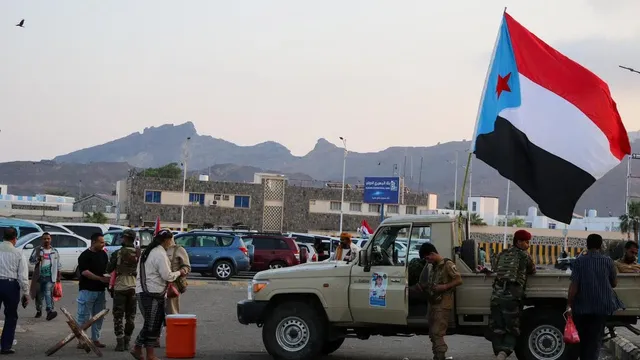
In Yemen, on January 2, 2026, the Saudi-backed government initiated a military operation to reclaim military positions from the UAE-backed Southern Transitional Council (STC) in Hadramout province. This operation was described as a 'peaceful' measure but was met with immediate backlash from the STC, who reported that seven airstrikes were carried out following the announcement. The conflict between these factions has been intensifying, fueled by a growing rift between Saudi Arabia and the United Arab Emirates, both of which support opposing sides in Yemen's fragmented political landscape. Since December 2025, tensions have escalated significantly, as the STC seized large territories in southern Yemen, prompting Saudi Arabia to respond militarily. The governor of Hadramout announced the appointment of Salem Ahmed Saeed al-Khunbashi to lead the military forces in this operation, aimed to restore security and control in the region. The STC immediately declared its forces on high alert, asserting their readiness to counter any aggression, as they viewed the Saudi announcement as misleading and aggressive. Saudi Arabia’s ambassador expressed frustration at STC leader Aidarus Al-Zubaidi for blocking landing permissions for a Saudi delegation attempting to resolve the dispute. Zubaidi's order to close air traffic further complicated the situation, highlighting the deepening division between the Saudi-backed forces and the STC. The STC, in turn, accused Saudi Arabia of imposing an air blockade, asserting that Riyadh's measures destabilized the region further. The ongoing confrontations signify not only a battle for territorial control but also reflect the shifting geopolitical dynamics in the Gulf region, where traditional alliances are fracturing over competing interests. As the two nations stand in opposition, the possibility of a sustainable resolution appears dim, potentially leading to increased violence and longer-term instability in Yemen, which remains mired in conflict.


