

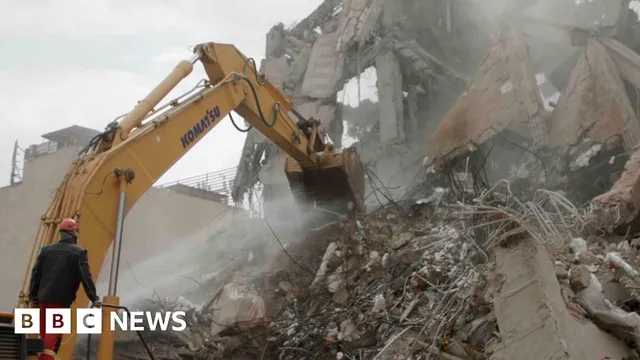
Over 3,600 bombs dropped on Tehran amid ongoing US-Israel strikes
Over 3,600 bombs dropped on Tehran amid ongoing US-Israel strikes
- The conflict between Iran and the United States and Israel escalated significantly in February 2026.
- Civilian infrastructure has been heavily impacted by strikes targeted at military installations.
- The bombing campaign raises serious humanitarian concerns as residents face devastating living conditions.
Story
Iran has been embroiled in a conflict with the United States and Israel for about a month, with hostilities escalating significantly since late February 2026. As part of the military operations, targeted strikes have been conducted across the country, specifically aiming at state-linked military installations. The consequences of these attacks have severely impacted civilians residing in close proximity to these military targets, leading to tragic loss of life and destruction of property. Reports indicate that in residential areas like Resalat in eastern Tehran, entire apartment buildings have been leveled, resulting in numerous casualties among innocent citizens, including women and children. Eyewitness accounts reveal the chaos experienced during the strikes, characterized by sudden explosions that caught many residents off guard. Notably, a family was trapped under rubble after their apartment building was targeted on March 9, with devastating effects on neighbors who witnessed the attack. Approximately 20 individuals are reported to have died in a single incident, but these figures have not been independently verified. The consistent bombing campaign led by Israel has raised critical concerns regarding military tactics and their implications on civilian safety. Military experts have suggested that the precision bombing techniques being utilized involve large ordnance from the Mark 80 series, which are capable of causing significant collateral damage. The Israeli Defense Forces have confirmed their intent to focus on military objectives, justifying their aerial campaign as necessary for national security. However, the evidence indicates that these military objectives are often located within heavily populated urban settings, exacerbating the humanitarian crisis. As the conflict continues, international observers and humanitarian agencies are calling for urgent evaluations of military strategies that compromise civilian safety. The ongoing bombings highlight the complex interplay between military operations and the lives of ordinary citizens caught in the crossfire. Residents in Tehran find themselves grappling with the realities of war, amidst uncertainty and desperation as they await either a diplomatic resolution or the continuation of hostilities.
Context
The history of US-Israel relations with Iran is marked by a series of complex interactions influenced by geopolitical interests, national security concerns, and regional stability. Following the Islamic Revolution in 1979, relations between the United States and Iran deteriorated sharply, leading to the severance of diplomatic ties. The revolution resulted in the overthrow of the US-backed Shah, which fundamentally changed the dynamics in the region. The U.S. viewed the newly established Islamic Republic as a threat not only to its interests but also to Israel's security. Consequently, the U.S. aligned more closely with Israel, reinforcing a strategic partnership aimed at countering Iranian influence in the Middle East. This partnership was further solidified through military aid, intelligence sharing, and diplomatic support that spanned several decades. As Iran pursued its nuclear program in the 1980s and 1990s, concerns over potential Iranian capabilities to develop nuclear weapons further strained relations. The United States and Israel both perceived a nuclear-armed Iran as an existential threat. This fear led to increased cooperation between the two countries in various capacities, culminating in the implementation of sanctions against Iran to hinder its nuclear ambitions. The sanctions were intended to isolate Iran economically and politically; however, they also contributed to a discussion around regional security and stability, with both nations striving to prevent Iranian influence from expanding further throughout the region. In the context of the 2015 Iran Nuclear Deal (Formally known as the Joint Comprehensive Plan of Action), tensions flared again. The agreement, which aimed to limit Iran's nuclear program in exchange for sanctions relief, was met with strong opposition from Israel. Israeli leaders, citing security concerns, argued that the deal did not adequately address Iran's regional behavior, including its support for proxies in Lebanon and Syria. The election of President Donald Trump in 2016 marked a significant shift in US policy, as he withdrew from the nuclear agreement in 2018. This move resulted in the reinstatement of harsh economic sanctions against Iran, which triggered further escalation in US-Iran tensions and bolstered Israeli security efforts in the region. In recent years, developments in US-Israel relations have been influenced by evolving geopolitical dynamics, particularly regarding normalization agreements between Israel and several Arab nations through the Abraham Accords in 2020. These agreements have shifted the regional power dynamics, emphasizing collaboration against common threats, including Iran. While the relationship between Israel and the United States remains strong, renewed talks regarding Iran's nuclear ambitions and regional strategies will continue to shape this complex relationship. The ongoing discourse around security, military collaboration, and diplomatic initiatives points to an enduring US-Israel bond, rooted in shared interests, while simultaneously navigating the intricate landscape of Iranian influence.


