

Ariane 6 rocket launches 32 Amazon satellites into orbit
Ariane 6 rocket launches 32 Amazon satellites into orbit
- The Ariane 6 rocket is launching today from Kourou, French Guiana, carrying 32 Amazon Leo satellites.
- This mission marks the first use of the Ariane 6's new four booster configuration, greatly increasing its payload capacity.
- With increasing competition in the satellite internet market, this launch is vital for both Amazon and the European space industry.
Story
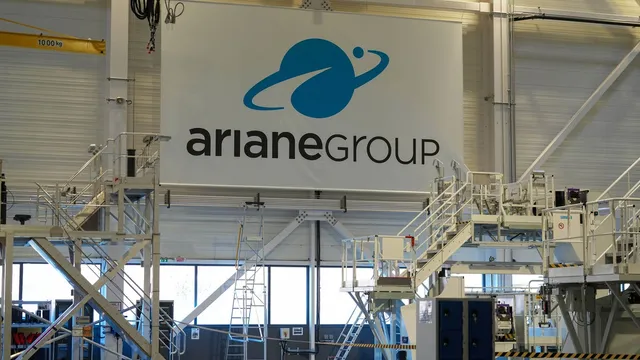
In Kourou, French Guiana, Europe’s Ariane 6 rocket is scheduled for a significant launch today, aiming to deploy 32 Amazon Leo satellites. This mission is particularly notable as it marks the rocket's first operational use of its four booster configuration, allowing it to achieve enhanced thrust and carry over 21.6 metric tons into low Earth orbit. With a history of five previous successful launches using a two-booster setup, this launch will be the sixth and represents a shift towards commercial endeavors. Previously, the Ariane 6 focused on institutional missions for the European Space Agency and allied countries. The Ariane program is backed by 13 nations and relies on around 600 subcontractors, led by ArianeGroup. The complexity and scale of this project involve managing approximately 300,000 individual pieces to assemble the rocket. The core and upper stages of the Ariane 6 are produced in France and Germany, respectively, with components shipped to French Guiana for final assembly. This logistical planning is crucial for reducing both emissions and logistics costs, showcased by the cargo ship with sails to minimize its environmental impact on the delivery of rocket components. The deployment of Amazon’s satellites is positioned as a counter-move in the mega-constellation market where SpaceX currently leads with its Starlink satellites. With a vision of establishing a network to offer global broadband access, Amazon aims to launch over 3,200 satellites. This launch underscores the growing competition in the satellite internet market, driven partly by major tech companies wanting to provide fast internet services worldwide. Lastly, as this mission unfolds, it is designed to last approximately one hour and fifty-four minutes, from liftoff to the point when all satellites are separated into their intended orbits. The development of the Ariane 6 and its successful commercial launch could have lasting implications not only for European space capabilities but also for the broader landscape of satellite communications and internet services globally.
Context
The Ariane rocket family is a series of launch vehicles developed and operated by Arianespace, primarily for the purpose of deploying satellites into orbit. The history of Ariane rocket launches began with the inaugural flight of the Ariane 1 on December 20, 1979, from the Guiana Space Centre in French Guiana. This was a significant milestone, marking Europe's entry into the commercial satellite launch market. Over the years, Ariane has evolved through several iterations, with each new version enhancing payload capacity, reliability, and performance, reflecting the advancements in space technology and the increasing demands for satellite launches around the globe. Subsequent developments saw the introduction of the Ariane 2 and Ariane 3, which were both launched in the 1980s. These models further refined the design of the rocket while increasing its payload capacity. The Ariane 4, introduced in 1988, became one of the most successful models with 116 launches over a 1992-2003 operational period, effectively establishing Arianespace as a leading player in the global satellite launch market. Ariane 4's versatility allowed it to carry multiple payloads including satellites for telecommunications, Earth observation, and scientific missions. The consistency and reliability of the Ariane program were further underscored by its successful launch record, which built strong confidence among commercial and governmental clients alike. The evolution of the Ariane rocket family continued with the Ariane 5, which was first launched on June 4, 1996. Despite setbacks in its initial years, the Ariane 5 eventually became a workhorse of the European space program by significantly increasing the payload capacity to low Earth orbit and geostationary transfer orbit. With improvements in its launch capabilities, the Ariane 5 has been instrumental in deploying a wide range of satellites, including those for scientific missions as well as telecommunications, including the Galileo navigation system. The successful development of the Ariane 5 has solidified Arianespace’s reputation, resulting in notable contracts from international customers and maintaining a significant market share in the global launch vehicle sector. Currently, planning and development efforts are underway for the Ariane 6, slated to replace the Ariane 5, with its maiden flight anticipated in the near future. This next-generation vehicle aims to offer increased versatility and cost-effectiveness to meet the contemporary challenges of the commercial satellite launch market. Ariane 6 is expected to improve operational flexibility, allowing Arianespace to cater to a broader customer base, including smaller satellite operators and burgeoning commercial opportunities in space. Through the continual evolution of the Ariane program, Arianespace has showcased its commitment to innovation while supporting global initiatives in satellite technology and exploration.


