

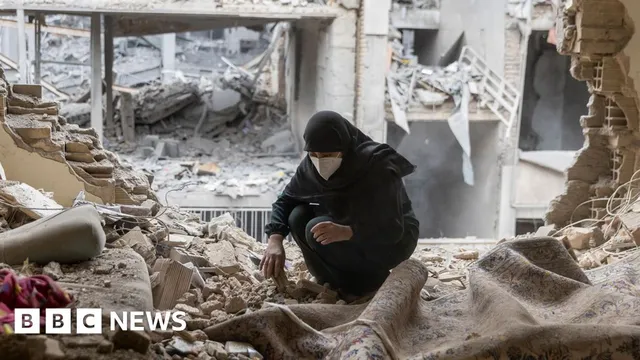
Iranian state media distorts truth in war reporting
Iranian state media distorts truth in war reporting
- Iranian state media has significantly distorted facts during wartime by promoting false casualty figures.
- The use of AI-generated content by state outlets has raised concerns about misinformation.
- These trends indicate a worrying challenge for the public's ability to discern truth from propaganda.
Story
In the context of the ongoing war that has resulted in over 1,200 casualties in Iran, the country's state media has taken up the mantle of controlling the narrative for its domestic audience. Reports from Iranian outlets have included exaggerated claims, such as an assertion that 650 US military personnel were killed in just the first two days of conflict. Independent sources, however, indicate that factual accuracy is often compromised. Images and videos released as part of this agenda have included digitally enhanced content, raising questions about authenticity and manipulation. This blending of truth with fiction complicates public understanding of the realities on the ground, especially in an environment where alternative news sources are largely banned within the country. Social media plays a critical role in disseminating official narratives, often requiring citizens to utilize VPNs to access platforms like Instagram and Telegram, which have become essential for communication, especially during internet blackouts. The Iranian media's strategic utilization of AI-generated imagery highlights a new front in the war of information. While some images reflect real events, such as mass funerals, they are often used alongside misleading content to paint a more favorable depiction of the regime's military operations. This mixture of genuine and manipulated content has bred skepticism not only among critics of the government but also among the general populace, who are increasingly urged to remain vigilant and question the information they receive. Consequently, the craft of fact-checking and critical assessment of media reports has grown in importance as citizens navigate this complex landscape of information warfare.
Context
War propaganda plays a significant role in shaping public perception during times of conflict, influencing attitudes and beliefs toward both the enemy and domestic policies. Historically, propaganda has been utilized by states to justify military actions, mobilize civilian support, and suppress dissent. The mechanisms of propaganda, including media manipulation, strategic messaging, and the use of symbolism, are designed to produce a favorable narrative that galvanizes public support for the war effort and demonizes adversaries. By controlling the flow of information, governments can effectively shape public perceptions, often painting their own actions in a positive light while presenting the opposing side as a threat or as morally inferior. This manipulation of information is crucial, as it creates an environment in which citizens are more likely to rally around their leaders and the national agenda, even when faced with complex moral dilemmas regarding conflict engagement. The impact of war propaganda extends beyond mere support for military operations; it also affects public attitudes toward international relations and foreign policy. The portrayal of the enemy can lead to lasting stereotypes and biases, fostering a culture of fear and hostility that persists long after the cessation of hostilities. For example, the propagation of dehumanizing narratives about an adversary can solidify negative perceptions and justify ongoing military or diplomatic aggression in the future. Furthermore, propaganda can encourage a sense of national unity and identity, where citizens feel a duty to contribute to the war effort, whether through enlistment, increased productivity, or financial support to their government. This collective sentiment can have an enduring impact on societal values and norms surrounding military engagement and nationalism. Moreover, the advent of social media and modern communication technologies has transformed the landscape of war propaganda. In contemporary conflicts, propaganda is no longer solely the purview of state actors; non-state actors, including insurgent groups and organizations, utilize social media platforms to disseminate their narratives, recruit followers, and spread disinformation. The rapid spread of information, combined with the ability to reach a global audience, has led to both opportunities and challenges in understanding and responding to war propaganda. The challenge lies in distinguishing credible information from manipulation, as misinformation can exacerbate tensions and complicate diplomatic efforts. As a result, the influence of propaganda in the digital age requires a more nuanced analysis and a comprehensive approach to counteract its potential harms while preserving the integrity of public discourse. In conclusion, the impact of war propaganda on public perception is profound and multifaceted, influencing how societies respond to conflict and shaping long-term attitudes toward warfare and peace. By examining historical and contemporary examples, it becomes evident that understanding the mechanics and effects of propaganda is critical in navigating the complexities of war. This awareness is essential not only for policymakers and military leaders but also for citizens who seek to engage critically with information in an increasingly interconnected and media-saturated environment. The ongoing evolution of propaganda tactics necessitates continuous research and analysis to develop effective strategies for countering misinformation and fostering informed public dialogue.


