

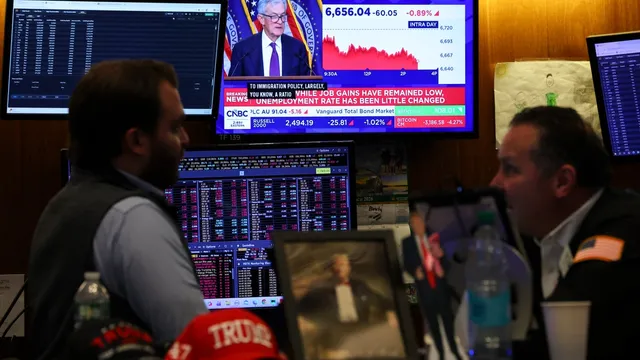
Almost half of Americans fear total economic collapse in next decade
Almost half of Americans fear total economic collapse in next decade
- A YouGov poll revealed that over 40% of Americans fear a total economic collapse in the next decade.
- The survey highlighted a stark divide in economic fears between Democrats and Republicans.
- The findings illustrate a significant level of financial anxiety amid ongoing international conflicts affecting the economy.
Story
In a recent poll conducted by YouGov from February 24 to March 1, 2026, findings revealed that a significant portion of the American population harbors fears regarding the economy. The poll indicated that over four in ten respondents, specifically 42%, believe that the United States is on the brink of a complete economic meltdown within the next ten years. This apprehension is more pronounced among Democratic voters, with 53% expressing concerns about an economic breakdown, compared to only 28% of Republicans. The survey also highlighted that a concerning percentage of individuals, 43%, think the U.S. is currently experiencing a recession, a view shared by 58% of Democrats but just 21% of Republican participants. These sentiments echo a general financial anxiety that pervades various demographic groups across the nation. The broader context of economic uncertainty stems from multiple factors, including the impact of ongoing international conflicts. Recent tensions, particularly the war in Iran, have exacerbated fears of a global economic downturn. The conflict has disrupted cargo traffic through the Strait of Hormuz, a critical shipping route that significantly affects oil prices. Observers note that rising oil prices, often exceeding $100 per barrel, could lead to higher costs for consumers and businesses, impacting grocery prices, shipping, and travel. As a result, experts caution that these elevated fuel costs may filter down into the domestic economy, straining household budgets and exacerbating financial hardships for many. Despite these concerns, some indicators suggest that the U.S. economy is still progressing, albeit at a slower pace. The Commerce Department reported a modest annual economic growth rate of only 0.7% for the previous quarter, a stark decline from more robust growth rates earlier in the year. This dismal growth figure, which was significantly downgraded from earlier projections, reflects the realities of a contracting labor market, as evidenced by the Labor Department's report of a 92,000-job loss in the previous month, coupled with an increase in the unemployment rate to 4.4%. Inflation rates have been relatively stable, with a 2.4% increase in consumer prices from the previous year, indicating that while prices are rising, they do so in a controlled manner. With these conflicting signals, the Federal Reserve has opted to maintain steady interest rates amidst the uncertainty resulting from international events, including the conflict in Iran. Chair Jerome Powell emphasized the unpredictable nature of how these external factors will influence the labor market and broader economy moving forward. "The thing I really want to emphasize is that nobody knows," he stated, highlighting the layered complexities of the current economic landscape and underlying unpredictability faced by both analysts and policymakers alike.


