

Trump aims to stop renewed hostilities between Thailand and Cambodia
Trump aims to stop renewed hostilities between Thailand and Cambodia
- Fighting between Thailand and Cambodia escalated on December 8, 2025, resulting in military clashes and civilian casualties.
- Donald Trump indicated his intention to intervene once again to help mediate the conflict after a previously brokered ceasefire collapsed.
- Thai authorities have rejected international mediation efforts, asserting military action will be taken to defend national sovereignty.
Story
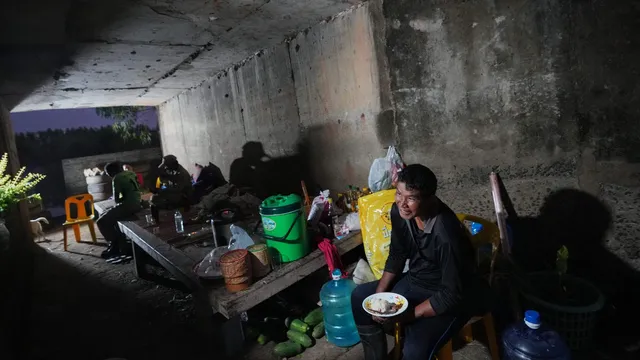
On December 8, 2025, renewed clashes erupted between Thailand and Cambodia, causing deaths and displacements amid a long-standing territorial dispute. Both nations have blamed each other for the violence that has escalated and included airstrikes and artillery exchanges along their border. The hostilities trace back to a century-old disagreement, intensified by maps from the colonial era and a controversial 1962 ruling by the International Court of Justice awarding disputed land to Cambodia. In the wake of this violence, President Donald Trump announced on December 9, 2025, that he intended to mediate the conflict once more, recalling a ceasefire he helped establish earlier in July 2025. Despite Trump’s previous mediation attempts, the Thai officials are firmly against involving external parties, including Trump, and have emphasized their military readiness to protect sovereignty against perceived threats from Cambodia. The breakdown of the ceasefire has led to serious military engagements, with Thailand conducting airstrikes on what it described as military threats from Cambodia. The situation worsens as countless civilians have fled their homes, with reported casualties including at least three Thai soldiers and seven Cambodian civilians. Thailand has reported massive displacement of villagers due to the conflict, complicating the humanitarian situation in the region. Both countries, while publicly committing to peace, appear deadlocked with increasing hostility and military actions. Key officials from Cambodia have accused Thailand of violating international agreements and disregarding diplomatic avenues for resolving the dispute. Meanwhile, the Thai Prime Minister has taken a staunch position against negotiations, insisting on military action should the provocation continue. As Trump prepares to reach out to both nations, the future of peace is uncertain, with calls from various quarters, including U.S. Secretary of State Marco Rubio, urging an immediate halt to the fighting and a return to de-escalatory talks.
Context
The territorial dispute between Thailand and Cambodia is a long-standing issue that has its roots in historical, geographical, and political facets. The core of the dispute primarily centers around a land area surrounding the ancient Preah Vihear Temple, which is situated on a 1,722-foot cliff in the Dาด mountain range, bordering the two nations. This temple, built during the Khmer Empire and dedicated to the Hindu deity Shiva, has been a point of contention since the early 20th century when colonial maps and treaties began to demarcate borders. The situation intensified after World War II, leading to a series of conflicts over the accuracy and legitimacy of historical treaties and the interpretation of geographical boundaries. The most significant turning point occurred in 1962 when the International Court of Justice (ICJ) ruled that the temple was located in Cambodia, igniting further nationalist sentiments in Thailand and leading to its claim over the surrounding area. As the years progressed, tensions continued to resonate between the two nations. Various incidents, including military confrontations in the 2000s, compelled both sides to reconsider diplomacy as a means of resolution. The contention over the Preah Vihear Temple area came to a head again in 2008 when Cambodia sought to list the temple as a UNESCO World Heritage site, provoking Thailand to ramp up its claims and military presence in the region. This move highlighted the fraught national identities and perceptions of sovereignty, exacerbating hostilities and leading to armed skirmishes in 2011, which resulted in numerous casualties and significant damage to the historical site. Efforts to resolve the dispute have been complicated by national pride, local politics, and regional dynamics in Southeast Asia. While both nations have engaged in diplomatic discussions and regional forums such as ASEAN, sustainable dialogue has often stalled due to reticence to compromise and perceived threats to national sovereignty. In addition, the domestic political climate in both Thailand and Cambodia plays a crucial role, as nationalist politics often sway public sentiment in favor of more hardline positions. Moreover, the implications of this territorial dispute extend beyond just land ownership; they encompass issues of historical narrative, cultural identity, and the ability to collaborate on shared resources and development in the border areas, including tourism aspects related to the ancient temple. In recent years, there have been attempts at reaffirming peace and cooperation. Tracking progress is essential, as both countries face common challenges that transcend territorial disputes, such as economic development, environmental issues, and regional stability in the face of global uncertainties. Ultimately, while the history of the Thailand-Cambodia territorial dispute is marked by conflict and disagreement, it also presents a potential pathway for collaborative resolution, whereby fostering mutual understanding and respect for heritage may lead to a more constructive dialogue. Continued engagement at various diplomatic levels will be vital in navigating the complexities inherent in modern territorial disputes and in building a foundation for future bilateral relations.


