

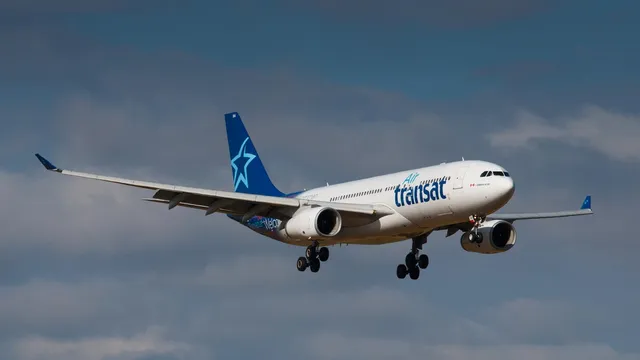
Air Transat cancels all US flights for summer 2026
Air Transat cancels all US flights for summer 2026
- Air Transat will cancel all flights from Canada to the US effective this summer.
- This decision is part of a capacity management strategy given the low passenger capacity on US routes.
- Airlines like WestJet are also adjusting their US flight offerings due to declining travel demand.
Story
In early 2026, Air Transat, a Canadian airline, announced significant operational changes affecting its flight services to the United States. As part of a strategic adjustment to its capacity, the airline decided to cancel all flights between Canada and the US, particularly its routes to Florida, which include Fort Lauderdale and Orlando. These cancellations will gradually take effect in the spring of 2026 and will result in the elimination of Air Transat's US routes, which account for only one percent of the airline's passenger capacity for the summer season. Air Transat's spokesperson clarified that the decision arose from the airline's initiative to focus on markets where it is best positioned, aiming to optimize resource deployment. With only two US destinations among its 67 global routes, the airline's reductions reflect a broader trend within the aviation industry. WestJet, Canada's second-largest airline, is similarly scaling back its US routes for the summer of 2026, citing a notable decline in transborder travel demand observed in 2025. The general downturn in demand has prompted Canadian airlines to reevaluate their service offerings to the US market. Additionally, operational challenges may be exacerbated by external factors, including the potential partial shutdown of the US federal government. Such a government closure could lead to significant disruptions at airports due to delays in services provided by various agencies, including the Department of Homeland Security and Customs and Border Protection. Travel trade associations have warned that these complications may contribute to higher wait times and increased instances of missed or delayed flights. Taken together, Air Transat's cancellation of US flights, alongside similar moves by other Canadian airlines, points to a broader reevaluation of air travel needs and capabilities. As Canadian airlines navigate changing demand, they must also consider potential impacts from government policy and external regulatory conditions, which complicate the travel landscape for consumers. The focus now shifts to how airlines will adapt to these evolving circumstances and what future strategies they will employ to remain competitive in a challenging market environment.
Context
The effect of a US government shutdown on travel has historically presented various challenges for both domestic and international travelers. A government shutdown occurs when Congress fails to appropriate funding for government operations, leading to the cessation of non-essential functions. During such periods, agencies responsible for travel services, such as the Department of Homeland Security and the federal transportation sector, often face significant operational interruptions. Travelers may experience delays at airports due to a reduction in staff, as the Transportation Security Administration (TSA) may operate with fewer personnel. This can result in longer security line waits, canceled flights, and complicated travel plans, impacting those trying to reach their destinations in a timely manner. Moreover, national parks, which attract millions of visitors annually, often close or reduce services during a shutdown, limiting travel opportunities for those aiming to experience America’s natural beauty. Additionally, travel-related services offered by the federal government, such as issuing passports and visas, may be significantly affected. During a government shutdown, passport processing can come to a standstill, delaying travel plans for international travelers. This poses a problem not only for tourists but also for business travelers who may have urgent travel needs due to international commitments. As government resources are strained, travelers may need to reschedule or confront uncertain circumstances regarding entry into the United States, leading to considerable anxiety and financial implications. The broader economic repercussions of a government shutdown also extend to the travel industry, which is a significant contributor to the US economy. With decreased traveler confidence, especially in peak travel seasons, disruptions can lead to substantial revenue losses for airlines, hotels, and local businesses that rely on tourist spending. The cyclical nature of travel trends means that once consumer confidence is shaken, recovery can take time. This creates a compounding effect on the travel sector's overall stability, as uncertainty drives travelers to cancel or postpone outings regardless of circumstances improving post-shutdown. In conclusion, the ramifications of a government shutdown are multidimensional and can negatively impact travelers on multiple fronts. From operational inefficiencies and delays at airports to service interruptions for essential travel documentation, the travel experience can be significantly impaired. Furthermore, the long-lasting effects on the travel economy highlight the importance of government stability and efficient management in supporting not just travel, but also the broader economic framework connected to it. Understanding these nuances is critical for all stakeholders, from government agencies to travelers themselves, as navigating the complex landscape of travel during such disruptions requires adaptability and awareness.


