U.S. strikes escalate tensions over disputed islands in the Strait of Hormuz
politics
impactful
controversial

U.S. strikes escalate tensions over disputed islands in the Strait of Hormuz

40
(Update: )
country primarily in North America
country in Western Asia
strait between the Gulf of Oman and the Persian Gulf
  • The U.S. military has launched strikes on Abu Musa and Greater Tunb islands, escalating tensions in the region.
  • These islands are strategically important and have been a point of dispute between Iran and the United Arab Emirates since 1971.
  • The ongoing conflict may lead to significant geopolitical consequences as the U.S. campaign against Iran intensifies.
Share opinion
4

Story

In recent days, the U.S. military has intensified its operations against Iran by launching strikes on two strategically significant islands, Abu Musa and Greater Tunb, located at the confluence of the Persian Gulf and the Strait of Hormuz. These islands have long been a point of contention, with their ownership disputed between Iran and the United Arab Emirates. The U.S. military's actions come amid an expanding campaign against Iran, which has raised concerns about the potential for further escalation in the region. The largest of the islands, Abu Musa, is primarily used by Iran's paramilitary Revolutionary Guard as a base for military operations, including the deployment of fast boats and missiles. These assets have been utilized to harass shipping in the Strait of Hormuz, a critical maritime route for global oil transportation. The historical context of the islands dates back to November 30, 1971, when Iran, under the rule of Shah Mohammad Reza Pahlavi, seized control of them just before the formation of the United Arab Emirates. At that time, the U.S. provided little resistance to Iran's actions, viewing the Shah as a key ally in the region. Following the 1979 Islamic Revolution, Iran has continued to use these islands as strategic military bases, particularly during the Tanker War of the 1980s, when U.S. Navy vessels escorted oil tankers through the region under threat from Iranian forces. U.S. estimates indicate that Iran attacked over 160 ships during this period, leading to heightened tensions and military confrontations. The recent U.S. strikes on the islands have reignited discussions about their ownership and strategic importance, with some analysts suggesting that American forces might consider a more permanent military presence in the area. The United Arab Emirates has actively sought to resolve the dispute over the islands through international channels, lobbying both China and Russia to support negotiations or court decisions regarding their ownership. This diplomatic effort has angered Tehran, which views any external intervention as a direct challenge to its sovereignty. As the conflict continues to escalate, the fate of these islands remains uncertain, with the potential for significant geopolitical ramifications in the region. The U.S. military's actions may force the issue to a head, nearly 55 years after the Shah warned that the Strait of Hormuz could become a "nuisance" for the world, highlighting the ongoing volatility and strategic significance of this critical maritime chokepoint.

Context

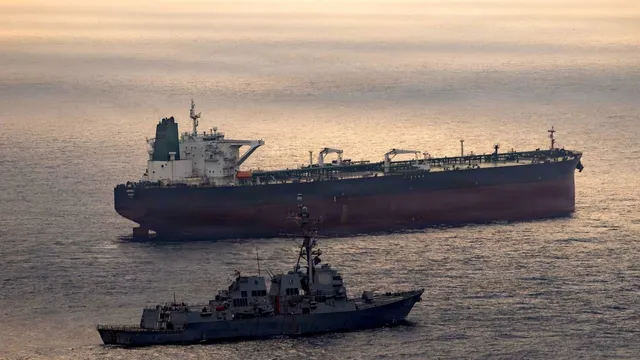
The U.S. military presence in the Strait of Hormuz is a critical aspect of global security and economic stability, given that this narrow waterway is a vital conduit for a significant portion of the world's oil supply. Approximately 20% of the global oil trade passes through the Strait, making it a strategic chokepoint. The U.S. has maintained a military presence in the region to ensure the free flow of commerce and to deter potential threats from regional adversaries, particularly Iran, which has historically sought to exert influence over the Strait and disrupt maritime traffic. The U.S. Navy's Fifth Fleet, based in Bahrain, plays a pivotal role in patrolling these waters and conducting operations to safeguard shipping lanes against piracy and hostile actions. This military posture is not only about protecting oil shipments but also about maintaining regional stability and supporting allied nations in the Gulf Cooperation Council (GCC). The U.S. military's operations in the Strait of Hormuz have evolved over the years, particularly in response to changing geopolitical dynamics and threats. In recent years, tensions with Iran have escalated, leading to increased military deployments and exercises aimed at demonstrating U.S. resolve. The presence of U.S. naval forces serves as a deterrent against Iranian aggression, which has included threats to close the Strait and attacks on commercial vessels. The U.S. has also engaged in joint exercises with allied nations to enhance interoperability and readiness in the face of potential conflicts. These efforts underscore the importance of collective security arrangements in the region, as the U.S. works alongside partners to ensure maritime security and uphold international law. In addition to military operations, the U.S. presence in the Strait of Hormuz is supported by diplomatic efforts aimed at de-escalating tensions and fostering dialogue among regional stakeholders. The U.S. has sought to build coalitions with other nations to address security challenges in the Strait, emphasizing the need for a coordinated approach to maritime security. This includes initiatives to enhance surveillance and intelligence-sharing among allies, as well as efforts to counteract threats posed by non-state actors and asymmetric warfare tactics employed by adversaries. The U.S. military's role in the Strait is thus not only about deterrence but also about fostering a collaborative security environment that benefits all nations reliant on this critical waterway. Looking ahead, the U.S. military presence in the Strait of Hormuz will likely continue to adapt to the evolving security landscape. As geopolitical tensions fluctuate and new challenges emerge, the U.S. will need to remain vigilant and responsive to protect its interests and those of its allies. The importance of the Strait as a global trade route ensures that the U.S. military's role will remain significant in the years to come. Continued investment in naval capabilities, partnerships with regional allies, and a commitment to maintaining freedom of navigation will be essential components of U.S. strategy in the Strait of Hormuz, ensuring that this vital artery of international commerce remains open and secure.