

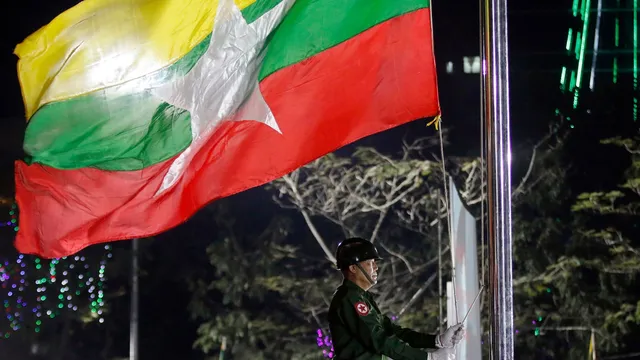
Myanmar's military-backed party secures landslide election victory amid turmoil
Myanmar's military-backed party secures landslide election victory amid turmoil
- The military government in Myanmar conducted a general election in January 2026 amid ongoing civil conflict and repression of political rivals.
- The Union Solidarity and Development Party obtained a significant majority in the election and claims public support despite international criticism.
- This election outcome reinforces military authority, raising concerns over Myanmar's democratic future and relationship with global economies.
Story
Myanmar has experienced significant political turmoil following a coup in February 2021, which ended the elected government of Nobel Peace Prize laureate Aung San Suu Kyi. Amid ongoing civil war and violence, the military government conducted a highly contested general election in January 2026. This election was marked by various allegations of voting irregularities and repression of major political players, notably the National League for Democracy, which was dissolved prior to the vote. The Union Solidarity and Development Party (USDP), seen as a proxy for the military, claimed victory in all areas of the election. Turnout for the polls was reported around 55%, lower than previous elections due to ongoing conflict in numerous regions. In the backdrop of this victory, the government claims the elections were legitimate and supported by the populace, despite widespread opposition and condemnation from several international bodies. Critics argue that these elections serve to solidify military rule rather than foster democratic change, and point to the continued presence of Myanmar's military in governance structures, which retains a guaranteed share of parliamentary seats. Additionally, Mr. Wirathu, a monk associated with hardline nationalist movements, has expressed support for the junta, signaling an alignment of religious figures with military interests within the country. His previous rise to prominence during anti-Muslim unrest in the 2010s has left a lasting impact, fueling tensions against the Rohingya community in Myanmar and contributing to ongoing allegations of genocide that are being investigated internationally. Moving forward, the junta's reliance on such figures could hinder Myanmar's ability to attract foreign investment and integrate into the global economy.


