

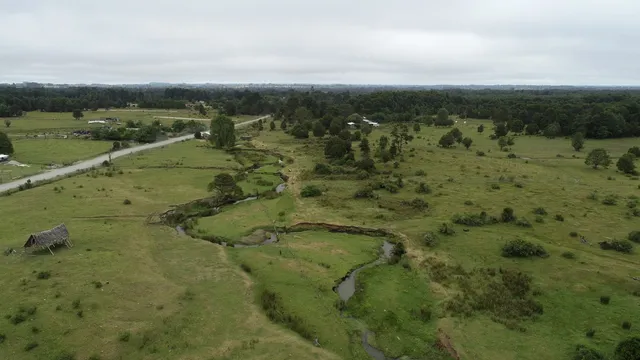
New study disputes date of key archaeological site in Chile
New study disputes date of key archaeological site in Chile
- A recent study argues Monte Verde's artifacts date back to no earlier than 8,200 years ago.
- Debates arise over the accuracy of previous findings regarding early human activity in the Americas.
- The understanding of early migration routes and timelines may change based on new evidence.
Story
Chile is home to the Monte Verde archaeological site, which has long been associated with the earliest evidence of human presence in the Americas, estimated to date back approximately 14,500 years. Traditionally regarded as a pivotal location, it has produced significant findings, including tools and remnants indicative of early human activity. Recent research published in the journal Science has introduced a controversial new date for the site, suggesting that its significance may have been overstated, as the evidence dates back to no earlier than 8,200 years before the present. This finding has prompted a reevaluation of previous assumptions about early human migrations into the Americas. Researchers like Todd Surovell from the University of Wyoming argue that the dates assigned to notable artifacts at Monte Verde could be inaccurate, which has reignited debates surrounding the routes taken by early humans into the continent. The previous consensus posited that modern humans arrived in the Americas via a land bridge known as Beringia or through coastal routes. However, the implications of this new study could shift theories regarding migration timelines and methods, especially concerning Clovis culture, which was previously thought to be the earliest known group in North America. Surovell and his team contest the reliability of the dating of artifacts found at the site, claiming that samples analyzed do not reflect comparable geological contexts, thus questioning earlier findings. Their analysis included not only the Monte Verde site itself but also surrounding areas. Some experts involved in the original excavations dispute the integrity of this new research, expressing doubt about the new conclusions and the manner in which samples were evaluated. As researchers continue to analyze human migration patterns based on current studies, it remains uncertain how this newly proposed dating will transform the understanding of early human settlement in the Americas. The scientific community emphasizes that ongoing research is crucial for refining historical perspectives on human origins in the continent. Surovell notes that science is inherently self-corrective, lending hope that further investigations will provide clarity on this significant question in archaeology.
Context
The history of the bow and arrow in North America is a tale intertwined with the survival, culture, and technological advancements of Indigenous peoples. The origins of the bow and arrow in North America can be traced back to around 2000 BC, when the first evidence of these tools appeared among some of the earliest peoples on the continent. Hunter-gatherer societies utilized the bow and arrow for hunting and protection, crafting their tools from locally available materials such as wood, bone, and sinew. The development of these tools marked a significant turning point, allowing for greater distance in hunting which, in turn, contributed to more efficient food acquisition and the ability to target larger game. Over time, different tribes adapted their bows and arrows to suit their particular environments and hunting practices, leading to a diversity of designs across the continent. As Indigenous peoples migrated and settled in various regions, the bow and arrow underwent various modifications. The Great Plains tribes, for instance, developed long, powerful bows suitable for hunting bison and other large game found in the vast open lands. In contrast, coastal tribes might favor shorter and more maneuverable bows ideal for hunting smaller, swift animals and fishing. The arrows also varied considerably, with different fletching and tips tailored to maximize effectiveness in their specific hunting practices. The craftsmanship involved in creating these tools reflected not only a practical necessity but also cultural significance, with many tribes incorporating their unique artistic styles into the design of their weapons. Furthermore, the introduction of European settlers in the 15th century had a profound impact on Indigenous archery practices. With the arrival of Europeans, Indigenous peoples were introduced to new materials such as metal for arrowheads and new types of wood for bow construction. This interaction led to a fusion of traditional crafting techniques and new innovations, where Indigenous peoples began to integrate European tools into their hunting practices. The bow and arrow remained a critical part of survival but were now enhanced by the incorporation of metal tips and other durable materials. However, the introduction of firearms gradually shifted hunting practices and altered the landscape of warfare among tribes. The bow and arrow, while still used, began to play a lesser role in the lives of many Indigenous groups as these new technologies reshaped traditional methods. Despite the transformative effects of colonization and the introduction of modern weaponry, the bow and arrow have remained significant symbols of cultural heritage and identity for many Indigenous peoples in North America. Today, there is a resurgence of interest in traditional archery, with efforts to revive ancient techniques and preserve the cultural practices associated with the bow and arrow. Organizations and tribal communities are increasingly recognizing the importance of these practices in maintaining cultural identity and educating younger generations about their ancestral practices. The bow and arrow, thus, not only represent a historical tool of survival but also embody a rich cultural legacy that continues to evolve and inspire.


