

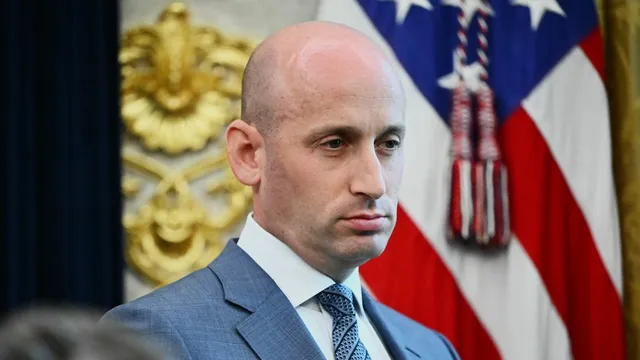
Stephen Miller drives Trump's immigration and cultural agenda in power
Stephen Miller drives Trump's immigration and cultural agenda in power
- Stephen Miller serves as a crucial aide in Donald Trump's administration, focusing on immigration and cultural issues.
- He operates with an aggressive approach, ensuring enforcement of Trump's policies and maintenance of public spaces.
- Miller's significant influence and varied responsibilities make him a key figure within the administration, aimed at achieving the president's agenda.
Story
In the United States under the Donald Trump administration, Stephen Miller has emerged as one of Trump's most influential aides, known primarily for his involvement in shaping the immigration agenda. Miller’s varied responsibilities extend beyond immigration policy; he has actively engaged in initiatives aimed at addressing what Trump perceives as 'woke' culture within higher education institutions and local governance in Washington, D.C. On any given day, Miller may facilitate meetings with various officials focused on enhancing the capital’s appearance or tackle pressing national security concerns. Miller's aggressive approach has characterized his role within the administration, where he has become synonymous with Trump's desire for a visually appealing and functional Washington, D.C. This includes overseeing the maintenance of public spaces while also maintaining pressure on agencies like Immigration and Customs Enforcement to enforce immigration laws robustly. Those who have worked closely with Miller describe him as relentless in pursuit of Trump's agenda, reflecting a deep understanding of the 'MAGA DNA' that drives the former president's policies. As a key figure since the early days of Trump’s political career, Miller has established himself as a central player in crafting executive orders from the onset of Trump's presidency. His daily meetings with senior officials address varied topics, including security measures and foreign policy concerns, allowing him significant leeway to influence administrative strategy across various facets of government. This breadth of responsibility explains his lasting presence within a White House where many other original staff members have been replaced or marginalized over time. Despite his formidable influence, Miller's aggressive tactics sometimes lead to internal friction within the administration. He frequently pushes for rapid policy changes, which can create challenges for other officials who prefer a more measured approach. Notably, his relationship with White House Chief of Staff Susie Wiles acts as a check on his ambitions, ensuring that decisions are made with thorough consideration of all factors involved. Miller's dedication to Trump and his initiatives promises that even as the administration evolves, he will remain a pivotal figure until the very end of Trump's term.
Context
The Trump administration's immigration policy and executive orders marked a significant shift in U.S. immigration practices, emphasizing strict enforcement and a departure from previous approaches. Central to these changes was the implementation of the 'zero tolerance' policy, which resulted in the separation of families at the U.S.-Mexico border. This controversial policy drew widespread criticism and legal challenges, as it aimed to deter illegal crossings by prosecuting all adults arriving with children, leading to a surge in the number of unaccompanied minors in detention facilities. The administration framed its immigration policy as essential for national security, arguing that it would safeguard American citizens and uphold the rule of law. Moreover, the tightening of asylum regulations and the explicit push for a border wall were key components of Trump's strategy to reshape immigration enforcement. One of the most notable executive orders was the travel ban issued in January 2017, which initially targeted seven predominantly Muslim countries. This executive action sparked immediate protests and legal battles, highlighting the contentious nature of the administration's approach to immigration. Despite ongoing litigation, the travel ban was eventually upheld by the U.S. Supreme Court in a more refined format, reflecting the administration's persistent efforts to reduce immigration from specific regions. Additionally, Trump focused on ending the Deferred Action for Childhood Arrivals (DACA) program, which provided temporary relief from deportation for undocumented immigrants who arrived as children, further polarizing public opinion on the issue of migration and citizenship in the United States. In attempts to modify the legal immigration framework, Trump's administration sought to prioritize merit-based immigration over family reunification policies. The introduction of the 'merit-based' immigration proposal aimed at reducing the number of family-sponsored visas and reorienting the immigration system toward skilled workers. This proposal faced substantial criticism from immigrant advocacy groups who argued that it would disadvantage lower-income individuals and exacerbate inequality in the immigration system. The Trump administration also introduced various measures to curb the influx of asylum seekers at the southern border, including the 'Migrant Protection Protocols' (MPP), which forced applicants to wait in Mexico while their asylum claims were processed. These measures were supported by a narrative emphasizing the need for stronger borders and a reduction in migration levels, which resonated with a segment of the American electorate. The impact of these policies has been profound, creating a humanitarian and legal quagmire at the U.S.-Mexico border and altering the lives of countless migrants and their families. While the Trump administration's tenure ended in January 2021, the legacy of its immigration policies continues to generate debate, informing current discussions around immigration reform and the future of U.S. immigration policy.


