

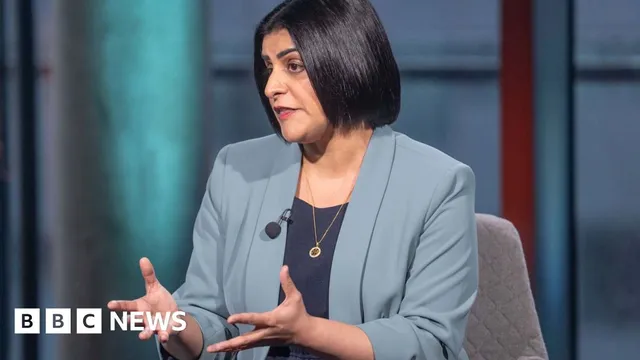
Shabana Mahmood plans sweeping changes to UK immigration rules
Shabana Mahmood plans sweeping changes to UK immigration rules
- Shabana Mahmood is set to unveil sweeping reforms aimed at tightening UK immigration controls.
- The proposed measures include requiring asylum seekers to wait 20 years for permanent residency and revising interpretations of family rights under the ECHR.
- The proposed immigration changes have faced criticism and reflect ongoing internal conflicts within the Labour Party.
Story
In the UK, significant developments in immigration policy are unfolding as Shabana Mahmood, the Home Secretary, prepares to introduce the largest overhaul of the immigration system in modern times. This announcement, anticipated in the House of Commons, aims to tighten regulations governing asylum seekers and illegal migrants. Mahmood's proposals include a radical shift that will require asylum seekers who arrive in the country through unauthorized means, such as small boats, to wait 20 years before being eligible for permanent residency. This initiative seeks to draw inspiration from Denmark's system, believed to be more stringent in managing migration issues. The planned reforms aim to reinterpret the European Convention on Human Rights (ECHR) concerning family rights, specifically Article 8, which affords the right to a family life. Under the new interpretation, only individuals with immediate family members already in the UK will be granted grounds for remaining in the country based on this article. Mahmood emphasized that these measures are necessary to prevent what she perceives as the abuse of the system by migrants attempting to manipulate their asylum claims. The proposals are met with mixed responses, as critics argue they could push vulnerable individuals underground, heightening their risk of exploitation. The context of Mahmood’s impending announcement is underscored by internal turmoil within the Labour Party, where speculation regarding a leadership challenge to Sir Keir Starmer has surged. As Labour leadership rumors swirl, Mahmood has described the situation as “deeply mortifying
Context
As of November 2025, the UK's immigration policies have undergone significant transformations, reflecting the broader objectives of post-Brexit Britain. The shift in these policies has been primarily influenced by the desire to control immigration levels while attracting skilled labor to support the economy. The new regulations focus on a points-based immigration system that prioritizes skill, experience, and English language proficiency. This approach aims to reduce reliance on low-skilled labor from the EU and streamline the visa process for individuals outside the bloc, enhancing the UK’s capacity to attract talent from a global pool. Digital innovation plays a key role, with applications and processing largely moving online, thus increasing efficiency and accessibility for potential immigrants. The current framework seeks to balance economic needs with public sentiment. Economic sectors such as healthcare, technology, and engineering have been identified as critical areas requiring skilled professionals. Consequently, specific routes have been established to facilitate entry for workers in these sectors, ensuring that businesses can fill vacancies with eligible candidates. Additionally, the Government has introduced temporary worker schemes to address immediate labor shortages while maintaining stringent criteria for long-term residency, thus averting the risks associated with over-reliance on transient workforces. However, the policies have not been without controversy. Advocacy groups and various stakeholders have raised concerns regarding the impacts on family reunifications and the challenges faced by asylum seekers. As the UK Government aims to streamline immigration pathways, critics argue that the measures could inadvertently exclude vulnerable groups and undermine the UK's commitment to international responsibilities. Public discourse continues to grapple with the implications for society, with some advocating for a more humanitarian approach to immigration, especially concerning refugees and asylum seekers fleeing conflict or persecution. Looking forward, the UK immigration policies will likely evolve further as the Government monitors their impact on the economy and society. Adjustments may be made in response to sectoral labor shortages or shifts in public opinion. To address these dynamics effectively, a continual assessment of the policies will be necessary, ensuring they remain aligned with the UK’s strategic goals while upholding fundamental human rights principles. In summary, the UK's immigration landscape in 2025 is a complex interplay of ambition and caution, reflecting the nation’s aspirations for economic growth while striving to navigate the multifaceted challenges associated with immigration in a post-Brexit context.


