

Pope Leo XIV reflects on the weight of leadership and his spirituality
Pope Leo XIV reflects on the weight of leadership and his spirituality
- Pope Leo XIV shared his initial reaction to being elected Pope, expressing how he surrendered to God.
- He discussed his past work and experiences influencing his spirituality and leadership beliefs.
- The Pope outlined future travel plans and emphasized dialogue among different faiths.
Story
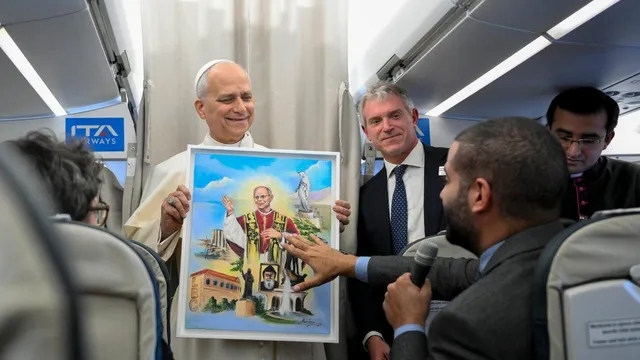
In May, Pope Leo XIV, formerly known as Cardinal Robert Prevost, was elected as the new leader of the Catholic Church. This marked a significant moment, as he became the first U.S. Pope, inheriting a spiritual lineage that spans over a billion Catholics worldwide. Following his election, he candidly expressed his immediate feelings of the daunting responsibility he faced. During a press conference aboard his flight returning from Lebanon, he recounted how he had to resign himself to the reality of becoming pope as the voting progressed in the secret conclave. He stated a deep conviction in surrendering to God, asserting that everything was in God's hands. Pope Leo recalled the moment before his election when he began to grasp that he might be chosen; he took a deep breath and gave himself to the Lord, accepting the role with the mindset, 'You're in charge and you lead the way.' His journey into this prominent religious position drew on decades of dedication to missionary work, having spent substantial time in Peru before rising through the ranks of the Vatican, where he became a senior official just a year prior. Despite being somewhat unknown to the global audience at that time, Leo's humility and commitment have shaped his spirituality, focusing on a prayerful life that allows God to lead. As he approaches a new chapter in his papacy, Pope Leo has begun to adjust to the media scrutiny that accompanies such a high-profile position. He humorously commented on how journalists often misinterpret his expressions, indicating he is more aware of public perceptions than one might expect. His reflections on the enthusiastic reception he experienced during his travels to Lebanon highlight his appreciation for the people's desire to connect with his visit, emphasizing their connection not just with him, but with their belief in Christ. Looking to the future, Pope Leo expressed a wish to continue international outreach, particularly emphasizing plans for future trips to Africa, specifically Algeria, to foster inter-religious dialogue. He also mentioned potential trips to Latin America in 2026 or 2027, in countries like Argentina and Peru, where he previously served. Overall, his statements reflect a commitment to addressing pressing global issues such as peace in the Middle East, while reinforcing a spirit of coexistence among different faiths.
Context
Pope Leo XIV is a significant figure in the history of the Catholic Church, recognized for his profound spirituality and distinctive beliefs that shaped his papacy. His approach to spirituality can be characterized by a deep commitment to traditional Catholic doctrine, while also being open to engaging with contemporary issues faced by the Church. Leo XIV emphasized the importance of personal holiness, encouraging the faithful to cultivate a vibrant spiritual life through prayer, the sacraments, and adherence to Church teachings. He believed that a strong spiritual foundation was essential for not only individual salvation but also for the health and vitality of the Church as a whole. A central tenet of Pope Leo XIV's beliefs was the notion of the Church as a guiding light in a tumultuous world. He viewed the role of the papacy as not only a religious authority but also as a moral compass for society. His teachings often highlighted the need for the Church to engage with social issues, advocating for the poor and marginalized while promoting justice and peace. By addressing contemporary concerns, Leo XIV sought to make the Church's message relevant and impactful, urging the faithful to embody Christian virtues in their daily lives and interactions with others. In addition to his focus on social issues, Leo XIV had a profound respect for the traditions of the Church. He believed that the richness of Catholicism was rooted in its historical teachings and practices, which provided a solid foundation for understanding and living out the faith. This respect for tradition enabled him to navigate the tensions between modernity and the core values of the Church, helping to maintain a balance that resonated with the faithful. His emphasis on the importance of liturgy and the sacraments reflected his belief that these elements were essential for spiritual growth and a deep connection with God. Pope Leo XIV's impact on the Catholic Church extended beyond his teachings; his spirituality and beliefs encouraged a revival of religious fervor during a time of significant change. His legacy is one of inspiring a comprehensive approach to faith that combines devotion, social responsibility, and a deep respect for tradition. By advocating for a personal and communal understanding of spirituality, he challenged individuals and the Church to live authentically and courageously in a complex world. As such, the spirituality and beliefs of Pope Leo XIV continue to influence the Catholic Church and its mission in the modern era.


