

Council approves solar farm plans despite local objections
Council approves solar farm plans despite local objections
- Plans for a solar farm in North East Lincolnshire have been unanimously approved by the planning committee.
- Developers assert that the solar facility will generate enough electricity for about 16,000 homes.
- The project has sparked a mix of support and objections, with concerns over agricultural land use and fire hazards.
Story
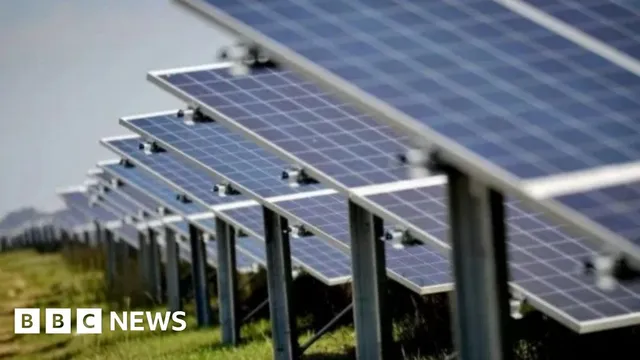
In North East Lincolnshire, plans for a solar farm have received unanimous approval from the local council, despite concerns raised by some villagers. During a recent planning committee meeting, representatives from the development company, Grange Energy Park, presented their proposal to construct the solar facility off Riby Road, which is positioned between Stallingborough and Keelby. This development is expected to generate enough electricity to power approximately 16,000 homes and will also feature a battery storage facility. The planning committee took into account the poor soil quality of the area intended for the solar farm, with agricultural land still available for productive use. Local farmer Harry Burt, who has been operating in the area for fifty years, expressed his intent to increase sheep grazing alongside the energy production from the solar farm. This integration of agricultural activity with renewable energy production demonstrates an innovative approach to land use. Concerns surrounding the development included the loss of agricultural land and potential fire hazards associated with the proposed battery storage system. In response, developers have conducted a detailed fire risk assessment and have planned to implement a comprehensive biodiversity strategy that exceeds the government's Biodiversity Net Gain policy requirements. Despite these objections, several councillors praised the solar farm proposal, with one calling it “one of the best” applications they had encountered. Nick Bowen, a representative from the developer Island Green Power Ltd, noted that significant community engagement has taken place, resulting in feedback that influenced adjustments to the project. The engagement involved offering additional greenery and positioning the battery storage centrally on the site. In total, the solar facility will utilize about 387 acres of land, leaving over 1,200 acres still available for continuous agricultural activities. This scenario highlights a growing trend in renewable energy development where energy production and agricultural practices coexist on the same land. The project, which has drawn both support and criticism from local governments and residents, aims to help contribute towards the greener future of the region while addressing local concerns through thoughtful compromise. A parallel planning application has also been submitted to West Lindsey District Council, which is yet to make a decision regarding the expansion of solar energy in the area.
Context
The impact of solar farms on local agriculture has gained increasing attention as the demand for renewable energy sources continues to grow. Historically, land used for agricultural purposes provided essential resources for local communities and economies, yet the advent of solar energy technology poses both challenges and opportunities. Solar farms, while providing a clean energy alternative, can occupy large areas of arable land, potentially reducing the available space for traditional farming practices. However, it is essential to examine both the direct and indirect effects solar farms have on local agricultural activities, as the overall impact is not purely negative or positive. Despite concerns regarding land use, research indicates that solar farms can coexist with agricultural practices in various ways. A method known as agrivoltaics has emerged, which describes the integration of solar panels with crops or livestock farming. By leveraging the land on which solar panels are installed for dual purposes, farmers can continue to cultivate crops or raise livestock while simultaneously producing renewable energy. This approach not only maximizes land use but can also provide shade for certain crops, potentially improving yields in arid regions. Additionally, the revenue generated from leasing land for solar energy can provide farmers with an alternative income stream and help support local economies. On the other hand, the introduction of solar farms in agricultural areas may lead to significant changes in land management and farming practices. Farmers may need to adapt to new regulations, shifts in land value, and evolving market demands as renewable energy takes a more prominent role in local economies. Furthermore, the construction and maintenance of solar farms could disrupt local ecosystems if not managed responsibly. It is crucial for policymakers to balance the benefits of renewable energy with the preservation of agricultural land, considering both environmental and economic factors in their decision-making processes. Ultimately, the long-term effects of solar farms on local agriculture will depend on thoughtful planning, collaboration among stakeholders, and the implementation of best practices that encourage sustainable land use. Continuous dialogue between energy producers, agricultural professionals, and local communities is essential to foster innovation and adaptability in the face of changing energy landscapes. As society moves toward a more renewable future, understanding the intricate relationship between solar energy and agricultural viability will be vital for ensuring the health and prosperity of local economies and the environment.


