

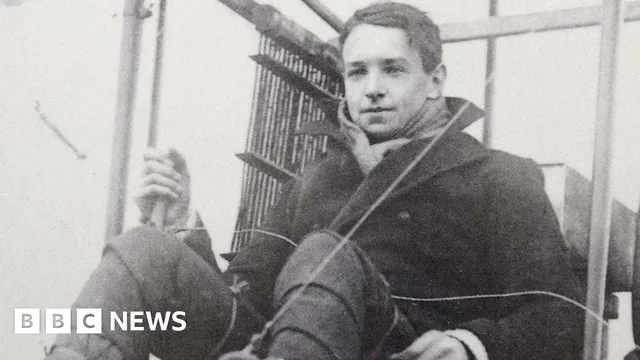
Sopwith revolutionizes aviation after self-learning to fly
Sopwith revolutionizes aviation after self-learning to fly
- Thomas Octave Murdoch Sopwith taught himself to fly a monoplane from Brooklands at the age of 22.
- He established his aircraft manufacturing company and produced several notable planes during World War I.
- Sopwith's innovations contributed to the development of important British aircraft and influenced aviation for decades.
Story
In the early 20th century in the UK, Thomas Octave Murdoch Sopwith emerged as a seminal figure in aviation history. At just 22, he taught himself to fly a monoplane from Brooklands, a location known for its association with motorsports and aviation. His passion for flying led him to crash his first plane, but his determination didn't wane; he acquired a second aircraft and quickly gained his flying certificate. Adapting to the needs of the times, Sopwith began competing in the United States, accumulating substantial winnings which he used to establish his own aircraft manufacturing company. As World War I approached, Sopwith's timely entry into aircraft production came as demand surged for effective military airplanes. Initially, his company received an order for 70 planes, which was more than he had previously manufactured, necessitating rapid innovation and production. One of the most notable aircraft from his line during the war was the Sopwith Camel, known for its dual guns shooting through the propeller, which significantly contributed to its effectiveness in aerial combat. The success of the Camel cemented Sopwith's status as an influential figure in the realm of aviation. In the post-war period, however, demand for military aircraft dwindled, prompting Sopwith and his team, including notable designer Harry Hawker, to pivot in their endeavors. They founded a new company, H.G. Hawker Engineering, shifting the focus towards civilian aviation and innovation. During the subsequent decades, Sopwith's influence on the company’s culture and design philosophy led to the development of key aircraft such as the Fury biplane and the Hurricane, the latter playing a pivotal role in securing victory for Britain during the Battle of Britain. The advancements in aviation technology spearheaded by Sopwith and his team not only reflected the dynamic nature of the industry but also underscored the ongoing evolution of aircraft design in response to changing military and civilian needs. Sopwith's legacy is not merely about aircraft production; it exemplifies the spirit of innovation and resilience that characterized early aviation pioneers who shaped the landscape of modern flight.
Context
The Sopwith Aircraft Company, established in 1912, is renowned for its significant contributions to aviation history, especially during World War I. Founded by Thomas Sopwith, the company began as a manufacturer of various types of aircraft, quickly gaining a reputation for innovation and quality. Their initial foray into aviation commenced with the production of the Sopwith Tabloid, which was notable for being one of the first British aircraft to win a military competition and set records for speed and performance. This early success positioned Sopwith as a competing entity in the burgeoning field of military aviation, leading to the development of several iconic aircraft models that would leave a lasting impact on air warfare techniques and design philosophy. The most celebrated aircraft produced by Sopwith was undoubtedly the Sopwith Camel, which emerged in 1917. The Camel was a biplane fighter known for its agility and speed, becoming one of the best-performing aircraft used by the Royal Flying Corps and significantly contributing to the Allies' air dominance over the Western Front. Its distinctive humpbacked design and twin gun placement allowed pilots to quickly engage enemy aircraft effectively, solidifying its reputation as a formidable foe in aerial combat. The Camel played a critical role in the air battles of World War I, with many credited aces achieving their victories while piloting this influential aircraft. Beyond the Camel, Sopwith's catalog included other noteworthy designs such as the Sopwith Pup and the Sopwith Snipe, both of which were integral to the evolution of fighter aircraft during the war. The influence of these planes extended beyond immediate military applications; they also set the stage for future advancements in aerodynamics, control systems, and aircraft materials. Post-war, the company faced challenges as the demand for military aircraft declined, leading to a diversification of production and an eventual shift to commercial aviation ventures. However, the legacy of Sopwith's designs persisted, inspiring generations of aircraft designers and engineers. In the context of aviation history, the Sopwith Aircraft Company is a pivotal name, not only for its engineering achievements but also for its lasting cultural impact on aviation. The company's ventures reflected the rapid technological advancements of the early 20th century, showcasing how war can accelerate innovation in engineering. The designs and concepts pioneered by Sopwith have been studied and revered in aeronautical engineering fields, and the company’s story serves as a testament to the spirit of innovation that characterizes the aviation industry.


