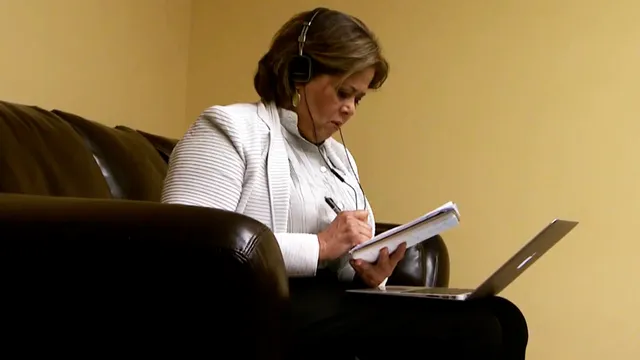
In Philadelphia, Anna Deavere Smith, a renowned playwright and actress, has embarked on a new project that delves into her family's history. This initiative is part of her ongoing exploration of American life through theater. During a workshop production at the Wilma Theater, she presented a work in progress titled 'Basil Biggs' as part of a citywide arts festival called What Now. Smith's approach to this play is distinct from her previous works, as she relies heavily on photographs and archives related to Basil Biggs and his family, rather than solely on words and language.
Smith's journey into her family's past was inspired by a story shared by Henry Louis Gates, which she felt was crucial for understanding her own connection to America. She expressed that this exploration is not just about her ancestry but also about her stake in the country. The play reflects her desire to connect with the broader narrative of American identity, particularly through the lens of her great-great-grandfather, who cared for soldiers' burials. This personal connection to the story has allowed her to imagine the life of Basil Biggs more vividly.
Throughout her career, Smith has been known for her unique style of theatrical dramas that engage with complex social issues. In her previous work, 'Notes From the Field,' she traveled to her hometown of Baltimore to gather stories and perspectives from residents. This method of engaging with real-life experiences has been a hallmark of her artistic practice. In 'Basil Biggs,' she continues this tradition, using her family's history as a means to explore themes of identity, belonging, and the American experience.
As the audience engages with her work, Smith hopes to provoke thought about the current state of America and the work that still needs to be done. She emphasizes the importance of understanding the past to address present challenges, leaving the audience with a sense of urgency to reflect on their roles in shaping the future. The play serves as a reminder that while there may be hope for a better tomorrow, the journey toward that future requires acknowledgment of the complexities of history and identity.