

Teen suspects throw explosive devices at NYC protest
Teen suspects throw explosive devices at NYC protest
- Ibrahim Kayumi and Emir Balat are accused of throwing homemade bombs at a New York City protest on March 7, 2026.
- The incident is being investigated as a case of ISIS-inspired terrorism, with alarming intentions revealed from one suspect.
- Law enforcement and the FBI are actively investigating to understand the full scope of the suspects' motivations and connections.
Story
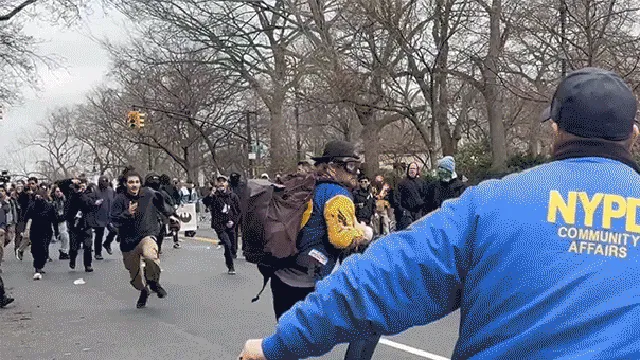
On March 7, 2026, in the United States, two youths, Ibrahim Kayumi, 19, and Emir Balat, 18, were involved in a serious incident during a protest outside Mayor Zohran Mamdani's residence in New York City. Reports indicate that the suspects drove from Bucks County to Manhattan to participate in the protest, where they allegedly threw homemade explosive devices, specifically bombs containing TATP, nuts, and bolts, which were concealed with duct tape. The New York Police Department quickly intervened, with video evidence showing an officer tackling Balat to the ground after he allegedly threw one of the bombs. The chaotic scene unfolded as bystanders warned, yelling 'bomb' after witnessing the attack. The police described the homemade bombs as real and capable of causing significant harm or even fatalities, prompting investigations into the event as an act of terrorism. NYPD officials, including Commissioner Jessica Tisch, stated that this incident is being investigated as 'ISIS-inspired terrorism,' highlighting the serious implications of the youths' actions. Prosecutors revealed that Balat expressed a desire to make the assault 'bigger than the Boston Marathon bombing,' implying a disturbing intent behind their actions. Furthermore, during his interrogation, Balat allegedly committed to the Islamic State by pledging allegiance, writing a note that included, 'All praise is due to Allah lord of all worlds!' This revelation further escalated concerns surrounding radicalization among youth in America. Authorities have been investigating the suspects for connections to terrorism, which included a previous search of a self-storage unit linked to them, where explosive residues were found. The FBI reported the findings after conducting a controlled detonation to ensure public safety. This incident raises alarms about homegrown terrorism and connections to broader extremist ideologies, posing significant questions for law enforcement and the communities affected as they strive to understand and counter the radicalization of young individuals engaged in violent political actions. The situation reflects a concerning trend of youth involvement in extremist ideologies, and the repercussions of such incidents can have lasting impacts on public safety and community cohesion. As investigations continue, there will likely be more revelations concerning the motivations behind the suspects' actions and the networks that may have influenced them.
Context
Home-grown terrorism in the United States has a complex history rooted in various social, political, and economic factors. The term refers to acts of violence committed by individuals or groups who are citizens or residents of the country but are motivated by ideological beliefs that often stem from domestic grievances. This type of terrorism can be traced back to multiple historical events, but its modern manifestations have gained attention particularly since the 1990s, with significant incidents such as the Oklahoma City bombing in 1995, led by Timothy McVeigh, who sought to further anti-government sentiments. Such acts highlight a growing trend where individuals become radicalized by extreme ideologies, resulting in violent actions against perceived oppressors or societal structures they oppose. The rise of the internet and social media has played a pivotal role in the evolution of home-grown terrorism. These platforms provide a means of communication and organization for extremist groups, allowing for the spread of radical ideologies without the need for centralized structures. Individuals can be influenced by online propaganda, leading to a disturbing increase in lone-wolf attacks where perpetrators act independently, motivated by personal convictions that align with extremist views. Notable cases like the Pulse nightclub shooting in 2016 underscore how personal experiences, combined with online radicalization, can culminate in devastating terrorist acts that target specific communities. In recent years, the landscape of home-grown terrorism has shifted to include a more diverse set of ideologies. While far-right extremism has been the focus of law enforcement and scholars alike, other forms of radicalization, including extremist leftism, religious fundamentalism, and populism, have also surfaced. The FBI and other agencies have observed an uptick in incidents linked to white supremacist groups and anti-government militias, often fueled by a toxic mix of socio-economic instability and political polarization. This environment not only fosters extremist ideologies but also creates a fertile ground for violent action against various communities and institutions. Efforts to combat home-grown terrorism in the U.S. have evolved over time, addressing the need for a multifaceted approach that includes intelligence sharing, community engagement, and counter-radicalization strategies. Initiatives aiming to build resilience in communities are vital, as they empower local entities to recognize and address signs of radicalization before they escalate. Furthermore, creating a dialogue around the root causes of domestic extremism and fostering inclusivity can significantly contribute to deradicalization efforts. Understanding that home-grown terrorism is an ongoing issue requiring constant vigilance and proactive measures is crucial for ensuring public safety and maintaining a cohesive society.


