

Scientists reveal seven potential Dyson spheres in the cosmos
Scientists reveal seven potential Dyson spheres in the cosmos
- A team from Uppsala University analyzed data from Gaia, 2MASS, and WISE to study potential Dyson spheres.
- After reviewing five million sources, researchers narrowed it down to seven candidates based on their infrared emissions.
- Follow-up studies are essential to verify the nature of these candidates and assess their implications for the search for extraterrestrial intelligence.
Story
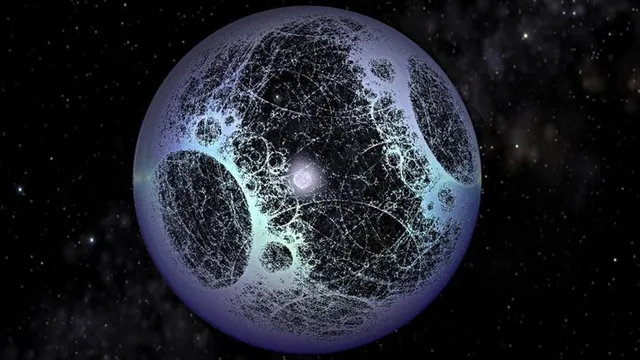
In a groundbreaking study led by Matías Suazo from Sweden's Uppsala University, researchers have successfully identified seven potential Dyson spheres, constructed megastructures proposed by physicist Freeman J. Dyson in 1960. The analysis, published on May 6, utilized data collected from three key astronomical surveys—the European Space Agency's Gaia, the 2MASS infrared survey, and NASA's WISE telescope—covering approximately five million celestial objects. The objective was to find technosignatures indicative of advanced extraterrestrial civilizations capable of harnessing stellar energy through these colossal structures. Dyson spheres are theorized as solar-system-sized shells composed of vast swarms of objects, orbiting around a star to capture energy. However, the emitted mid-infrared radiation from these structures could overlap with signals from natural cosmic phenomena, such as nebulae and background galaxies. A sophisticated filtering process was implemented by the team to distinguish false positives from genuine potential Dyson spheres, ultimately narrowing down the candidates to seven. The identified candidates are primarily M-type (red dwarf) stars, known to emit mid-infrared radiation. Despite this interesting finding, the researchers remain cautious, recognizing the possibility of alternative explanations for the infrared excess observed. They acknowledge the existence of warm debris disks around these stars as a viable reason for the observed emissions. Nevertheless, the study provides a significant leap toward understanding the presence and technological capabilities of advanced civilizations within the universe. The team concluded that further optical spectroscopy work is necessary to confirm the nature of these seven intriguing sources. Their findings open up new pathways for scientific inquiry into the existence of extraterrestrial life and the energy consumption of advanced civilizations. Following this research, the astronomical community will likely seek additional verification and exploration concerning these potential megastructures, setting a precedent for future astronomical studies targeting Dyson spheres and other signs of intelligent life in the cosmos.


