

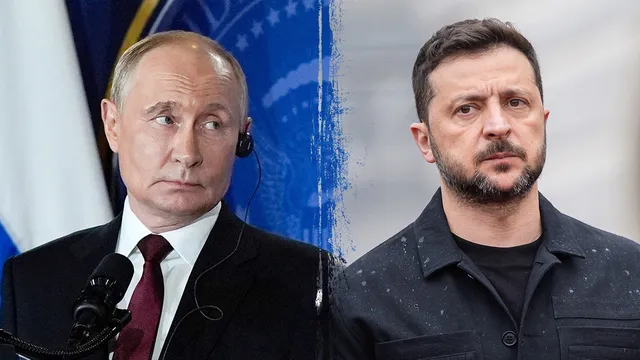
Peace talks advance constructively despite ongoing violence in Ukraine
Peace talks advance constructively despite ongoing violence in Ukraine
- Russian envoy Kirill Dmitriev asserts that peace talks in Florida are making progress, despite ongoing violence.
- Ukrainian President Volodymyr Zelensky warns of the need for comprehensive security guarantees.
- The situation remains precarious as Russia maintains its demands while civilian suffering continues.
Story
The ongoing conflict in Ukraine continues to see diplomatic efforts aimed at establishing peace, with latest talks taking place in Florida between Russian and U.S. representatives. Kirill Dmitriev, a Kremlin envoy, asserted that discussions regarding a U.S.-proposed plan were moving constructively. Despite these talks, violence has persisted, highlighted by a recent missile strike on Odesa that resulted in casualties. Ukrainian President Volodymyr Zelensky expressed concerns about the negotiations, emphasizing the need for robust security guarantees as an essential component of any settlement. Meanwhile, Russia maintains its hardline stance on territorial demands, complicating the negotiation landscape. In the last week, Zelensky reported around 2,500 aerial attacks by Russian forces, underscoring the urgent need for successful peace proceedings. U.S. negotiators, including President Donald Trump’s son-in-law, Jared Kushner, are involved in discussions to broker a resolution to the conflict. Evidence of Russia's firm approach to peace terms was underscored by Yury Ushakov, Putin’s foreign affairs adviser, who dismissed changes proposed by Ukraine and its allies as unbeneficial. Amid these talks, reports have surfaced regarding the abduction of Ukrainian civilians, with nearly 50 individuals purportedly taken into Russia. This adds a layer of complexity to the peace negotiations as Ukraine advocates for the return of its citizens while facing ongoing military aggression. Calls for increased pressure on Moscow by U.S. politicians indicate a growing frustration with the pace of negotiations and the viability of Russian willingness to engage in meaningful dialogue. The political landscape remains fraught, with differing views on how best to proceed in the quest for peace. While a significant military escalation occurs, the potential for diplomatic resolution exists, albeit fraught with skepticism from both sides. As negotiations continue, the world watches closely to see if peace can be achieved amidst the continuing turmoil and civilian suffering in Ukraine.
Context
The military strategy of President Vladimir Putin in Ukraine has evolved significantly since the onset of the conflict in 2014. Initially characterized by the swift annexation of Crimea and the support for separatist movements in Eastern Ukraine, the strategy has encompassed a multifaceted approach aimed at undermining Ukraine's sovereignty and deterring Western influence in the region. A central element of this strategy has been the use of hybrid warfare, which integrates conventional military action with covert operations, cyber warfare, and propaganda, thereby creating instability without overtly engaging in a traditional war. This approach allows for plausible deniability and complicates the responses of Ukraine and its allies. In terms of military operations, Russian forces have utilized a combination of well-coordinated ground, air, and naval strategies to exert control in contested regions. The establishment of a strong military presence along the Ukrainian border and the continuous supply of weapons, training, and intelligence to pro-Russian separatists illustrate a commitment to maintaining influence in the area. Additionally, the employment of advanced military technology and tactics, including drone warfare and electronic warfare capabilities, has significantly improved the effectiveness of Russian operations. These advancements demonstrate a shift towards modern warfare, adapting to the complexities of the Ukrainian theatre, while simultaneously testing NATO's resolve and capabilities. Putin's strategy also hinges on reshaping international norms surrounding conflict. By openly challenging Ukraine’s territorial integrity and flouting international law, Russia seeks to convey a message that it can act with impunity in its sphere of influence. This is reflected in its ongoing support for separatist entities and its historical narrative that frames the West as antagonistic to Russia's interests. Moreover, the Kremlin engages in information warfare aimed at sowing discord among Western nations, thereby weakening their unified response to its actions. By leveraging media narratives and exploiting political divisions in Europe and the United States, Putin aims to create a more favorable geopolitical environment for Russia. Looking forward, Putin’s military strategy in Ukraine will likely remain adaptable. The outcomes observed over the years indicate that the Russian leadership values a sustained presence in Ukraine, leveraging both military and non-military tools to achieve its overarching objectives. As Ukraine continues to strengthen its ties with Western nations and NATO, Russia may feel pressed to escalate military actions or further entrench its support for separatist forces, even as it navigates the international consequences of such decisions. The situation remains fluid, and understanding the implications of Putin’s military strategy is vital for predicting potential shifts in the landscape of Eastern Europe and beyond.


