

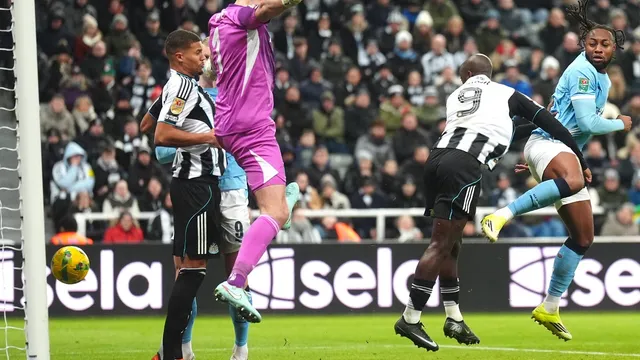
VAR intervention denies Antoine Semenyo in Carabao Cup clash
VAR intervention denies Antoine Semenyo in Carabao Cup clash
- Antoine Semenyo scored the first goal for Manchester City against Newcastle United during the Carabao Cup semi-final.
- His second goal was ruled out after a lengthy VAR review found Erling Haaland to be offside.
- The match concluded with Manchester City winning 2-0, but the VAR intervention led to discussions about consistency in officiating.
Story
In England, Manchester City faced Newcastle United in the Carabao Cup semi-final first leg held at St. James' Park. Antoine Semenyo put City ahead in the first half but had a second goal ruled out in the 63rd minute due to a video assistant referee (VAR) intervention that deemed Erling Haaland to be offside and impacting defender Malick Thiaw's ability to play. The VAR review caused a lengthy pause, which incited mixed reactions from the crowd, especially Newcastle fans who cheered once the decision was announced. Later, Rayan Cherki sealed a 2-0 victory for Manchester City, leaving them with a comfortable lead for the second leg of the semi-final. The controversy surrounding the VAR decision sparked significant frustration from Manchester City's manager, Pep Guardiola. Following the match, he expressed confusion over the inconsistencies of VAR usage, particularly highlighting a previous match against Newcastle where a clear penalty was not awarded. Guardiola's comments underscored a growing concern in football regarding VAR implementation and its effects on match results, especially in high-stakes situations like semi-finals. Despite the win, the match was marred by the disallowed goal, which reignited debates about video technology in football. Guardiola discussed how crucial moments can affect teams in tournaments, stressing the importance of VAR decisions being consistent. He noted that the same stadium, where City recently suffered a controversial defeat, saw a different application of VAR, which left him questioning the robustness and reliability of the technology and the officials’ usage of it. Ultimately, the match not only highlighted Manchester City’s solid performance but also the ongoing discussions about VAR in football, focusing on the need for clearer guidelines and perhaps a review of its application for future games. The outcome has filled fans and analysts alike with a mix of excitement for the upcoming second leg and concern for the evolving nature of officiating in football and the potential ramifications for teams in knockout competitions.
Context
The use of Video Assistant Referee (VAR) technology has been a significant development in the sport of football, particularly highlighted during the 2026 season. VAR was initially introduced to enhance the accuracy of officiating decisions, yet it has become a source of considerable debate and controversy among players, officials, and fans alike. One of the primary criticisms surrounding VAR is its ability to disrupt the flow of the game. Delays caused by VAR reviews can frustrate players and spectators, leading to a disjointed match experience. Furthermore, the decision-making process can feel opaque, with fans often left in the dark regarding the rationale behind certain calls. This leads to questions about transparency and accountability within officiating, which are critical to maintaining trust in the game. The impact of these delays has been a recurrent theme in discussions about VAR's effectiveness and its overall contribution to the sport. Another critical aspect of the VAR controversy is the inconsistency in its application. Each match can yield different interpretations of the same situation, resulting in conflicting outcomes. For example, a handball decision deemed a penalty in one game may not be considered the same in another, leading to feelings of injustice among teams and supporters. This inconsistency raises concerns about the standardization of officiating and the potential for human bias to still influence decisions, undermining the core intent of deploying VAR – to ensure fairness and accuracy. The difficulty in achieving uniformity in officiating, especially in high-pressure matches, complicates the debate further, prompting calls for more comprehensive training for referees on how to utilize the technology. In addition to the officiating concerns, VAR's influence on game strategies has also come into play. Teams are now adjusting their tactics in anticipation of potential VAR interventions. This shift can lead to changes in how games are played, with players being more cautious about their actions in the box for fear of drawing attention from VAR reviews. Consequently, the very fabric of the game is being altered, as tactical considerations become more focused on avoiding penalties rather than playing creatively. This evolution introduces a unique dynamic that challenges traditional notions of attacking play and player behavior on the field, raising the question of whether VAR is enhancing the game or stifling its natural flow. The overall perception of VAR's role in football continues to evolve as further advancements and adaptations are made. While the technology has certainly contributed to rectifying some egregious errors, its implementation has sparked significant controversy and debate. Moving forward, it will be crucial for governing bodies like FIFA and UEFA to address these concerns by refining the rules surrounding VAR use, ensuring more consistent applications of its technology, and enhancing communication to both players and fans during matches. Ensuring that VAR serves its intended purpose without overshadowing the essence of football remains a significant challenge as the sport continues to navigate this new era of officiating.


