
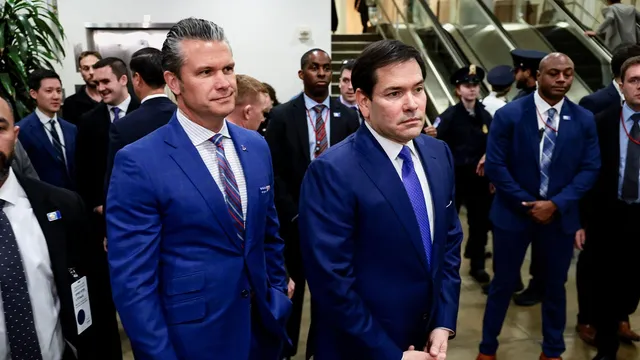
Marco Rubio set to defend Trump’s Venezuela strategy before Senate
- Marco Rubio will testify on the U.S. policy toward Venezuela before a Senate committee.
- A limited number of U.S. personnel are now in Caracas to evaluate diplomatic relations.
- Rubio's testimony may influence future U.S. military and diplomatic strategies in Venezuela.
Story
In the United States, the Secretary of State Marco Rubio is scheduled to testify before the Senate Foreign Relations Committee on January 28, 2026, regarding the current administration's approach to Venezuela. This is a significant moment as Rubio returns to the Senate, a place where he has frequently appeared lately to address increasing concerns among lawmakers about the U.S. actions in Venezuela and the broader Caribbean region. His testimony follows a series of events where he played a crucial role in shifting the opinions of several key Republican senators regarding President Trump’s war powers and military strategy involving Venezuela. In recent discussions, Rubio provided assurances to senators about military actions in Venezuela, suggesting that if President Trump decides to deploy U.S. Armed Forces in any substantial military operations, he would seek congressional authorization when possible. This move was meant to reassure lawmakers who are apprehensive about potential military engagements and balancing the powers of Congress in matters of war. Despite these reassurances, some Senators, particularly from the Democratic party, remain resolute in their efforts to scrutinize and limit the administration's military authority, emphasizing the need for transparency and congressional oversight. At the same time, recent developments indicate that a limited number of U.S. diplomatic personnel are now operating in Caracas, Venezuela, to evaluate the potential for re-establishing diplomatic relations following the significant political shifts in the country, which include the capture of Nicolás Maduro. The Trump administration's cautious approach to resuming formal diplomacy indicates a strategic pivot towards establishing a phased recovery in Venezuela while working closely with the interim government and addressing ongoing concerns regarding human rights and governance. As Venezuela navigates its complex political landscape, the anticipated testimony by Rubio is poised to influence the direction of U.S. policy and military involvement in the region moving forward. Furthermore, remarks made by Venezuelan opposition leader María Corina Machado following her meeting with President Trump underscore the delicate balance of political dynamics in the country. While Machado has expressed eventual optimism about conducting free and fair elections in Venezuela, she has refrained from specifying a timeline, highlighting the uncertainties surrounding the interim government’s rule and the potential for a democratic transition. The interaction between U.S. officials and Venezuelan leaders suggests a concerted effort to stabilize Venezuela, with promises of cooperation and assistance in various sectors, including national security and economic recovery.
Context
The relationship between Venezuela and the United States has been characterized by significant tensions and complexities, particularly over the last two decades. Historically, the U.S. has been a major player in Latin American politics, often promoting democratic values and economic stability. This involvement, however, has been perceived by Venezuela as interventionist, particularly during the administrations of presidents Hugo Chavez and Nicolás Maduro. The Bolivarian revolution initiated by Chavez aimed to establish a socialist regime that stood in direct opposition to U.S. influence in the region, leading to a strained relationship marked by accusations of imperialism and economic sabotage from both sides. As of January 2026, these historical grievances continue to shape diplomatic interactions and public sentiment in Venezuela towards the United States. The U.S. has imposed various sanctions on Venezuela over issues related to human rights abuses, corruption, and electoral irregularities. These sanctions intensified during the Maduro regime, particularly after the controversial 2018 presidential election, which was met with widespread denouncement from the U.S. and its allies. In response, the Maduro government has routinely deflected blame onto the U.S., depicting these actions as an economic blockade aimed at destabilizing the country. Despite these challenges, the U.S. continues to support opposition movements in Venezuela, most notably the efforts of figures like Juan Guaidó, who declared himself interim president in early 2019. As of early 2026, the dynamics between Venezuela and the U.S. are shifting, albeit slowly. The U.S. administration has shown a cautious openness to diplomacy, considering that a resolved crisis could lead to regional stability and economic recovery for Venezuela. Recent dialogues have focused on human rights conditions, political reforms, and the potential for international aid, which has been critical given the severe humanitarian crisis facing the Venezuelan population. While the Maduro government remains resistant to the idea of a major overhaul, the dire economic conditions and widespread public discontent may push them to the negotiation table in the near future. Looking ahead, the future of U.S.-Venezuela relations will likely hinge on the Venezuelan government's willingness to engage in meaningful dialogue and the broader geopolitical implications for the region. The climate surrounding agricultural production, oil exports, and international alliances will also play pivotal roles in shaping these relations. As the U.S. reassesses its strategy in Latin America amidst global challenges, including the rise of China’s influence, the new year may bring opportunities for renewed engagement or further deterioration depending on how both nations approach their interlinked fates.
