

Russia loses contact with Iran’s nuclear sector amid escalating war
Russia loses contact with Iran’s nuclear sector amid escalating war
- Iran has launched retaliatory strikes against US and Israeli targets amid ongoing military attacks.
- The US-Israeli assault on Iran has led to a significant rise in casualties and heightened tensions across the region.
- The uncertainty surrounding Iran’s nuclear facilities raises fears of potential catastrophic incidents as the situation unfolds.
Story
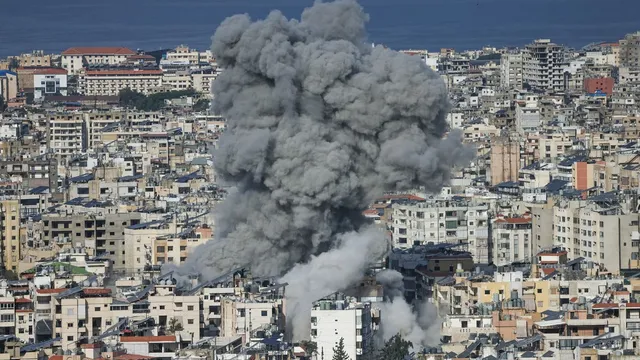
In the context of escalating military conflict in the Middle East, Russia's state nuclear corporation Rosatom reported losing communication with Iran's nuclear sector leadership amid ongoing US-Israeli airstrikes. This situation arose after a series of joint attacks that began on March 2, 2026, targeting Iran, which has sparked widespread international concern over the potential for nuclear proliferation. Iran has since retaliated with missile and drone strikes against US and Israeli targets, leading to a significant rise in casualties and escalating tensions in the region. Additionally, US forces have increased their military presence and targeted strikes, indicating a sustained military campaign. The severity of the conflict has resulted in heavy casualties, with reports of over 1,000 deaths in Iran and multiple casualties in Israel as well. The situation is exacerbated by the involvement of multiple nations, including Russia, which previously played a key role in Iran's civilian nuclear program. As airstrikes intensify, the operational status of Iran’s nuclear facilities remains uncertain, raising fears of a catastrophic incident due to the presence of significant stockpiles of fissile materials at sites such as the Bushehr Nuclear Power Plant. On the broader scale, this war has plunged the Middle East into chaos, with retaliatory strikes from Iran complicating diplomatic relations and prompting calls for de-escalation from various international leaders. Iran has asserted its rights under international law to develop a peaceful nuclear program, as recognized by treaties like the Non-Proliferation Treaty. However, the ongoing conflict risks fueling a nuclear arms race in the region, as highlighted by Russian Foreign Minister Sergey Lavrov's warnings that the US-Israeli military actions may provoke Iran into pursuing nuclear weapons capabilities in response to perceived threats. The international community watches with concern as the conflict unfolds, with implications not just for regional security but also for global energy markets due to the strategic importance of the Strait of Hormuz. As the US continues its military operations with around 50,000 troops and considerable air power, the situation remains fluid and fraught with danger. The fate of Iran’s nuclear program and its regional ambitions now hang in the balance amid escalating tensions and military aggression.
Context
The impact of US-Israel military strikes on Iran encompasses a multifaceted analysis of geopolitical, economic, and social dimensions. The military collaboration between the United States and Israel has historically aimed at countering perceived threats from Iran, particularly regarding its nuclear program and regional influence. The precision and scale of military strikes have evolved, with the effectiveness and consequences of this partnership being scrutinized through various lenses. The frequency and intensity of such strikes have potential ripple effects not only within Iran but also across the broader Middle Eastern landscape, impacting alliances, security dynamics, and the future of conflict in the region. A primary concern surrounding US-Israel military operations against Iran is the potential for escalation into a broader regional conflict. Iran's strategic response to such strikes may include direct military retaliation, asymmetric warfare, or the mobilization of proxy groups throughout the region. The likelihood of contributing to a cycle of retaliation raises critical questions about the stability of neighboring states and the implications for US foreign policy in the region. Furthermore, the perception of these military actions may influence Iran’s nuclear ambitions, as the regime could view military involvement as an existential threat, prompting accelerated efforts to develop nuclear capabilities for deterrence purposes. From an economic perspective, the military strikes can produce significant implications for Iranian stability and, by extension, global markets. Sanctions combined with military actions could exacerbate the already struggling Iranian economy, leading to increased domestic unrest. The constriction of Iran's economy may also impact oil markets, particularly if Iran retaliates by disrupting shipping routes in the Strait of Hormuz, a critical chokepoint for global oil trade. Moreover, the credibility of US and Israeli military power might influence the calculations of other state and non-state actors, potentially leading to shifts in alliances and military strategies across the Middle East. Socially, the impact of military strikes is significant in shaping public opinion within Iran and the region. The narrative crafted around military actions can foster nationalism or anti-American sentiments, complicating diplomatic efforts. Additionally, the suffering inflicted through military confrontations can lead to humanitarian crises, prompting international condemnation and calls for a reassessment of military strategies in favor of diplomatic approaches. Thus, the consequences of US-Israel military strikes on Iran continue to unfold, revealing the intricate interplay of military, economic, and social factors that together shape the future of Iran and the Middle East.


