

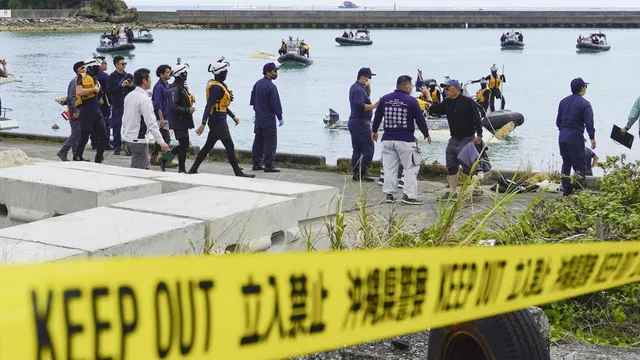
Two dead after student boats capsize near US military site in Okinawa
Two dead after student boats capsize near US military site in Okinawa
- On March 15, 2026, two boats flipped over near Henoko, Okinawa, throwing all passengers into the water.
- Among the 21 individuals on board were 18 students from a Kyoto high school participating in an educational program.
- The capsizing incident highlighted safety concerns regarding U.S. military presence in Okinawa, reigniting discussions on local activism.
Story
On March 15, 2026, two boats carrying 21 people capsized off Okinawa, Japan, resulting in the tragic deaths of a 17-year-old female student and a captain. The incident occurred near Henoko, known for its controversial status as a relocation site for a U.S. military base. Eighteen of the individuals on board were students from a Kyoto high school, who were participating in a peace education program aimed at observing the Henoko area, but they were not protesting. The Japan Coast Guard was able to rescue all passengers from the water, but two were later confirmed dead, while two others received non-life-threatening injuries. The accident unfolded approximately one kilometer east of Henoko amid a wave advisory. However, officials noted that the water conditions were not especially rough, and there was no indication of a collision between the boats. Currently, investigators are examining the circumstances surrounding the capsizing. The broader context includes ongoing protests and legal disputes regarding the U.S. Marine Corps Air Station Futenma's planned relocation from a densely populated area of Okinawa to Henoko, a contentious issue that has embroiled local citizens and activists for nearly 30 years. Okinawa is the home base for approximately half of the 50,000 American military personnel in Japan, under a bilateral security pact. Many Okinawans express concerns over the negative impacts associated with the U.S. military presence, which includes accidents, noise, pollution, and crime. The tragedy that occurred may reignite discussions about the safety and implications of foreign military operations in the region, highlighting the community's long-standing frustrations and fears related to the military bases. The situation will need close attention moving forward, as the local community processes the loss and the investigation unfolds. As more details about the incident emerge, it is crucial to understand not only the events of that day but also how they relate to the ongoing issues surrounding the U.S. military's role in Okinawa. This incident serves as a reminder of the human cost of larger geopolitical conflicts and the lasting impact they have on local communities.
Context
The relocation of the US military base to Henoko in Okinawa, Japan, has been a point of significant contention and protest over the years. The origins of the protests can be traced back to the 1990s and early 2000s, when local residents increasingly voiced their opposition to the base's presence due to concerns over environmental damage, crime, and the local community's sovereignty. The facility's existing location in Futenma was deemed dangerous, prompting the Japanese and US governments to propose the new base at Henoko, which was believed to be a safer and more strategic alternative. However, this proposal ignited fierce resistance among locals, activists, and various environmental groups who argue that the construction would further harm the delicate ecosystem of the nearby Oura Bay, which is home to endangered species such as dugongs and coral reefs. The protests escalated notably in the 2010s, with numerous demonstrations, sit-ins, and public gatherings held to advocate against the relocation. Activists highlighted the strong cultural ties of the Okinawan people to the land and marine environment. They argued that the relocation would not only set a dangerous precedent for military encroachment but would also cause irreversible damage to an area rich in biodiversity. The sentiments were compounded by a historical context of Okinawa being seen as a host for US military facilities, which have long strained its resources and infrastructure. The opposition was thus framed not just as an environmental issue but also as one of Okinawan identity and community integrity. In 2016, Okinawa's then-Governor Takeshi Onaga signed a resolution telling the Japanese government to stop the base's construction, reflecting the sentiments of many local residents. Nationally, the issue has also stirred controversies: it divided political opinions and sparked public discourse regarding the broader implications of US-Japan military cooperation, particularly in the context of regional security in East Asia. A notable aspect of the tension is the feeling among many Okinawans that their voices are being overlooked in favor of national and international security objectives. This underscores a deeper historical context of colonialism and exploitation felt by the residents of Okinawa throughout their post-war history. Despite the determined efforts of the protesters, the construction of the Henoko base progressed, raising concerns over human rights, freedom of expression, and the environmental implications of military bases. Continued protests have attracted attention not only from local citizens but also international observers, organizations, and media. Efforts to bridge communication between the government and activists have taken place intermittently, but a resolution remains elusive. The situation in Henoko is indicative of a broader struggle faced by many communities around the world who contest the presence of military installations on ceded or claimed land, emphasizing the need for dialogue, respect for local perspectives, and consideration of environmental sustainability in future military planning.


