

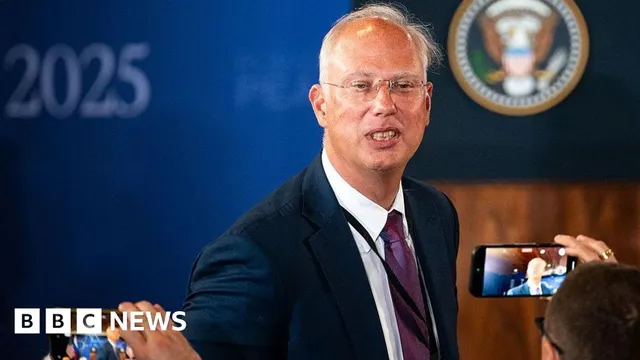
Kirill Dmitriev shapes controversial peace talks with Trump’s administration
Kirill Dmitriev shapes controversial peace talks with Trump’s administration
- Kirill Dmitriev is a significant figure involved in US-Russia relations, serving as CEO of the Russian Direct Investment Fund.
- His recent meeting with Trump's envoy in Miami was part of ongoing discussions about peace plans concerning Ukraine.
- The complex relationship between the US and Russia continues to evolve, with Dmitriev's influence highlighting critical diplomatic considerations.
Story
Ukraine, recently embroiled in conflict with Russia, has seen significant diplomatic maneuvers involving Kirill Dmitriev, the CEO of the Russian Direct Investment Fund. In October 2025, Dmitriev met with Trump administration officials, including special envoy Steve Witkoff, during discussions for a draft peace plan while in Miami. Ukraine's President Volodymyr Zelensky has maintained a cautious stance toward any proposed agreements, emphasizing that any peace terms must respect Ukraine's independence and sovereignty. Dmitriev's background uniquely positions him as a bridge between the US and Russian perspectives, yet US Treasury imposed sanctions against him in 2022, labeling him a "known Putin ally," which adds complexity to his engagement in US-Russia relations. As an important interlocutor, Dmitriev has played a role in various negotiations that coincide with Russia’s recent foreign policy shifts. He is known for advocating for stronger trade relations between the two countries, presenting a perspective that acknowledges Trump's administration's approach as favorable compared to Biden's. His historical ties to the United States, having studied at Stanford University, were said to fuel his ambitions for reform in Ukraine since early in his career. Dmitriev is perceived as a skilled diplomat and businessman, but his advocacy has raised concerns within American intelligence circles due to his close ties to the Kremlin and the sanctions imposed against him. Amid scandals concerning alleged favoritism seen in Trump's peace proposal that too heavily favors Putin, Dmitriev's confidence in the Russian position being heard indicates a deep-rooted ambition for continued engagement with American politics. Despite the sanctions, he has sought out connections with Western businesses and governments while navigating the complex landscape of international diplomacy. His role in discussions around peace with Ukraine represent a strategic move for both Russia and Dmitriev, revealing how financial interests intertwine with geopolitical maneuvers. The potential for new diplomatic channels remains uncertain given the historical context of relations between the US and Russia, compounded by the evolving situation in Ukraine. As Ukraine continues to fight for its independence and sovereignty, the ongoing negotiations and statements from influential figures like Dmitriev highlight a broader tension between economic cooperation and political integrity. The outcome of these discussions could significantly impact geopolitical relations in Eastern Europe and beyond.


