

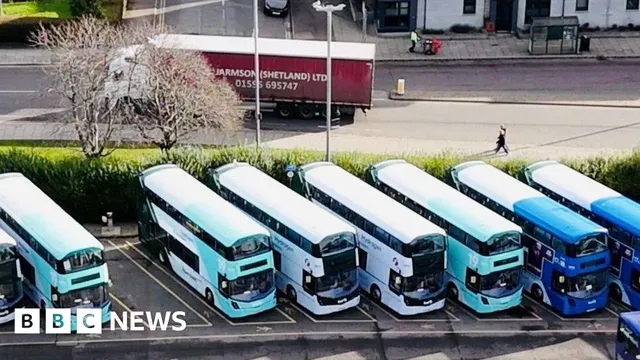
Aberdeen's hydrogen bus project fails, costing taxpayers £14 million
Aberdeen's hydrogen bus project fails, costing taxpayers £14 million
- In February 2026, Aberdeen's city council decided to abandon its hydrogen bus fleet due to operational issues.
- The total expenditure on the hydrogen bus project amounted to approximately £13.9 million.
- The city has opted to transition to electric vehicles which have become more popular as alternatives to hydrogen buses.
Story
In February 2026, the city council of Aberdeen, Scotland, made the decision to terminate its initiative involving a fleet of 25 hydrogen-powered buses after facing serious operational challenges. Initially touted as the world's first hydrogen double-decker bus fleet, the project was launched to position Aberdeen as a leading hub for clean public transportation, particularly in hydrogen technology. However, after nearly two years of struggling with issues related to the fuelling stations at Kittybrewster and Cove, which rendered the buses out of action since September 2024, city officials resolved to abandon the hydrogen initiative in favor of electric vehicle alternatives. The financial implications of the failed hydrogen bus project have raised concerns among local taxpayers. Following a freedom of information request by a local news outlet, it was revealed that the total expenditure on the project amounted to roughly £13.9 million. The initial excitement around the promise of cleaner transport and reduced emissions quickly turned into disappointment as operational difficulties stymied the project's progress and ultimately led to its downfall. Furthermore, it was reported that the city council had previously partnered with BP in 2022, seeking to strengthen Aberdeen's ambitions regarding hydrogen as a viable energy source for public transport. The shift from hydrogen to electric buses is part of a broader trend observed in cities across the UK and beyond, with numerous operators transitioning to battery-powered alternatives. In Glasgow, for instance, First Bus announced plans to invest in a significant fleet of electric buses capable of rapid overnight charging. Similarly, the inter-city bus operator Ember has expanded its electric fleet to around 100 vehicles. These developments illustrate the increasing confidence in electric buses, which, despite having higher upfront costs than diesel counterparts, provide substantial savings in running costs. Overall, Aberdeen's experience serves as a cautionary tale regarding the ambitious pursuit of alternative fueling technologies in public transport. While hydrogen may have appeared as a viable path toward achieving cleaner transportation solutions, the significant financial burden and operational challenges presented serious obstacles. As cities continue to grapple with environmental concerns and the need for sustainable transport solutions, electric buses are increasingly being recognized as the more practical option, which could influence future investments in public transit across the UK.
Context
The adoption of electric buses in public transportation systems has garnered significant attention over the past few years due to the potential benefits they offer. These benefits include reduced greenhouse gas emissions, decreased noise pollution, and financial savings in operational costs over the vehicle's lifespan. Electric buses operate on batteries, which can be charged using renewable energy sources, leading to a decrease in reliance on fossil fuels. As cities face growing challenges stemming from climate change and urban air quality issues, transitioning to electric buses presents a viable solution that aligns with sustainability goals, thereby improving overall public health and environmental conditions in urban areas. Furthermore, electric buses contribute to an enhanced passenger experience. They tend to have smoother acceleration, quieter operation, and lower vibration levels compared to traditional diesel buses. These features can result in a more comfortable ride for passengers, which may lead to increased ridership and higher public satisfaction with the transportation system. In addition, the advanced technology found in electric buses often includes improved accessibility features and amenities such as Wi-Fi, making public transportation more appealing to a broader demographic. The economic implications of electric buses are multifaceted. While the initial investment in electric bus fleets and the necessary charging infrastructure can be substantial, the long-term savings on fuel and maintenance should not be overlooked. Electric buses have fewer moving parts than their diesel counterparts, leading to reduced maintenance costs. Additionally, as battery technologies continue to improve, the cost of electric buses is projected to decrease, making them more economically viable for public transit agencies worldwide. Federal and local government incentives also play a crucial role in supporting the transition, providing funding and subsidies to facilitate investment in electric buses. The integration of electric buses into existing public transportation networks requires careful planning and consideration of various factors, including the existing infrastructure and service demands. It is essential to develop strategic charging solutions that minimize downtime while ensuring efficient service delivery. Collaboration between transit authorities, technology providers, and municipal governments is critical to address these challenges. With proper implementation and support, electric buses can significantly transform public transportation, leading to cleaner cities, increased public engagement with transit systems, and a step toward a sustainable future.


