

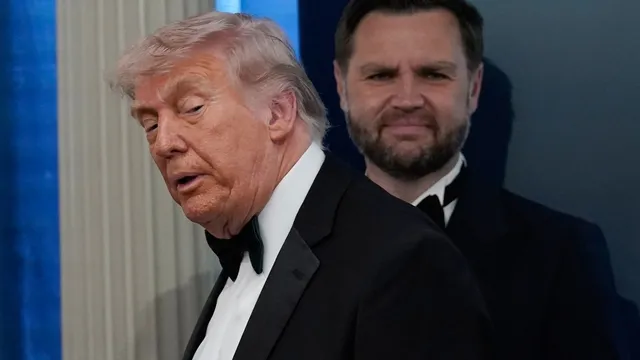
Concerns grow over presidential security after shooting incident
Concerns grow over presidential security after shooting incident
- The shooting incident raised serious questions about the security of high-ranking officials in attendance, including President Donald Trump.
- Senator Josh Hawley urged for a congressional hearing to evaluate presidential security following the attempted assassination charge.
- The incident could lead to revised security measures and the potential implementation of a designated survivor for non-official events.
Story
In the aftermath of a shooting incident at the White House Correspondents' Association dinner, important discussions have emerged regarding the security of high-ranking government officials in the United States. The event occurred recently and placed President Donald Trump and several successors, including Vice President JD Vance and House Speaker Mike Johnson, in a concentrated risk environment. Representative Michael McCaul noted that the presence of the president, vice president, and speaker of the house at the same table could create a critical failure in the line of succession if a catastrophic event occurred. As a result of this incident, calls for improved security measures have been intensified. Republican Senator Josh Hawley of Missouri announced his intention to convene a congressional hearing to assess the adequacy of security arrangements for the president. He highlighted the need to evaluate the current threat environment following the attempted assassination charge stemming from the shooting. This scrutiny has also reignited the debate over a proposed $400 million White House ballroom designed to enhance security during official events. Supporters of the ballroom construction argue that it would not only provide a more secure venue for presidential events but also allow the Secret Service to exercise greater control over protective environments. Critics, however, remain skeptical about the funding and political implications of the project. In light of these discussions, experts suggest that there may now be a reassessment of colocation practices among senior officials, particularly in non-official events like the WHCA dinner. The WHCA dinner highlighted the complexities associated with event security, particularly when top officials gather in less secure environments. The concept of a designated survivor, typically employed during events like the State of the Union, may be applied more broadly to avoid potential vulnerabilities in the future. While issues surrounding official gatherings have been debated for years, the recent shooting has prompted immediate action and consideration of continuity planning to ensure the future safety of U.S. leadership.
Context
The designated survivor protocol in the United States is a security measure utilized primarily during events where the entire leadership of the government might be simultaneously gathered in one location, such as the State of the Union address or presidential inaugurations. The primary goal of this protocol is to ensure the continuity of government in the event of a catastrophic occurrence, such as a terrorist attack, natural disaster, or any other threat that could incapacitate or eliminate key leadership figures. Under this protocol, a member of the cabinet or another official is chosen in advance to remain in a secure location away from the main gathering, thus ensuring that there is always someone in a position of authority to assume control and maintain the functions of government should a disaster strike the primary leadership contingent. The selection process for the designated survivor involves careful consideration by the President and security officials, ensuring that the chosen individual has the experience and capability to lead. The designated survivor is typically provided with the necessary security and communication resources to manage the situation, should a crisis occur. This individual remains isolated from the event to prevent any potential harm and to maintain the integrity of the government’s command structure. Often, the designated survivor is kept in a secure, undisclosed location and is monitored continuously, ensuring their safety and readiness to step into the role of acting leader. Historically, the practice of having a designated survivor has been in place for several decades, but it gained heightened visibility during the events of September 11, 2001, when national security concerns prompted a reassessment of protocols regarding government continuity. The choice of designated survivor during high-profile events has varied, with selections generally made to balance visibility with the necessity of keeping certain key figures out of harm’s way. This measure acts as a vital safeguard against the risk of a large-scale attack that could incapacitate the nation’s leadership at a critical time. The implications of the designated survivor protocol extend beyond mere survival of individuals; it reflects broader concerns about government resilience and the uninterruptibility of governance in crises. In addition to the designated survivor's immediate responsibility to assume leadership, there is an ongoing commitment to ensure that plans are in place for an effective transition to a legitimate authority, should such dramatic circumstances arise. As such, the designated survivor protocol is not only a reactive measure but also a proactive strategy to maintain the functionality and stability of the United States government under the most adverse conditions.


