

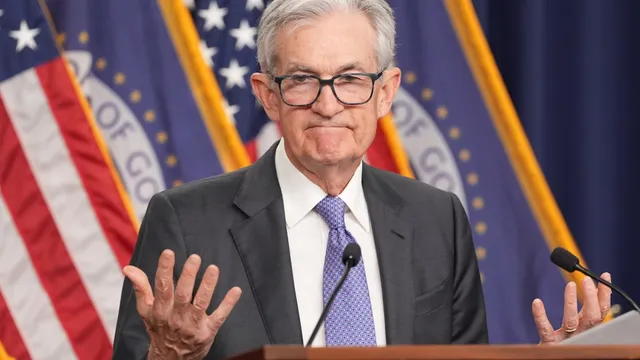
Federal Reserve implements rate cut before leadership change
Federal Reserve implements rate cut before leadership change
- The Federal Reserve cut interest rates by 25 basis points in December 2026 amid concerns about inflation and job market fragility.
- Jerome Powell indicated that rates were approaching neutral, though warnings about inflation risks remained.
- The upcoming leadership transition at the Fed is expected to influence future monetary policy.
Story
In December 2026, the Federal Reserve conducted its last monetary policy decision of the year, marking a significant moment in its ongoing efforts to balance inflation control with labor market stability. The central bank's decision to cut interest rates by 25 basis points was largely anticipated by economists, following a period characterized by elevated inflation rates and concerns in the job market. Jerome Powell, who was serving as Chairman at this time, indicated that the current rates were approaching a neutral level, which suggests that the Fed could be nearing the end of its rate-cutting cycle. Despite the cut, Powell delivered a cautious message during his remarks, highlighting ongoing inflation risks and uncertainties in the labor market, which may remain fragile moving into 2027. The Federal Open Market Committee (FOMC) had a mixed response, with nine members supporting the cut, while others preferred to maintain the current rates, reflecting differing opinions within the committee regarding the future economic outlook. Anticipation built as January 2027 approached, with market forecasts suggesting a 75 percent chance that rates would remain steady. Looking ahead, the departure of Jerome Powell in May 2027, after his six-year tenure, was noted as adding further uncertainty to the Fed's direction. The potential appointment of a new chairman, likely influenced by political considerations, raised concerns about the Fed's future focus on inflation control versus job creation. Stakeholders speculated on who might replace Powell, with possible candidates including former Fed Governor Kevin Warsh and economic adviser Kevin Hassett, both holding differing views on monetary policy. The economic landscape revealed a drop in the annual inflation rate to 2.7 percent, down from previous levels, painting a complex picture for the characters involved in these discussions. Despite this positive sign, the tension between alleviating financial burdens on households and ensuring sustainable economic growth persisted as a major theme. Discussions around the Fed's independence and the political pressures it might face under a new chairman increased considerably, prompting experts to emphasize the balanced approach required to navigate the intricate web of economic indicators and societal needs.


