

Grab prepares to test delivery robots in Singapore to tackle labor shortages
Grab prepares to test delivery robots in Singapore to tackle labor shortages
- Grab will launch a pilot of its first delivery robot, Carri, in Singapore's Punggol district in late 2026.
- The pilot aims to automate the final stages of package delivery, allowing drivers to focus on longer routes.
- This initiative represents Grab's deeper investment in AI and robotics to enhance overall service efficiency.
Story
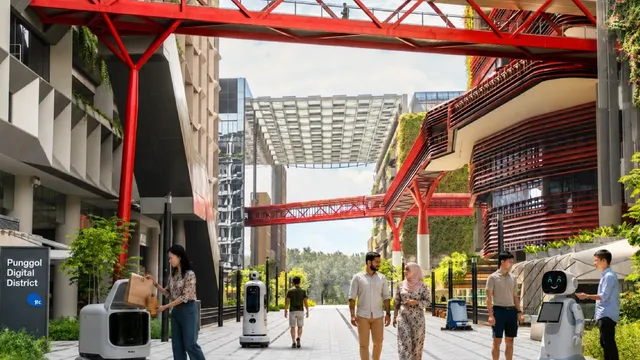
In an effort to address labor shortages in Singapore, Grab will pilot its first delivery robot, named Carri, in the Punggol district in late 2026. The Southeast Asian tech company aims to automate the final stages of package delivery, which represents approximately 10% of a driver’s working time. Chief Technology Officer Suthen Paradatheth highlighted the growing utility of autonomous vehicles (AVs) in supply-constrained markets, particularly for underserved passengers residing in remote areas. Grab's initiative comes as part of a larger strategy where they are deepening their investment in physical AI and robotics to enhance service delivery. Alongside Grab, seven other companies, including DHL and local startup Quikbot, plan to pilot their technology in this district, recognized as a hub for testing embodied AI technology. The various companies will focus on tasks such as food delivery, parcel delivery, cleaning, and security patrols, collectively contributing to a more automated urban logistics landscape. Grab’s robots are positioned to handle the initial and final 100 meters of delivery, effectively bridging the gap experienced in traditional logistical operations and alleviating the workload of drivers and delivery personnel. Grab's strategy reflects its ambition to create an ecosystem enriched by data collection from both human drivers and autonomous systems. Using insights obtained from robots in conjunction with data generated by human interactions, the company hopes to achieve optimization in delivery services across the city. The Singaporean government has also expressed support for this initiative, with Josephine Teo, the country’s digital development and information minister, noting the role of robots in expanding service delivery, particularly in areas lacking sufficient human resources. Moreover, Grab is concurrently working with the Chinese automated driving company WeRide to deploy Singapore's first fleet of autonomous vehicles, beginning with self-driving shuttle buses in local housing estates. Despite the potential for labor disruption caused by automation, Grab executives, including CEO Anthony Tan, have emphasized the emergence of new job opportunities. They foresee a variety of roles for drivers, such as remote safety drivers and data labelers, reflecting a transformative approach to workforce dynamics within the technology and transportation sectors. Throughout this evolution toward a more integrated technology-driven operation, Grab envisions a future where humans and AI coexist, enhancing overall service delivery in Singapore.
Context
Autonomous vehicles (AVs) in Singapore represent a significant advancement in urban transportation, reflecting the city-state's commitment to technology and innovation. The Singaporean government has positioned itself as a leader in the adoption of AVs, integrating them into the fabric of its public transport system while prioritizing safety, efficiency, and smart city initiatives. With a vision to enhance mobility for all, Singapore has embarked on a series of trials and regulatory measures to establish a supportive framework for the widespread deployment of autonomous transport solutions. This strategic approach not only aims to ease traffic congestion in the densely populated urban environment but also to reduce carbon emissions and improve overall urban living conditions. The progress of AVs in Singapore is evidenced by various pilot projects that have been initiated over the past few years. These include collaborations with technology companies and research institutions to test different AV technologies in real-world scenarios. The trials involve deploying AVs in public areas, allowing the government to collect data that will inform safety standards and operational guidelines. These trials focus on different environments, from urban streets to suburban areas, examining factors such as passenger interactions, vehicle navigation, and emergency response capabilities. The outcomes of these trials are pivotal in refining the technology and ensuring that AVs can operate safely and effectively alongside conventional vehicles. Legislation and regulatory frameworks are critical to the successful integration of AVs into Singapore's transportation network. The Land Transport Authority (LTA) and other governmental bodies have established guidelines to prioritize research and development while ensuring public safety. Measures such as strict testing protocols, data collection requirements, and ongoing assessments of AV performance are integral to the framework. These regulations not only provide a pathway for innovation but also instill public confidence in the safety and reliability of AV technology. As the city-state continues to evolve its infrastructure to accommodate AVs, public awareness and education campaigns are essential in fostering acceptance among residents. Looking ahead, Singapore's long-term vision includes expanding the use of AVs beyond pilot projects to full-scale operations within its public transport system by the end of the decade. The government envisions a multi-modal transport ecosystem where AVs complement existing transport methods such as buses and trains, ensuring seamless connectivity throughout the city. The successful integration of AVs is anticipated to transform commuting experiences, enhancing convenience and accessibility while addressing pressing urban challenges. By committing to research, development, and innovative transport solutions, Singapore aims to set a global benchmark for the future of autonomous vehicles.


