

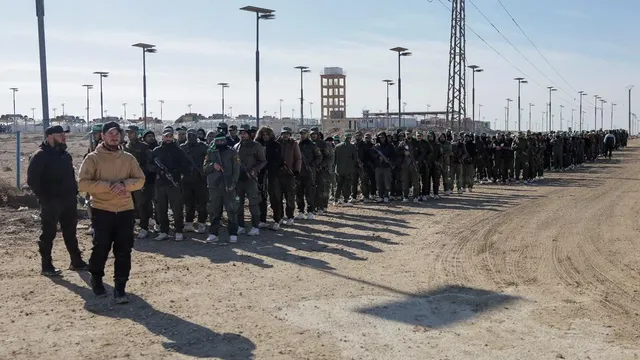
US military transfers 150 Islamic State detainees from Syria to Iraq
US military transfers 150 Islamic State detainees from Syria to Iraq
- U.S. military transferred 150 Islamic State detainees from Syria to Iraq as part of a security strategy.
- The transfer is aimed at preventing possible breakouts and the resurgence of ISIS.
- This action reflects a significant shift in the control dynamics in northeastern Syria and the role of the Syrian government.
Story
On January 21, 2026, the U.S. military initiated the transfer of detainees affiliated with the Islamic State from northeastern Syria to Iraq. This movement was prompted by recent developments in Syria, where government forces took control of areas previously held by the Kurdish-led Syrian Democratic Forces (SDF), leading to concerns regarding the security of detainees held in various facilities. The transfer began with 150 detainees from a facility in Hasakah, with future plans to potentially relocate up to 7,000 such individuals to secure locations in Iraq. The situation arose amid a ceasefire agreement that saw the SDF retreating from key areas, including detention facilities housing IS members. U.S. Central Command highlighted that the aim of these transfers is to prevent detainee breakouts, which would pose a security threat both regionally and to the United States. Rear Admiral Brad Cooper, the head of U.S. forces in the Middle East, underscored the importance of coordinating these actions with Iraqi authorities, ensuring a secure and orderly transfer process. Concurrent to these developments, rights groups have raised concerns about the treatment of detainees once transferred to Iraq. The organization Reprieve stated that individuals facing trial in Iraq could be subjected to torture and execution. Reports indicate that among the detainees could be individuals of various nationalities, many categorized as dangerous members of ISIS. Thus, the eyes of the international community remain on how these transfers will be executed and the subsequent handling of the detainees in Iraq. As reported by various media, the transfer reflects a shift in security control dynamics in the region, with the Syrian government now assuming a more active role in managing the fate of ISIS detainees. Tom Barrack, representing U.S. interests in Syria, acknowledged the evolving situation by stating that the SDF's previous partnership has reached a phase where Damascus is equipped to take over security responsibilities. This change is a consequential aspect of the broader geopolitical landscape in Syria, affecting how foreign powers engage with local forces and handle the remnants of the Islamic State fight in the region.
Context
shift data economic geopolitical strategic impact trends trends policy shift shift analysis data market geopolitical analysis economic global market analysis analysis global strategic geopolitical analysis impact data economic analysis global trends impact data analysis geopolitical market geopolitical geopolitical policy economic shift analysis geopolitical global strategic global analysis impact policy analysis strategic shift shift policy insight insight data analysis economic policy economic strategic strategic analysis impact economic shift data strategic policy data market global impact geopolitical data impact insight geopolitical economic...


