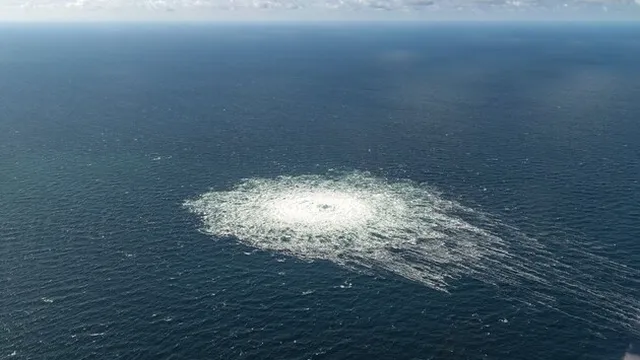
On July 9, 2026, the Prosecutor General's Office of Ukraine announced that there is currently no evidence linking Ukraine to the sabotage of the Nord Stream 1 and Nord Stream 2 gas pipelines. This statement comes amid an ongoing investigation into the incident, which occurred on September 26, 2022, when both lines of the Nord Stream 1 pipeline and one line of the Nord Stream 2 pipeline were damaged. Ukrainian law enforcement is actively conducting investigative actions, including questioning witnesses and gathering relevant information to clarify the circumstances surrounding the sabotage.
The Prosecutor General's Office emphasized that, based on the evidence collected so far, there are no established facts indicating that the State of Ukraine, its authorized bodies, or officials were involved in the unlawful acts related to the pipeline sabotage. They clarified that the investigation is still ongoing, and the collection of evidence is not yet complete. The office also noted that the filing of charges against a Ukrainian national, Serhii Kuznietsov, by the German federal prosecutor should not be interpreted as proof of guilt, as a person's guilt can only be determined by a court verdict.
Kuznietsov, a former member of a special operations unit of the Armed Forces of Ukraine, was detained in Italy in August 2025 and extradited to Germany in November 2025. He is currently facing charges related to the Nord Stream sabotage and is being held in Hamburg, where he will stand trial. The case has raised concerns among Ukrainian authorities regarding the treatment of Kuznietsov in detention, including issues related to his dietary needs and restrictions on communication.
The investigation into the Nord Stream sabotage has become a diplomatic flashpoint, with Ukraine cooperating with German authorities to establish the full truth of the circumstances. The Prosecutor General's Office has acknowledged the indictment filed by the German prosecutor and is prepared to assist in the investigation. The ongoing situation highlights the complexities surrounding the incident, as well as the broader geopolitical tensions between Ukraine and Russia, particularly in the context of Russia's war against Ukraine and the implications for European energy security.