

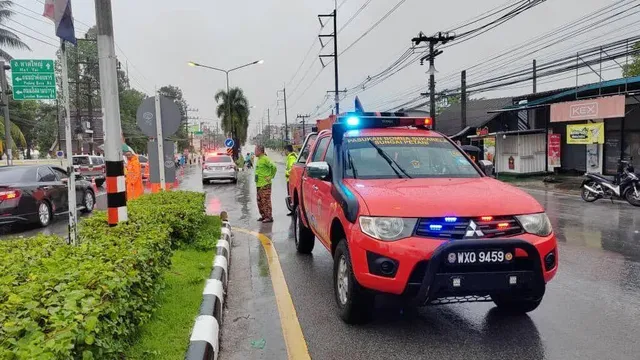
Volunteers save lives amid unprecedented floods in Thailand
Volunteers save lives amid unprecedented floods in Thailand
- Malaysian volunteer firefighters conducted a rescue operation in Thailand during severe flooding that saw parts of Hat Yai underwater.
- Over a week, a trapped family struggled with no aid, highlighting the dire conditions faced by victims.
- The successful mobilization of 128 volunteers demonstrates the commitment of Malaysia’s volunteer fire associations to disaster relief.
Story
In late January 2026, Malaysia witnessed its volunteer firefighters engage in an extraordinary rescue mission in Thailand during unprecedented flooding in the city of Hat Yai. The catastrophe led to parts of the city being submerged under more than 7 meters of water, with thousands of residents and tourists trapped. A family of 15, including vulnerable individuals such as an 80-year-old woman and a six-year-old girl, faced dire circumstances in a four-storey hotel, exacerbated by the language barrier preventing them from calling for help. They were left stranded for almost a week amidst prolonged power outages that left their mobile devices unusable. Responding to the scale of the disaster, Mr Raymond Leong, a seasoned volunteer firefighter from Malaysia, led a team of nine volunteers from the Sungai Petani Volunteer Fire Association to Thailand. Recognizing the urgency, Mr Leong quickly communicated with other volunteer fire associations across Malaysia to coordinate a larger response. In total, within days of the floods, he successfully mobilised 128 volunteer firefighters from 27 different associations including those from Selangor, Pahang, and Johor. The mission highlighted the importance of volunteer firefighters, who not only support domestic efforts during emergencies but also respond to disasters outside their country for the first time. The Malaysian teams provided targeted rescue operations to help stranded citizens and delivered much-needed aid to local residents affected by the flooding. In their humanitarian efforts, the Malaysian volunteers received warm thanks from the Thai people, showcasing the strength of cross-border collaboration in times of crisis. This unprecedented engagement revealed the valuable role played by Malaysian volunteer fire brigades, which as of now include 489 registered teams across the country. The initiative is crucial in filling response gaps, especially in rural areas far from established fire services, a mission established under the 1988 Fire Services Act. Recognition and resources for these volunteer teams have been increasing, as evidenced by donations like the new fire engine received by the Seri Serdang Volunteer Fire Association, which allowed them to enhance their capabilities in service to the community.
Context
The effectiveness of emergency response teams in Malaysia is paramount, considering the country's susceptibility to a range of natural disasters, including floods, landslides, and fires, as well as public health emergencies. The Malaysian government has established a robust framework for emergency management, which is governed by various agencies, including the National Disaster Management Agency (NDMA). This agency plays a crucial role in coordinating efforts among various stakeholders, including local authorities, non-governmental organizations, and international aid agencies. The integration of these stakeholders ensures that resources are allocated efficiently and that responses are timely and effective during emergencies. Emergency response teams in Malaysia are trained to handle diverse scenarios, and their readiness is bolstered through regular training exercises and simulations. These teams comprise professionals from different fields, including medical personnel, fire and rescue services, and law enforcement. They are equipped with specialized skills and equipment necessary for responding to various emergencies, which includes first aid, search and rescue operations, and managing hazardous materials. The collaboration with international partners also allows the exchange of best practices and advancements in emergency response technologies, enhancing the overall capabilities of local teams. In addition to government-led initiatives, community involvement plays a crucial role in emergency preparedness. Local communities are encouraged to participate in disaster response training and activities aimed at building resilience. Programs that promote awareness about disaster risks and preparedness are implemented to empower individuals to take action in emergencies, thus supporting the efforts of formal emergency response teams. This grassroots movement enhances overall community preparedness, enabling quicker and more coordinated responses when disasters strike. Despite the existing framework and community involvement, challenges persist in the effectiveness of emergency response in Malaysia. Issues such as inadequate funding, lack of infrastructure in rural areas, and insufficient public awareness can hamper response efforts. Addressing these challenges requires continuous investment in training, infrastructure development, and public education campaigns. Moreover, the integration of technology in emergency management, such as early warning systems and data analytics for risk assessment, can significantly enhance the capabilities and effectiveness of emergency response teams in the country.


