

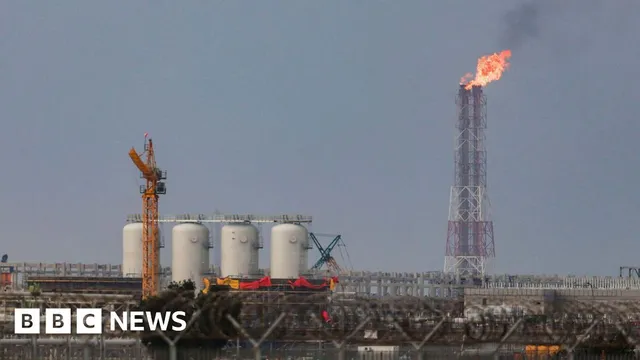
Trump threatens to destroy Iran's major gas field in retaliation for Qatar attacks
Trump threatens to destroy Iran's major gas field in retaliation for Qatar attacks
- Iran launched retaliatory attacks on Qatar's energy complex after Israeli strikes on its South Pars gas field.
- Trump issued a strong warning to Iran, threatening severe consequences if they attack Qatar again.
- This escalation of hostilities is contributing to rising global oil prices and increasing tensions in the region.
Story
Iran has been escalating tensions in the Middle East by launching attacks on energy facilities across the region, particularly following an Israeli strike on its South Pars gas field. This gas field, located offshore and shared between Iran and Qatar, is crucial for Iran's gas production. On March 18, 2026, the Iranian military retaliated against attacks targeting its fossil fuel infrastructure by hitting Qatar's Ras Laffan, leading to significant damage reported by the state-owned QatarEnergy. In response, U.S. President Donald Trump issued a stern warning threatening to "massively blow up" the South Pars gas field should Iran continue to threaten Qatar. Trump's comments came amidst rising oil prices, which spiked to nearly $117 a barrel as a result of these retaliatory strikes, indicating the potential for a major global energy crisis. Trump's threat not only reflects the tension between Iran and Israel but also highlights the complicated U.S. relationship with its Gulf allies, as Qatar is a close ally of the United States, particularly in the energy sector. The severity of the threats exchanged among these countries signals an urgent need to address escalating hostilities that jeopardize regional and global oil supply stability.
Context
The South Pars gas field, located in the Persian Gulf, is one of the largest gas fields in the world and represents a critical component of Iran's energy sector. Shared with Qatar, the field is part of the North Dome/South Pars gas field complex, which spans an area of approximately 9,700 square kilometers. The field contains vast reserves of natural gas—estimated at around 1,800 trillion cubic feet, along with billions of barrels of condensate. As of March 2026, the South Pars field continues to play a pivotal role in Iran's economy, supplying natural gas for both domestic consumption and export initiatives, particularly to neighboring countries and markets in Asia. The extraction and production from this field have been less challenging in recent years, with advancements in technology and increased foreign investment leading to enhanced production capabilities. Historically, the South Pars gas field has been integral in establishing Iran as a key player in the global energy market. However, the field's development has been impeded by international sanctions, technological constraints, and geopolitical tensions. Despite these challenges, Iran has sought to optimize its operations through the collaboration with various foreign companies, which has allowed for improved infrastructure and reduced operational delays. The complexity of managing the field, especially with respect to environmental regulations and local community needs, remains a significant consideration in ongoing and future developments related to the gas sector. The industry surrounding the South Pars gas field has also given rise to various economic opportunities within Iran. Job creation, technological knowledge transfer, and the establishment of ancillary industries have been essential outcomes of gas field development. As Iran continues to navigate economic sanctions and global energy market shifts, the importance of the South Pars field becomes even more pronounced in national planning and energy strategies. This emphasis underlines the need for sustainable practices and the adoption of innovative extraction technologies to maximize output while minimizing environmental impacts. Looking to the future, the South Pars gas field is expected to maintain its status as a cornerstone of Iranian energy strategy. This includes augmenting natural gas exports and expanding the scope of operations to better integrate with international markets. The potential for collaboration with international energy firms remains, despite fluctuating geopolitical dynamics. As the world transitions towards a greener energy paradigm, the South Pars gas field’s longevity will depend on its ability to adapt and innovate in an increasingly competitive global energy landscape.


