

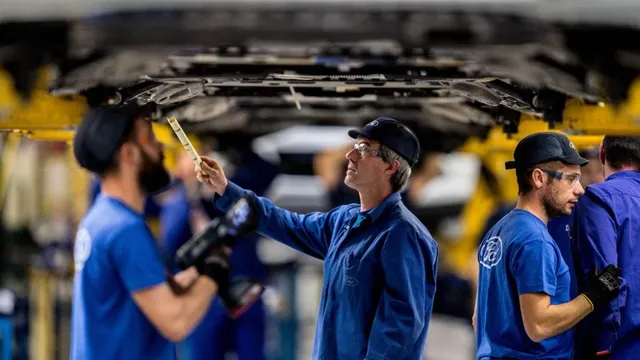
Ford struggles to find skilled mechanics despite high salaries
Ford struggles to find skilled mechanics despite high salaries
- Ford CEO Jim Farley warns of a nationwide shortage of skilled tradesworkers, particularly in mechanics.
- The company struggles to fill 5,000 mechanic positions that pay $120,000 a year due to a lack of trained workers.
- Without adequate investment in training programs, the workforce crisis is likely to worsen, threatening industry stability.
Story
In the United States, Ford is grappling with a severe shortage of skilled trades workers, specifically trying to fill 5,000 mechanic positions that offer an attractive salary of $120,000 a year. CEO Jim Farley highlighted the troubling reality that the nation lacks adequate training programs to prepare individuals for the advanced skills required in automotive repair. Many critical jobs remain unfulfilled across various sectors, indicating a broader workforce crisis that jeopardizes both industry growth and public services, as over a million positions are open nationwide. Farley's insights came during an appearance on the 'Office Hours: Business Edition' podcast, where he emphasized the urgency of addressing the skills gap. This shortage in skilled labor is not exclusive to Ford; the entire manufacturing sector in the U.S. faces challenges, with over 400,000 open manufacturing positions reported as of August. Industry organizations like the National Automobile Dealers Association highlight an annual shortfall of about 37,000 trained technicians in the automotive sector alone, reflecting an increasing demand for skilled labor. The lack of trade schools and outdated training programs further exacerbates the situation. According to Rich Garrity of the National Association of Manufacturers, community colleges and vocational schools often fail to keep pace with technological advancements, leaving graduates ill-prepared for contemporary job requirements. While there is a growing enrollment in trade schools, the courses frequently do not cover crucial subjects like robotics, automation, and electric vehicle technology, which are increasingly vital in modern manufacturing. Despite efforts to attract new employees through salary increases and revised hiring practices, Ford acknowledges that higher compensation alone is insufficient to resolve the shortage. The lament of Farley, whose grandfather built a stable life through skilled trade, underscores the importance of shifting societal focus toward vocational training as a pathway to sustainable careers. Addressing this skills crisis is critical not only for Ford but for ensuring the future economic health of the nation.
Context
The current state of trade education in the US is an essential concern for educators, policymakers, and industry leaders alike. Trade education, which encompasses technical and vocational training in various skilled trades, has witnessed fluctuating interest levels and funding opportunities. Over the years, the perception of trade careers has evolved, particularly as many high school graduates seek alternatives to traditional four-year college degrees. This shift is reflected in increasing enrollment numbers in community colleges and vocational training programs, critical in preparing a skilled workforce essential to meet the demands of various industries. However, trade education faces challenges, including funding disparities between different regions and the societal stigma that often undervalues these careers compared to white-collar professions, despite their importance in the economy. In recent years, several initiatives have emerged to enhance trade education and encourage greater participation among students. Partnerships between educational institutions and local industries have become increasingly common, allowing for more relevant training that meets current job market needs. These partnerships often involve internships, apprenticeships, and mentorship opportunities, providing students with hands-on experiences that are invaluable in their careers. Programs focusing on STEM (Science, Technology, Engineering, and Mathematics) skills within trade education have been particularly successful in attracting a more diverse population of students, including women and minorities, who have traditionally been underrepresented in these fields. Furthermore, technology integration is transforming trade education. From virtual simulations to online courses, educational institutions have started to leverage modern technology to enhance the learning experience. This includes the use of advanced tools and software that mirror real-world applications in skilled trades such as plumbing, electrical, and carpentry work. However, the rapid pace of technological advancement also necessitates continuous curriculum updates to ensure that students are equipped with the latest skills. Trade programs must adapt quickly to keep pace with industry innovations and standards, which can be a challenge for some institutions operating on limited budgets. In conclusion, while the state of trade education in the US is showing signs of improvement through increased awareness, industry partnerships, and technological advancements, there are still significant hurdles to overcome. Addressing these challenges is crucial for ensuring that trade education not only continues to grow but also meets the needs of a 21st-century economy. By fostering a culture that values skilled trades and providing adequate support and resources, the US can build a robust trade workforce capable of driving economic growth and innovation in the years to come.


