

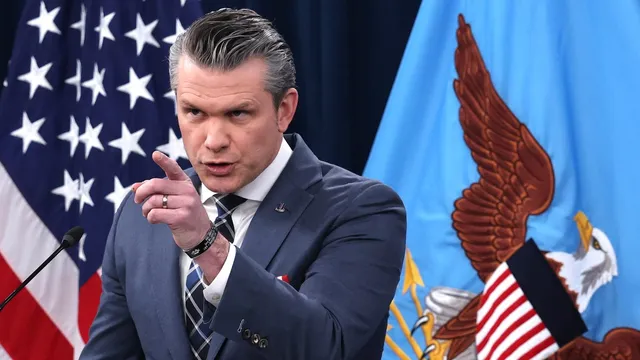
US soldiers died for the future generation's safety, says Pete Hegseth
US soldiers died for the future generation's safety, says Pete Hegseth
- Secretary of Defense Pete Hegseth shared a personal moment from a press conference about the conflict with Iran.
- He informed his son that soldiers died in the Iran War to ensure his generation would not face a nuclear threat.
- Hegseth's comments reflect the ongoing narrative about the sacrifices of military personnel for national security.
Story
In the ongoing conflict involving Iran, Secretary of Defense Pete Hegseth recently addressed the sacrifices made by U.S. soldiers during a press conference held on a Thursday morning. During the event, he shared a personal anecdote about a conversation he had with his 13-year-old son, who had expressed curiosity about the war and the families of soldiers lost in combat. Hegseth explained that he conveyed to his son the heavy cost of the war, emphasizing that these soldiers died for him, so that his generation would not have to grapple with the threat of a nuclear Iran. The Defense Secretary's remarks underscored the continued dangers posed by Iran, particularly regarding its nuclear ambitions. Hegseth's sentiments reflect a broader narrative often communicated to younger generations about the importance of military actions, aiming to instill a sense of respect and gratitude for the sacrifices made by service members. This perspective seeks to bridge the generational gap between those who have experienced war firsthand and those who have not, aiming to connect the present with the history of military endeavors. Additionally, Hegseth's comments highlight the ongoing struggles faced by military families and the psychological weight borne by soldiers who return from combat. The emotional toll is compounded by the reality that many service members lose their lives in conflicts that some view as necessary for national security. As debates about military intervention and foreign policy continue to evolve, the voices of military leaders become crucial in shaping public perception regarding the consequences of these interventions. In a polarized atmosphere, wherein discussions surrounding military action often fall into partisan divides, Hegseth's remarks attempted to cut through the noise by focusing on a human story. His effort to connect with his son, while dealing with profound losses that impact countless families, embodies a personal and emotional connection in political discourse. The Secretary's willingness to share this moment suggests a deeper narrative about the value and sacrifice of U.S. soldiers, interwoven with the implications of defense strategies aiming to prevent a nuclear-armed adversary in the region.
Context
The impact of U.S. soldiers' sacrifices in foreign wars is profound and multifaceted, influencing not only the immediate geopolitical landscape but also the domestic social fabric of the United States. Historically, American military involvement in various conflicts abroad has often been framed within the context of protecting national interests, promoting democracy, and responding to humanitarian crises. Each engagement, from World War II to recent operations in the Middle East, has come at a vast human cost, shaping public perception of military service and the veterans' experience. The sacrifices of these soldiers are memorialized in ceremonies and narratives, often serving as a reminder of the gravity of warfare and the high price of freedom and security that many citizens enjoy today. The sacrifices of U.S. soldiers have a lasting impact on foreign relations and global perceptions of the United States. Military actions, such as those in Iraq and Afghanistan, have been controversial, raising questions about the ethics and effectiveness of U.S. interventionism. While some argue that these sacrifices have helped to stabilize regions and foster growth, others contend that they have led to increased hostility and anti-American sentiment. The narratives constructed around these conflicts can either bolster national pride or instigate widespread critique, making the understanding of soldiers' contributions essential to grasping the complexities of U.S. foreign policy. Domestically, the sacrifices of U.S. soldiers resonate deeply within communities and societal structures. Veterans returning from foreign deployments face unique challenges, including physical injuries, mental health issues such as PTSD, and difficulties in reintegration into civilian life. The societal response to these heroes is critical; it determines how veterans are supported, honored, and integrated back into society. Furthermore, military sacrifice shapes a collective national identity, creating a bond between citizens and service members that transcends political ideologies, often uniting the populace in honoring those who have served. In conclusion, the sacrifices made by U.S. soldiers in foreign wars have significant and enduring repercussions. They affect international relations, public opinion, and the well-being of veterans and their families. Acknowledging and understanding these impacts is essential for fostering a respectful and informed dialogue about military service and its implications for both the nation and the world. As the U.S. navigates its role on the global stage, reflecting on the sacrifices of its soldiers will be pivotal in shaping future military and diplomatic strategies.


