

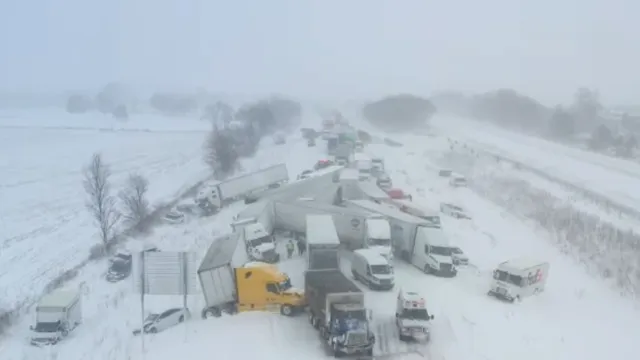
Nine injured in massive I-196 pileup due to snowy conditions
Nine injured in massive I-196 pileup due to snowy conditions
- Over 100 vehicles were involved in a multi-vehicle pileup on I-196 amid severe weather conditions.
- Nine to twelve people were reported injured, but there were no fatalities.
- The highway was closed for several hours while recovery operations took place.
Story
On January 19, 2026, a significant multi-vehicle accident occurred on Interstate 196 in Michigan, southeast of Grand Rapids. Amid severe winter weather characterized by heavy lake-effect snow, blustery winds, and poor visibility, the crash began around 10:19 AM local time. Authorities reported an initial estimate of around 100 vehicles involved in the collision, including numerous cars and semi-trucks. The hazardous weather conditions precipitated a rapid deterioration of driving conditions, leading to the massive pileup that resulted in nine to twelve reported injuries. Fortunately, there were no fatalities reported. The Ottawa County Sheriff's Office was dispatched to the scene, where they provided updates on the situation, including advising stranded drivers to stay in their vehicles until they could be bused to safety. The crash site experienced challenging conditions due to significant blowing snow, causing visibility to drop to a quarter-mile. In response to the incident, local authorities closed the affected section of the highway between Zeeland and Hudsonville to facilitate the evacuation of drivers and the clearing of wreckage. The road remained closed for an extended period while responders worked to manage the chaotic scene. Weather conditions were dire at the time of the pileup, with officials from the Michigan State Police highlighting the treacherous nature of the roads due to ongoing winter weather alerts. As a significant winter storm moved through the area, strong gusts of wind, coupled with snow accumulation, created whiteout conditions. This situation was underscored by the National Weather Service's advisories warning residents against unnecessary travel. In light of this incident, state and local officials emphasized the importance of preparedness during winter weather conditions. Suggestions included carrying emergency supplies and remaining vigilant about changing weather patterns. Notably, earlier communications from the Ottawa County Road Commission had already warned motorists about potential safety issues associated with winter storm conditions, illustrating the need for caution when traveling during severe weather. As recovery efforts continued, the local community faced significant interruptions due to this unfortunate event, catalyzing discussions on road safety and preparedness during adverse weather conditions.
Context
Driving in winter weather can pose significant challenges and dangers, making it crucial for motorists to take extra precautions. The first step towards safe driving in snow and ice is to ensure that your vehicle is properly prepared. This includes checking that your tires are winter-rated and have sufficient tread depth, as well as ensuring that your battery, wipers, and headlights are functioning well. Stocking your car with essential supplies such as a snow shovel, ice scraper, warm blankets, and a first-aid kit can also be lifesaving in case of emergencies. Additionally, keep your fuel tank at least half full to prevent fuel line freeze-up and to provide sufficient energy for heating the car if stranded. Understanding how to drive on icy and snowy roads is essential for safety. Drivers should accelerate and decelerate slowly, making gentle adjustments to speed and direction. This helps prevent skidding. Maintaining a greater distance between your vehicle and others is vital, as stopping distances can increase significantly on slippery surfaces. Using low gears can also help with traction when driving up or down hills. It's essential to be extra vigilant during adverse weather conditions, as visibility may be reduced. Turn on your headlights and avoid using cruise control, as you need full control over your speed and steering in slippery conditions. If you find yourself stranded in a winter storm, it is crucial to remain calm and take specific actions to ensure your safety. Stay with your vehicle, as it provides shelter and makes it easier for rescuers to locate you. Run the engine for about 10 minutes every hour to keep warm, while making sure your exhaust pipe is clear of snow to prevent carbon monoxide buildup. It's also advisable to signal for help by raising a brightly colored cloth or turning on your hazard lights. If you are in a remote area and need to conserve gas, it's best to limit running the engine and instead cover yourself with warm clothing and blankets. Preparation and knowledge are key factors in navigating winter driving conditions successfully. Understanding the risks and implementing safety measures can significantly reduce the chances of accidents or dangerous situations. Drivers are encouraged to stay informed about weather conditions and heed warnings when severe weather is expected. By adopting a cautious mindset, vehicle maintenance, and roadway awareness, drivers can increase their chances of staying safe on the roads during the winter months.


