

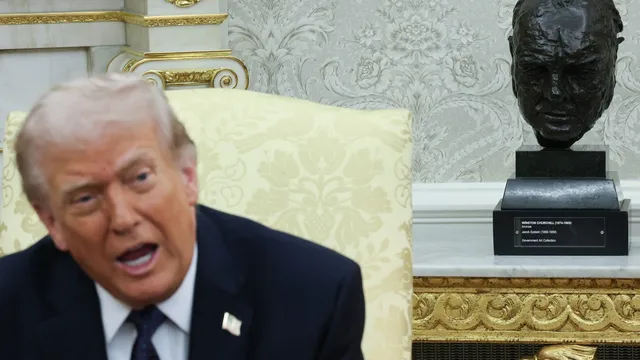
Trump criticizes NATO allies for lack of support in Iran operations
Trump criticizes NATO allies for lack of support in Iran operations
- President Trump expressed disappointment with NATO allies' hesitance to provide operational support in military actions against Iran.
- Turkey's President Erdoğan warned of possible regional destabilization due to the ongoing military campaign and expressed sadness over Khamenei's death.
- The situation has led to renewed discussions on NATO's unity and the desire among European members for enhanced nuclear capabilities.
Story
In recent weeks, President Donald Trump showcased his disappointment over European NATO allies' hesitance to fully support U.S. military actions against Iran. During a series of discussions, Trump pointed to the need for more decisive backing, citing specific instances of operational support that fell short of expectations. Reports indicated that while European capitals voiced their support, tangible actions remained limited, leading to concerns about NATO's unity during the ongoing military operations. Turkey's President Recep Tayyip Erdoğan also joined in the criticism by warning of potential destabilization in the region amidst the military campaign. Erdoğan expressed sadness over Ayatollah Ali Khamenei's death and denied that any Turkish territory was utilized in the recent strikes. France's President Emmanuel Macron stated that the outbreak of war carries significant risks for global peace and security, highlighting the millions of lives on the line amidst these rising tensions between the U.S., Israel, and Iran. The dynamics of NATO have been further complicated as nations like Germany and France reconsider their security policies in the face of perceived inadequacies in U.S. commitment to collective defense. Germany's Chancellor Friedrich Merz emphasized the need to avoid falling into a military quagmire reminiscent of Iraq or Afghanistan. As tensions continue to mount, European NATO members are increasingly vocal about their desire for a nuclear capability to guard against perceived threats, especially concerning Iran's potential ambitions. Overall, amidst a backdrop of geopolitical volatility, the conversations surrounding military action against Iran have reignited debates over the efficacy and unity of NATO, with Trump urging allies to transition from mere verbal support to concrete military collaboration.


