
politics
controversial

U.N. calls slavery the gravest crime against humanity

Mar 26, 2026, 9:28 AM20
(Update: Mar 28, 2026, 2:06 AM)
country primarily in North America
global international and intergovernmental organization

U.N. calls slavery the gravest crime against humanity

  • The U.N. General Assembly adopted a resolution condemning the trafficking of enslaved Africans as a crime against humanity.
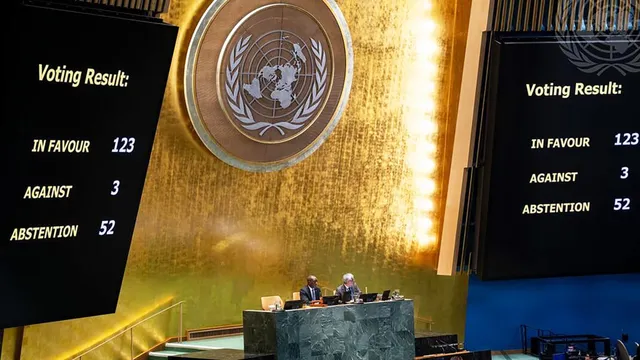
  • The vote included 123 in favor, 3 against, and 52 abstentions, highlighting divisions among member states.
  • The resolution calls for reparations and emphasizes addressing the historical injustices of slavery.
Share opinion
Tip: Add insight, not just a reaction
2

Story

On a significant date aligned with the International Day of Remembrance of the Victims of Slavery and the Transatlantic Slave Trade, the U.N. General Assembly held a vote resulting in a resolution that condemns the trafficking of enslaved Africans. The resolution passed with a majority of 123 votes in favor, with three nations, including the United States, voting against it. The resolution emphasizes the urgent need for reparations as a measure to address historical injustices and calls upon U.N. member nations to engage in discussions about reparatory justice, which can include formal apologies and compensation. This vote drew attention to the plight of an estimated 13 million African individuals who suffered abominably due to slavery over several centuries. Ghana's president, John Dramani Mahama, who played a crucial role in advocating for the resolution, claimed that the action serves to preserve the memory of those who endured the indignities of slavery. The discussions did not yield unanimous support, with notable abstentions from members of the European Union and the United Kingdom, indicating a division in perspective regarding the issue of reparations and how history should be addressed. Concerns were raised by nations opposing the resolution about the suggestion that some atrocities may be ranked in severity, which could undermine the severity suffered by victims of other crimes against humanity. Despite this, the resolution represented a significant move towards recognizing the long-lasting impacts of slavery, racial discrimination, and systemic injustices faced by descendants of enslaved people today. There remains ongoing dialogue about reparations, as many affected nations have historically sought apologies and compensation for past wrongs. Most countries have yet to provide reparations, with many adhering to compensating slave owners or offering symbolic acknowledgments rather than delivering direct financial reparations to affected descendants. This presents challenges in negotiating reparations, as highlighted by conflicting opinions on legal rights and ethical responsibilities regarding ownership of history. Evolving public support for reparations in the U.S., particularly following social movements spurred by recent events, reinforces the need for clearer conversations around such topics moving forward.

Context

The history of U.N. resolutions on slavery is a significant chapter in the broader narrative of human rights advocacy. The United Nations, formed in 1945, inherited a world still grappling with the legacy of slavery and colonialism. Initially, the focus of the U.N. was on preventing the atrocities of World War II, but the horrors associated with slavery soon gained attention. The U.N. General Assembly adopted its first resolution on slavery in 1948, which condemned all forms of slavery and emphasized the need for international cooperation in promoting freedom and abolishing slavery practices. This setting marked the beginning of a concerted effort by the U.N. to address slavery in all its forms, including forced labor, trafficking, and exploitative practices that persisted in various regions long after the formal abolition of slavery in the 19th century. Over the years, the U.N. has produced several significant resolutions and conventions aimed at combating slavery and related practices. The 1956 Supplementary Convention on the Abolition of Slavery expanded the definition of slavery and introduced prohibitions on practices such as servitude and trafficking in persons. This convention laid the groundwork for subsequent resolutions and frameworks that sought to eradicate modern forms of slavery, with the U.N. Secretariat and specialized agencies actively working to enforce these commitments. The U.N.'s Global Plan of Action to Combat Trafficking in Persons, adopted in 2010, exemplifies this sustained commitment, recognizing the need for comprehensive strategies involving legislative frameworks, law enforcement, and victim support. In the 21st century, the focus of U.N. resolutions has increasingly turned to addressing the complexities of contemporary slavery. This includes the recognition of economic and social factors that perpetuate slavery-like conditions, particularly among vulnerable populations in developing countries. U.N. resolutions have increasingly called for member states to implement domestic legal measures that align with international standards. For example, the 2015 U.N. Sustainable Development Goals underscore the urgent need to end all forms of slavery and human trafficking, emphasizing that these issues are interconnected with poverty eradication, gender equality, and sustainable economic growth. The U.N. also highlights the role of civil society in monitoring state compliance with international obligations regarding slavery, advocating for a multifaceted approach that includes education, advocacy, and community engagement. Overall, the history of U.N. resolutions on slavery represents a dynamic interplay of legal, ethical, and social considerations aimed at eradicating one of the most enduring violations of human rights. Despite significant progress, modern slavery remains a grave issue that requires ongoing attention and action from governments, international organizations, and civil society. The U.N. is committed to adapting its strategies in response to emerging challenges. As society progresses, the necessity of sustaining this commitment and ensuring the enforcement of resolutions remains vital to achieving a world free from slavery.

2026 All rights reserved
